

Last updated on August 11th, 2026 at 03:06 pm
Bird Island Trail is one of several hiking trails located within the Point Lobos State Natural Reserve a few miles south of Carmel, California. The Reserve is often referred to as the “crown jewel of the California State Park system” and, despite having only seen a small part of it, I can understand why.
The Reserve is home to a rich array of land based and marine wildlife and vegetation with the adjacent waters of the Pacific Ocean protected as part of the Point Lobos State Marine Reserve and the Point Lobos State Marine Conservation Area. The Bird Island Trail runs along part of the coastline and through pine forest and coastal scrub.
I hiked the Bird Island Trail during a short road trip along the California coast. If you’re planning a similar road trip or you find yourself in Carmel, I definitely recommend adding it to your trip itinerary. It’s an easy hike which all the family will enjoy.
In this post I’ll share a practical guide for hiking the Bird Island Trail. I’ll set out how to get to the trail and what you can expect as you hike along it.
Bird Island Trail is wonderful way to experience this wild and windswept part of California.

Point Lobos State Natural Reserve – A Bit of History
The Point Lobos area was inhabited by the native Ohlone people who harvested shellfish from the waters for about 2,500 years. Since then, the area has had many residents and owners. In the 19th century, Chinese arrivals built cottages at Whaler’s Cove, a granite quarry also operated from the land, coal was mined and transported, abalone was harvested and canned and gravel and sand were mined. Much of Point Lobos was also once proposed as a town site.
In 1933 the State of California purchased 348 acres of Point Lobos. A further 15 acres was donated and in 1975, the State acquired another 48 acres, thereby expanding the Reserve to almost 400 acres. The State removed evidence of the human encroachment onto the land, although it retained the Whalers Cabin. Built in the 1850s, the Whalers Cabin is on the National Register of Historic Places.
In 1960, 775 underwater acres were added as the first marine Reserve in the USA. In 1973, the marine Reserve was designated an ecological Reserve. Today, intertidal and subtidal plant and animal species are fully protected.
Point Lobos – What’s in a Name?
Are you wondering how the Reserve got its name? The answer is sea lions!
Living on the off shore rocks at Sea Lion Point are Californian sea lions. Early Spanish settlers thought they sounded like barking wolves and named the area Punta de Lobos from the Spanish term for sea lions – lobos marinos or sea wolves. When the State of California acquired the Reserve in 1933 it named the Reserve the Point Lobos State Natural Reserve for these loud residents.
Unfortunately, time constraints meant I did not get to see these infamous residents. If you have time however, Sea Lion Point is about 1 mile from Bird Island Trail.
Getting to the Bird Island Trail
Point Lobos State Natural Reserve is located on the central coast of California in Monterey County. The entrance is located 3 miles south of the beautiful seaside town of Carmel on Highway 1. The Bird Island Trailhead is at the southernmost corner of the Reserve. You can see its location on Google maps.
Operating Hours
Point Lobos State Natural Reserve is a day use only facility. It is open from 8am to 7pm and the last entry is 6.30pm.
Entrance Fee
The day use vehicle entrance fee is $10 (concessions are available). You can actually use your ticket to enter other California State Parks on the same day. We did this by using the ticket we bought to enter the Henry Cowell Redwoods State Park to enter the Reserve.
Visiting Rules
There are a number of rules that visitors should be aware of. These include:
- dogs are not permitted anywhere in the Reserve and cannot be left inside parked vehicles
- bikes are not permitted on the trail
- drone use isn’t permitted
- alcohol consumption isn’t permitted
I would suggest checking the official California State Parks website for up to date visitor information ahead of travelling.
Bird Island Trail – Hike Details
The Bird Island Trail details as set out on AllTrails are:
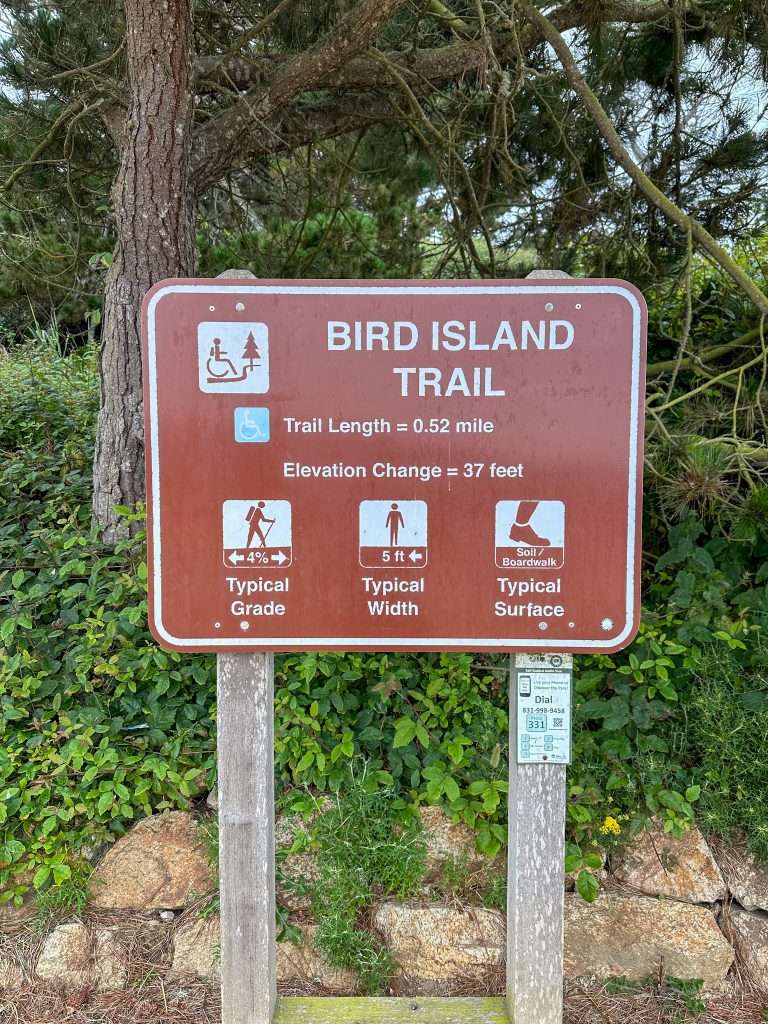
- Length – 1.3 kilometres (0.8 miles)
- Elevation Gain – 27 metres (88.5 feet)
- Average Time – 19 minutes
- Type – out and back
- Difficulty – easy
The distance and elevation information on AllTrails differs slightly to that on the trailhead signage.
Hiking Bird Island Trail
Here’s what you can expect when hiking the Bird Island Trail:
1. The Starting Point
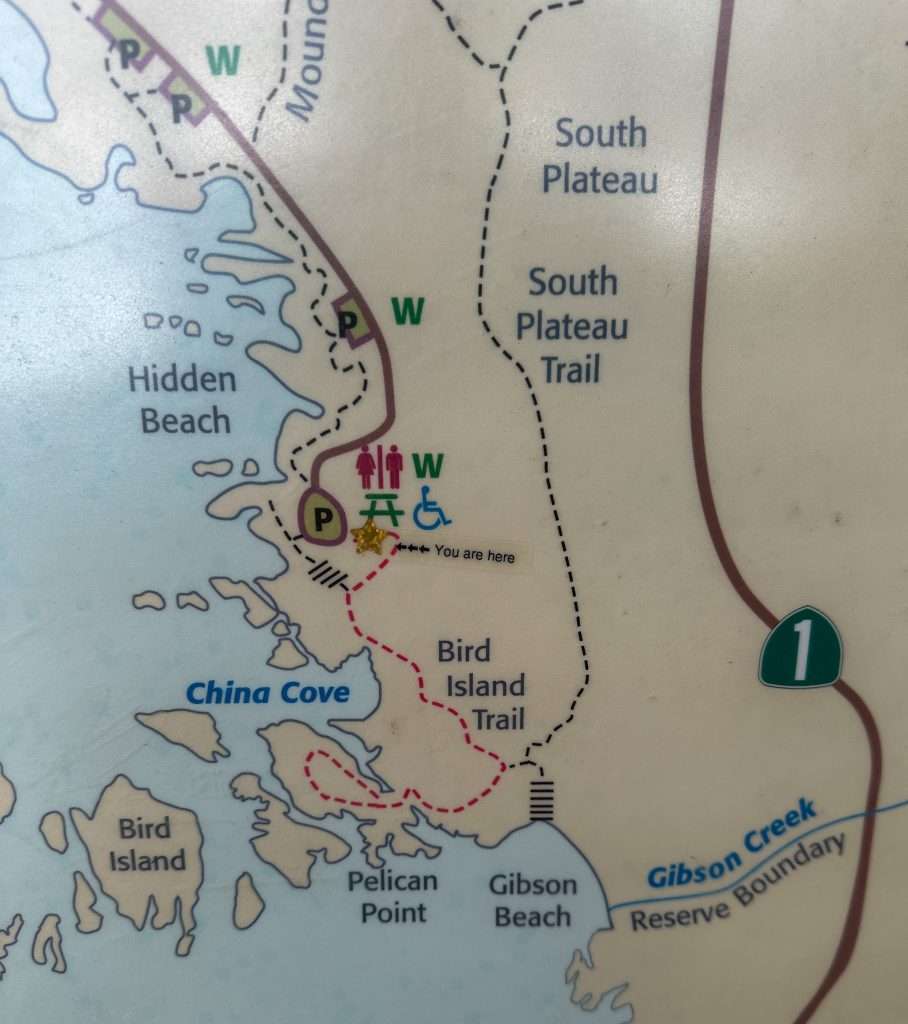
The Bird Island Trail starts at the southern most parking area in the Reserve. Here you will find picnic areas and bathrooms.
There are a few easy steps to climb once you’ve left the parking lot but otherwise the trail is relatively flat and sandy. You can also get onto the trail from near the bathrooms without needing to climb any steps.
2. China Cove
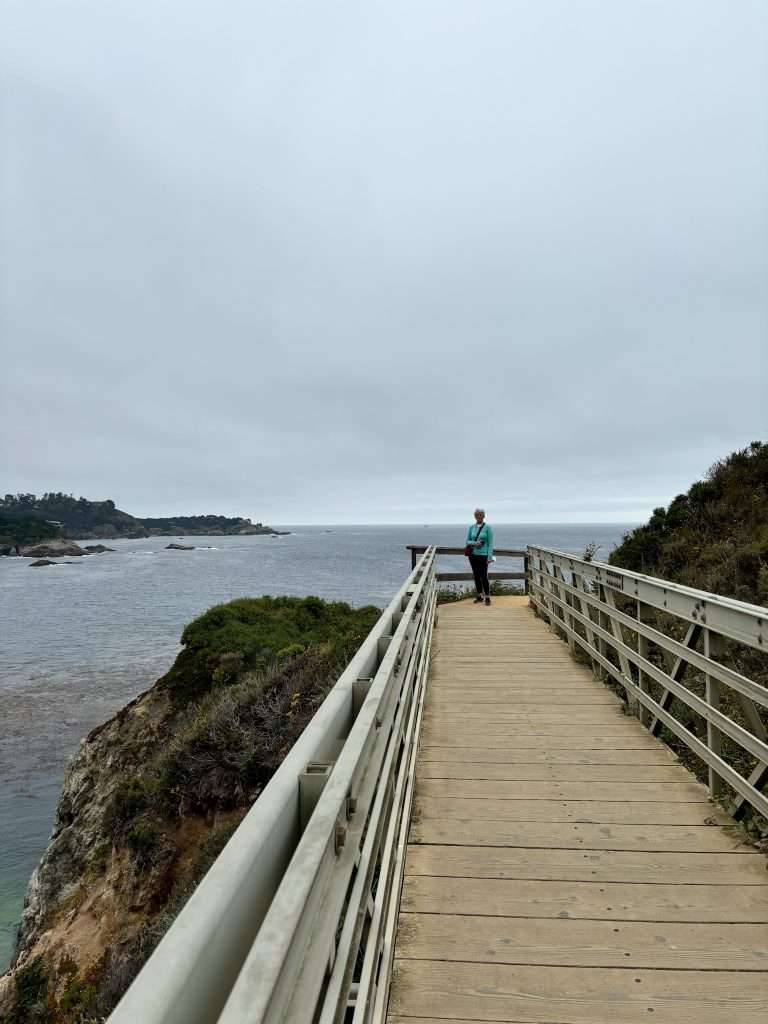
It’s not long before you will have your first view of China Cove. The cove is well known for its white sandy beach and beautiful jade green waters, both teeming with wildlife. Harbor seals in particular favour the cove and the protection it offers their pups. In the spring, be aware of any rules in force in order to better protect the nursing mothers and pups.
There are various points along the trail offering different but equally beautiful views down over China Cove.


In the waters there are amazing kelp beds – keep your eyes peeled for sea otters! Unfortunately, I did not see any during my hike.

3. Gibson Beach
On leaving China Cove, look out for Gibson Beach off to your left. Another beautiful stretch of white sand, Gibson Beach was closed during my visit due to storm damage, however I understand that it has now reopened.
Numerous birds gather on Gibson Beach making for an amazing sight. Be sure to look up above them to the forest (shrouded in fog during my visit) and those incredible homes with a stunning view!


4. Bird Island
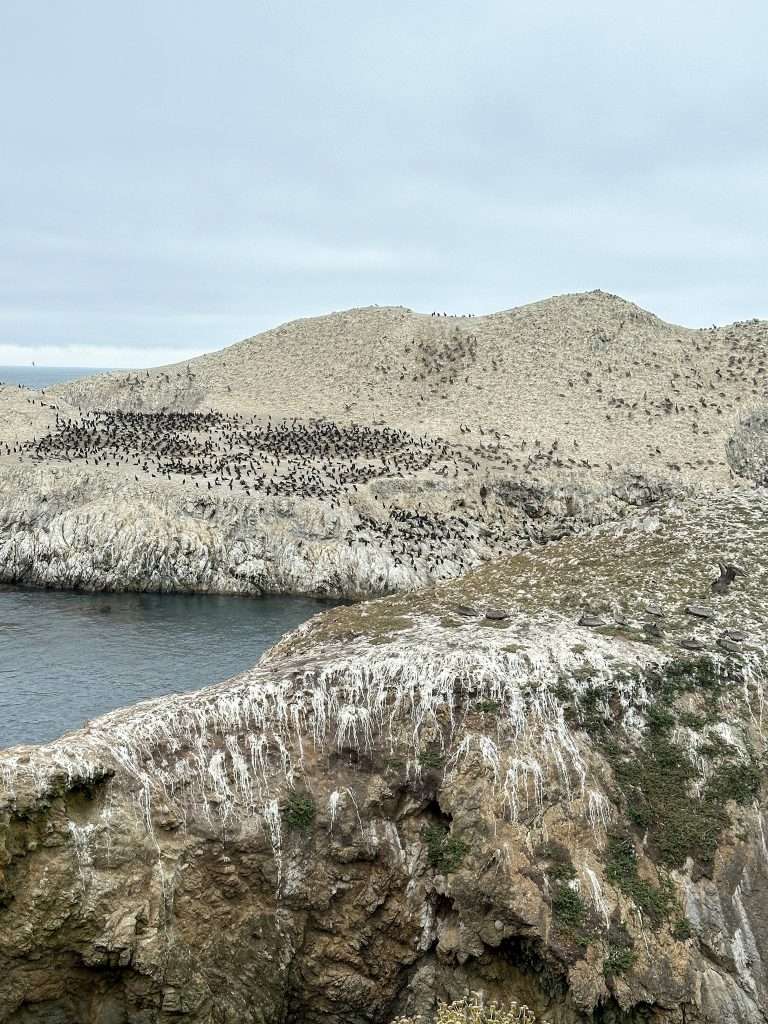
Just a short walk from Gibson Beach you will come to Pelican Point which offers amazing views of Bird Island. And there is no shortage of birds! Brandt’s Cormorants, Western Gulls, Back Crowned Night Herons and Pelicans all call this area home. As a result, the Bird Island Trail is popular with photographers and bird watchers alike.
When you have finished admiring the stunning views, turn round and walk back along the trail. Be sure to enjoy the wildflowers along the way. The trail loops back to the parking lots in the direction you came.
5. Reminders to Protect the Reserve
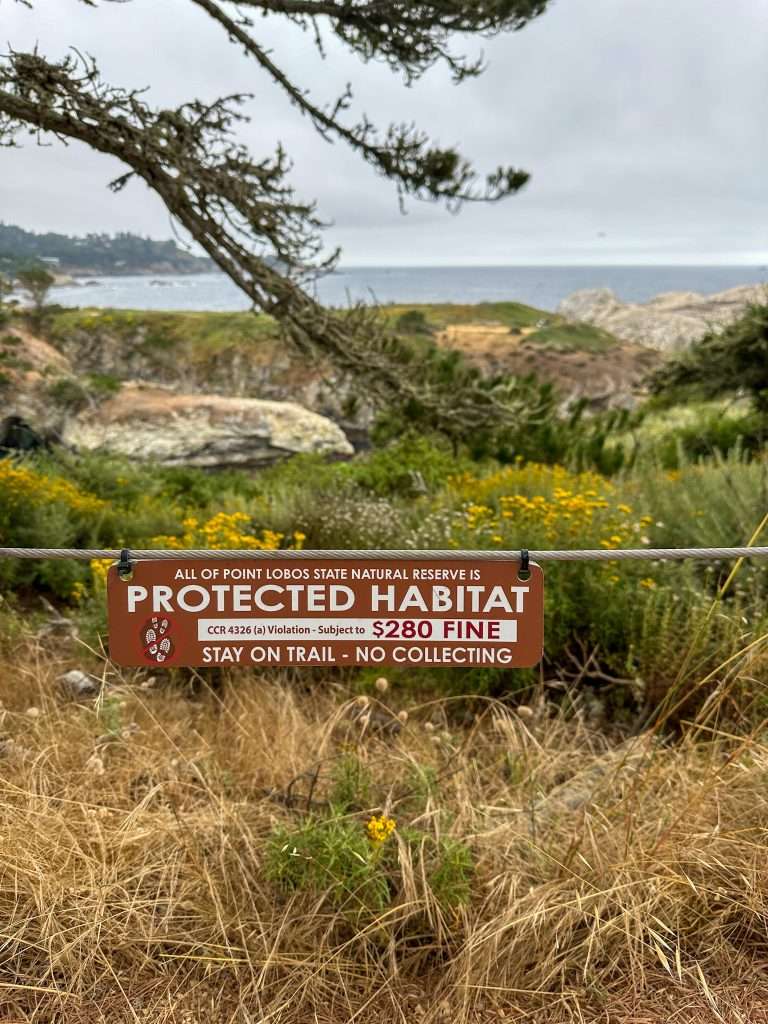
The Point Lobos State Natural Reserve is a protected habitat so be sure to stick to the dedicated paths and not to pick any plants or feed any wildlife.
More Time at Point Lobos State Natural Reserve?
If you have more time than I did to spend visiting Point Lobos State Reserve, then you may want to consider some of these further activities:
1. Hiking additional trails including those from:
a) Information Station
- Cypress Grove Trail (through one of only 2 naturally growing stands of Monterey Cypress trees remaining on earth)
- Seal Lion Point Trail
b) Bird Island
- South Shore Trail
- South Plateau Trail
c) Whalers Cove
- Granite Point Trail
- North Shore Trail
- Cabin Trail
d) Piney Woods
- Pine Ridge Trail
- South Shore Trail
I would suggest reviewing the official Point Lobos Foundation website for details of these and more hiking trails.

2. Visiting the Whalers Cabin Museum
The museum is open from 9am to 5pm, as staffing permits.
3. Going Scuba Diving
The Point Lobos State Marine Reserve, which is part of the larger Monterey Bay National Marine Sanctuary, is home to a rich array of marine life. Scuba diving is permitted at Whalers and Bluefish Coves. Permission to dive is granted on entering the Reserve and proof of certification and reservation are required.
Check official California State Parks website for up to date requirements, fees information and to make a reservation.
4. Going Snorkeling, Kayaking or Paddle Boarding
It is also possible to go snorkeling. Reservations are also required – you can make these and check up to date requirements using the link above.
Kayaking and stand up paddle boarding are also permitted.
5. Joining a Guided Walk
If you find yourself short of time too or you prefer to explore the Reserve on a guided walk and benefit from local knowledge, then you may want to consider a tour such as this:
6. Whale Watching
Various species of whales can be seen in the waters off the Reserve at different times of the year including Gray Whales between December and April. The official Point Lobos Foundation website provides an interesting summary of the marine mammals seen at Point Lobos.

Final Thoughts
The Bird Island Trail is one of the easiest hikes you could do but its no less beautiful for that. The rugged California coastline and its rich array of wildlife make for a wonderful short hike that is accessible and family friendly. Hiking the Bird Island Trail certainly helped make my Californian adventure one of my best road trips ever!
I hiked the Bird Island Trail after having spent a week hiking in Yosemite National Park and the Sierra Nevada. To learn more about my experiences in those areas, read the other posts on my USA page. You will also find, on that page, posts relating to my experiences visiting San Francisco and other destinations during my road trip.
Finally, if you need any general assistance with planning a trip to California (or any trips for that matter!), then check out my Resources page.
Happy hiking!

Disclaimer – Information correct at the time of writing but do check before visiting.


Leave a Comment