

Last updated on July 2nd, 2026 at 02:22 pm
3 days in Riga Latvia is a perfect city break option. Latvia is one of the 3 Baltic States and is located in Northeastern Europe between Estonia and Lithuania. Riga is its capital city. With its long history dominated by periods of occupation, its culture, architecture and more, Riga has become a popular destination and understandably so.
I spent 3 days in Riga and was kept busy throughout! There are enough tourist attractions and things to see and do to keep everyone happy!
In this post I’ll share 13 of the best things to see during 3 days in Riga. I’ll answer some frequently asked questions and give you a few suggestions for other activities you can add to your Riga sightseeing itinerary. I’ll also provide some travel tips, a general travel guide and some shopping tips so you too can spend your own amazing 3 days in Riga.
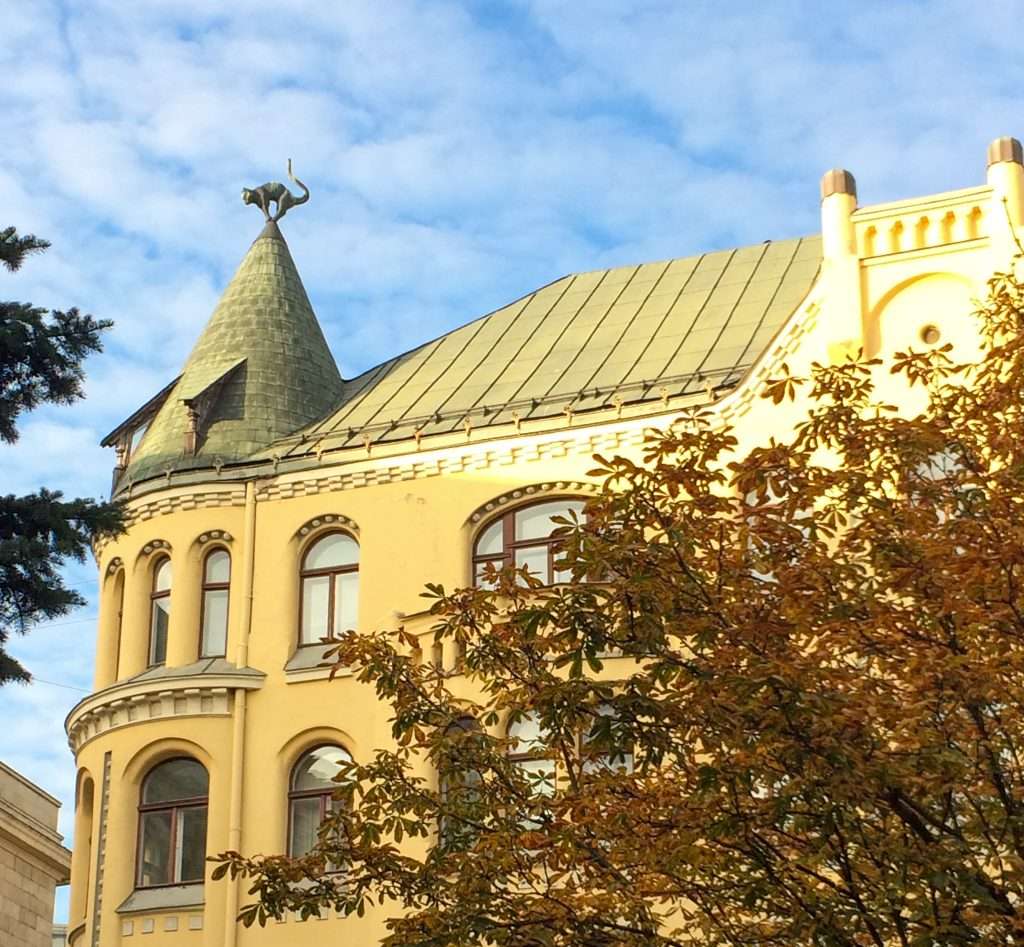
Frequently Asked Questions
1. Is Riga worth visiting?
Absolutely! The Latvian capital is a very walkable city and its long and fascinating history, amazing architecture, good food, beautiful parks, variety of worthwhile products to buy and reasonable prices are all reasons that make Riga definitely worth visiting. I think Riga is a perfect city break destination so read on to discover all the ingredients to create your own perfect itinerary!
2. How many days should I spend in Riga?
It goes without saying that the more time you spend in a place, the more of it you will see. Riga is a small city however and with many of its main attractions located within the Old Town, I would recommend spending 2 or 3 days in Riga. A long weekend would be a perfect amount of time.
3. When is the best time to visit Riga?
The weather in Riga is characterised by 4 seasons:
- Winter: December to March, the coldest months with sub-zero temperatures and snow
- Spring: April to May, average temperatures are between 6 and 12 Celsius (43 to 53°F) although they can be higher on individual days
- Summer: June to August, the warmest months with average temperatures in the teens but could rise as high as the 30s Celsius (86+°F)
- Autumn: September to November, temperatures are starting to cool with averages between 3 and 13 Celsius (37 to 55°F) although they can be higher on individual days
Summer is widely regarded as the best time to visit Riga, however I visited in the Autumn (October) and although temperatures were quite cool, it was generally dry with some morning mist and fog, some cloud cover and some sun. The autumnal colours however were lovely. Summer is also the high season so expect higher travel and accommodation costs and more crowds.
Overall, the best time to visit will be dependent on what it is you want to do. If you want warmer temperatures and outdoor activities, then Summer is your best bet. If you want to visit the Christmas markets however, then you’ll need to dress for Winter.
Currency
Latvia is a member of the European Union and as such, has adopted and uses the Euro (€).
Getting to Riga
The most common means of getting to Riga are:
1. By Plane
Direct flights to Riga are available from London and other UK and European cities. The flight time from the UK is 2.5 – 3 hours.
You can research available flight options and book here:
2. By Bus
Riga is also accessible by bus – this may be a good option for those visiting from the other Baltic States.
You can research available options and book here:
Getting to/from the Airport
If you arrive by air, you will land at Riga Airport (RIX). This is Latvia’s largest airport and is about 10 kilometres southwest of Riga city centre.
There are several ways of getting from the airport to the city:
1. Bus
Bus number 22 runs between the airport and the city center at regular intervals (10-20 minutes). You can purchase a ticket directly from the bus driver at a cost of €1.81, however payment can only be made with a card (no cash). Alternatively, you can purchase a ticket from the machines located at the bus stop or Narvesen shops in the airport terminal – by the exit from Arrivals Hall E and in the Check In Hall. I understand that there is also a ticket machine next to the exit from Arrivals Hall C.
Ticket prices are currently:
- 90 minutes ticket – €1.5
- 24 hours ticket – €5
- 3 days ticket – €8
- 5 days ticket – €10
Check the official public transport website for up to date information concerning bus routes and timetables.
2. Taxi
Taxis are available from outside the Arrival Hall. Prices are listed on the taxi door and the journey can take 10-20 minutes depending on traffic. I believe that Bolt also operate from the airport but that Uber is not yet operating in Latvia.
3. Private Transfer
If you prefer to have transport already arranged, then you should consider pre-booking a private transfer.
Where to Stay in Riga
As with all major European cities, there is a variety of accommodation choices in Vilnius. I stayed at the hotel now known as the Radisson Hotel Old Town Riga which is located in the Old Town.
You can research all available hotel options and book here:
A Bit of History
Riga, Latvia’s capital city, was founded in 1201 by Catholic Bishop Albert during the Livonian Crusade. Albert and his crusaders had come to the region to convert the pagan tribal kingdoms to Christianity. In defense of the territory and trade, he created the Order of the Livonian Brothers of the Sword in 1202.
The city’s position at the mouth of the River Daugava made it an important trading centre and in 1282 Riga became a member of the Hanseatic League, a commercial network of merchant guilds which originated in northern Germany.
The Order eventually came to an end in 1561 following which Riga came under the control of Poland and subsequently Sweden.
Riga surrendered to Peter the Great in 1710 and remained part of the Russian Empire until the German army arrived in 1917. Latvia, with Riga as its capital, claimed independence on 18 November 1918 but it was short lived as the Russians re-occupied Riga in 1940. Nazi Germany invaded in 1941 and occupied Riga until the city was reconquered by the Soviets in 1944.
Latvia remained behind the Iron Curtain until it declared independence in 1991. It joined NATO and the European Union in 2004 and adopted the Euro in 2014.
Riga’s Old Town was designated a UNESCO World Heritage Site in 1997.

13 Places to Visit During 3 Days in Riga
If you have stopped by my blog before you will know that I am a big fan of free walking tours. During my visit to Riga however, I decided to grab my guide book and explore on my own. If you prefer to join a guided tour however, then do check Riga Free Tours. They offer a variety of free, tips based, walking tours that appeal to me. Alternatively check out the walking tours available via Guruwalk, a company I have booked tours with in other cities.
Whichever way you decide to explore the city, here are 13 of the best places to include in your Riga 3 day itinerary:
1. Powder Tower
The Powder Tower is a short walk from the hotel I stayed in so was one of the first things I saw in Riga.
Once part of the defensive walls of the city, the Tower dates back to the 14th century, however it was destroyed in 1621 and rebuilt in 1650. The names dates back to the 17th century when it used to store gunpowder. It has also been used as a prison but today, it houses the Latvian War Museum, a small museum which is worth visiting. The museum is free to enter and open Wednesday to Sunday, 10am to 6pm.

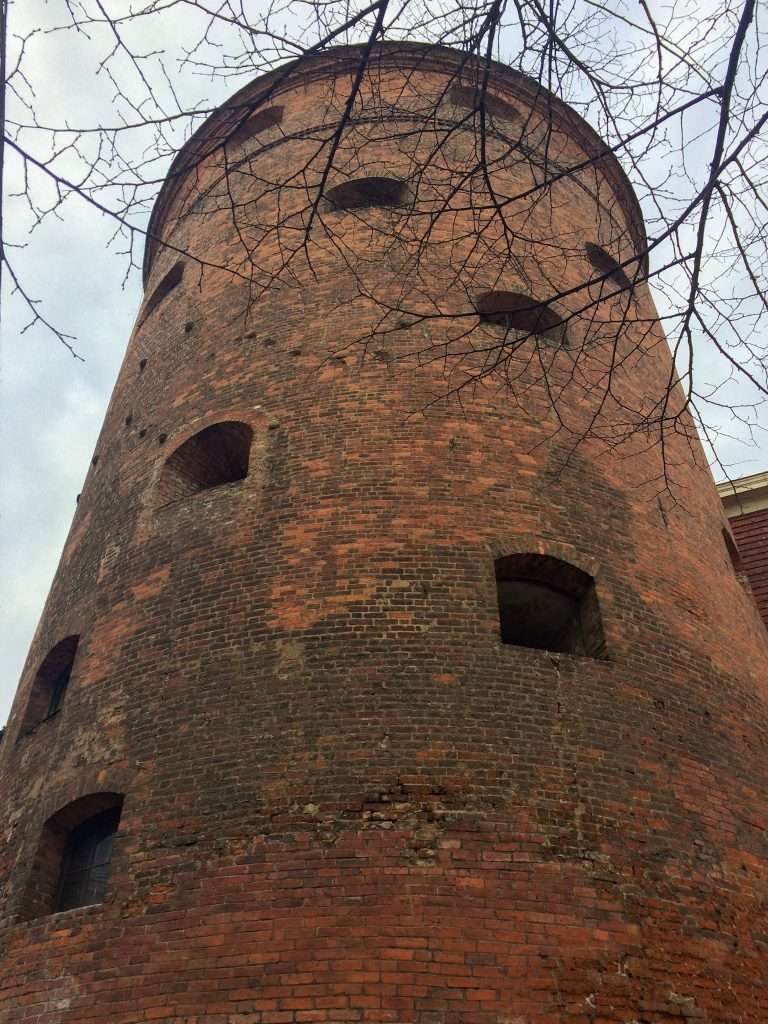
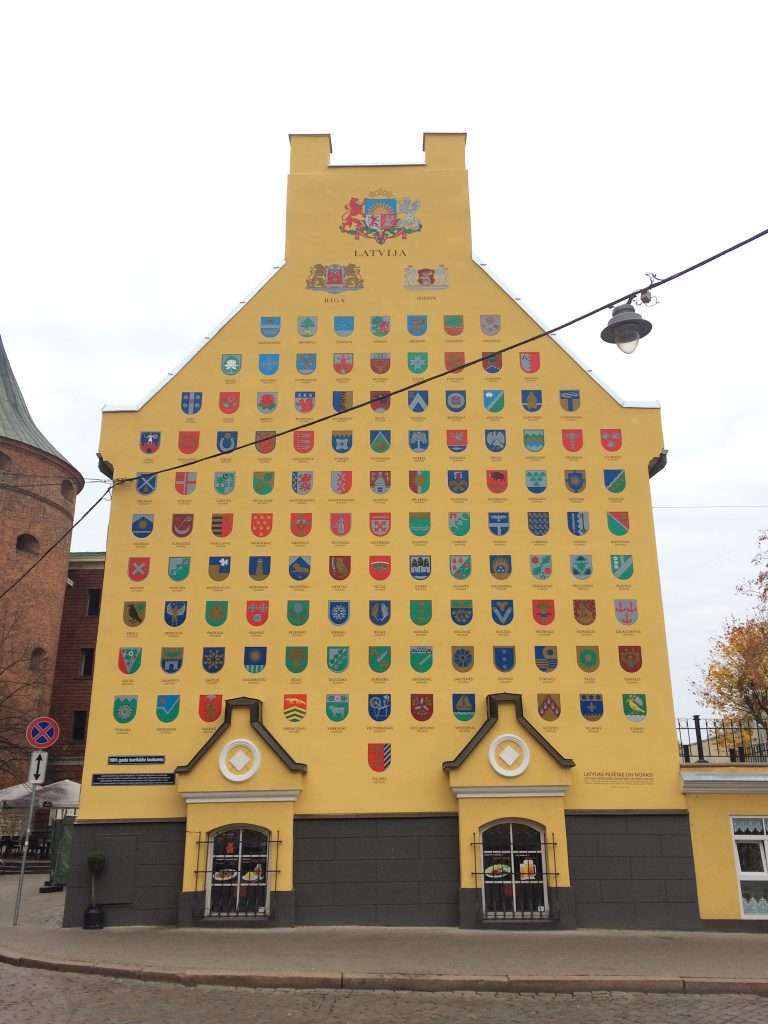
The yellow building visible in the photos are Jacobs Barracks which were built at the base of the city fortifications to house soldiers in the 18th century. Today they are home to various restaurants, bars and shops.
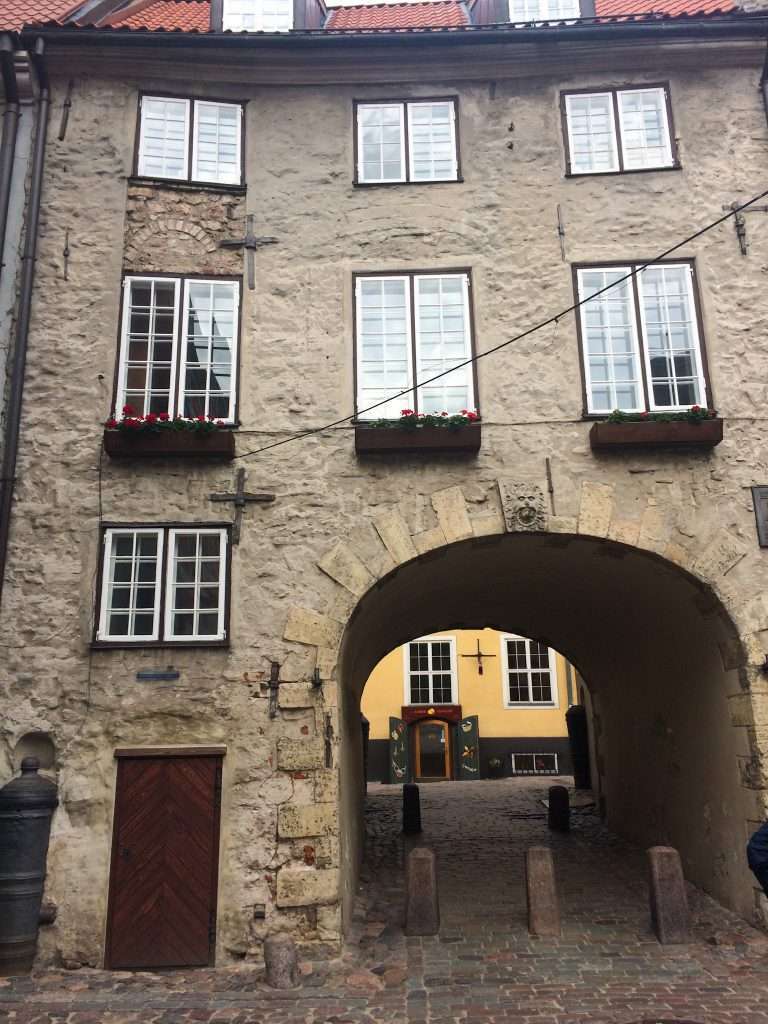
2. The Swedish Gate
Not far from the Powder Tower is the Swedish Gate. Dating from 1698, the Swedish Gate was once part of the old city walls and allowed access through to the Jacobs Barracks. Today, it is the only remaining city gate still in place.
The apartment above the Swedish Gate was once home to the city executioner. Legend has it that the night before an execution he would place a red rose in the window thereby letting all citizens know that there would be entertainment the next day!
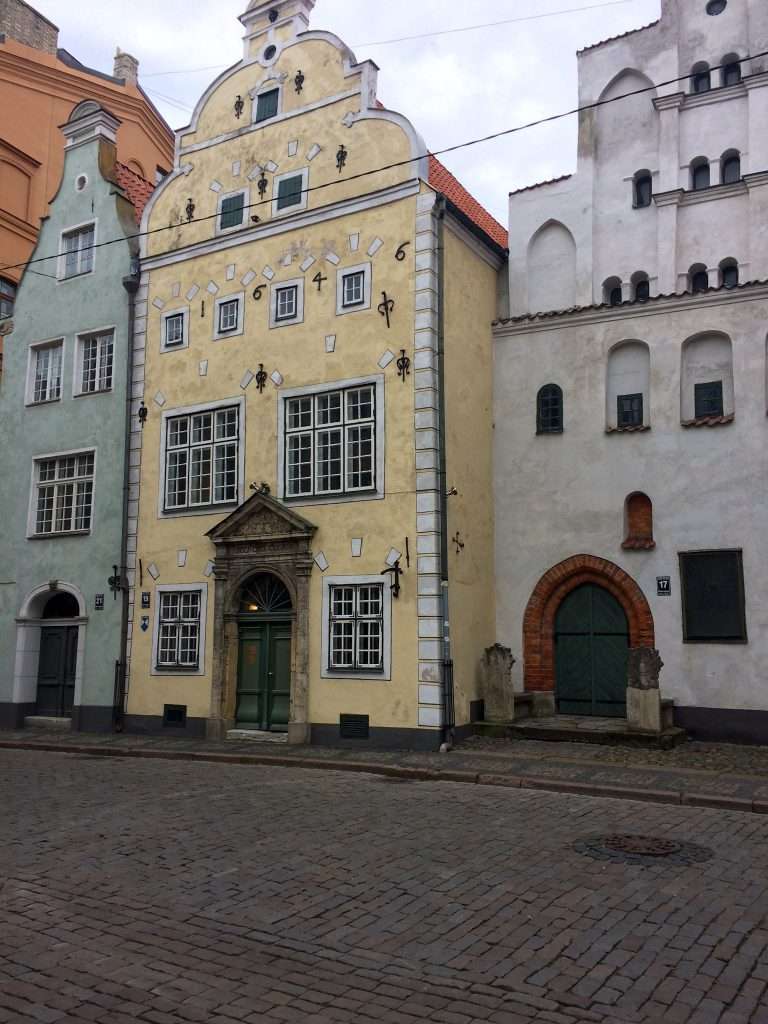
3. Three Brothers
The Three Brothers are one of the most iconic sights within Riga Old Town and therefore a must see during your 3 days in Riga.
Together, the Three Brothers are the oldest houses in Riga and comprise (L to R in the photo below):
- 21 Maza Pils Street – dating from the 2nd half 17th century, this is the youngest of the 3 houses. The mask above the doorway has apparently protected the occupants from evil spirits!
- 19 Maza Pils Street – dating from 1646, the stone portal was added in 1746
- 17 Maza Pils Street – the oldest of the houses, it dates from 1490. The little bench outside indicates it’s age as home owners at the time couldn’t afford to set aside indoor space where they could relax
4. The Cat House
Another iconic sight in Riga is the Cat House, named of course for the cats standing on the corner turrets with their backs arched and tails in the air. The Cat House, which faces the Great Guild, was owned by a trader who was denied admission to the Guild. He responded by placing the cats on the roof with their backsides pointed in the direction of the Guilds’ building!
The Cat House was designed by Friedrich Scheffel, one of the pioneers of Riga Art Nouveau architecture and built in 1909. It has a distinctive yellow colour and you’ll likely see representations of its cats everywhere…I now have one in the form of a fridge magnet!


5. Bremen Town Musicians
As you wander around the Old Town during your 3 days in Riga you will likely come upon a number of sculptures. This rather unusual one is based on a Brothers Grimm fairytale. In the tale, these animal characters (a donkey, dog, cat and rooster) left their homes and decided to go to Bremen to become musicians. On the way there, they come upon a cottage which is being robbed. They decided to scare off the robbers by standing on each others shoulders and making a lot of noise. This works, the robbers leave and the animals move into the house. If you recognise this story, it may be because variations of it have been told in different cultures.
This sculpture was gifted to Riga by Bremen in 1990. The suggestion is that it represents Latvians looking through the iron curtain and seeing a world of independence. As I mentioned above, Latvia finally became independent in 1991.

6. Town Hall Square
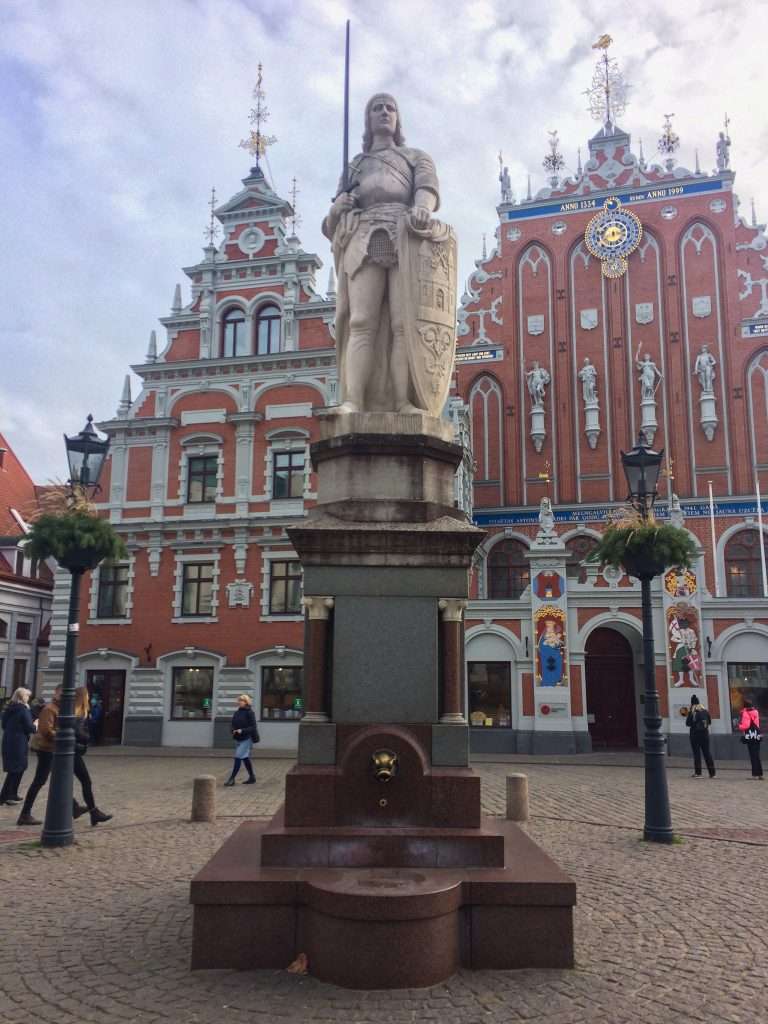
Riga’s Town Hall Square is the historic administrative and economic centre of the city. 500 years ago, it was where the city’s first Christmas Tree was placed. During World War II however, Town Hall Square was destroyed. Over the years it has been rebuilt with reconstruction of the Town Hall itself having been completed in 2004.
In the middle of the Square you’ll find a statue of St Roland. This is a replica, the original is in St. Peter’s Church.
7. House of the Black Heads
The most well known of the buildings on Town Hall Square is the House of the Black Heads.

First built in 1334 for use as a warehouse and meeting spot for merchants, it was used from the mid-15th century by the Brotherhood of Blackheads, a guild for unmarried merchants, shipowners and foreigners in Riga.
The building was bombed during World War II and its remains demolished by the Soviet Government in 1948. It was rebuilt however between 1996 and 2000.
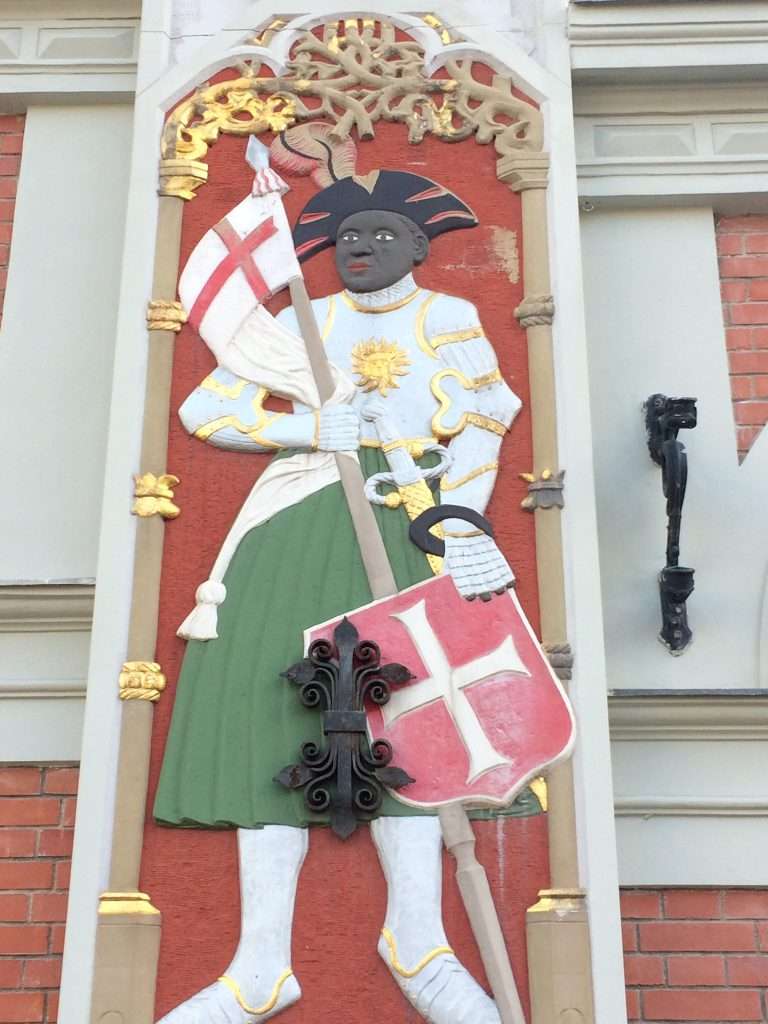

Today, it is a museum and events centre. Ticket prices start at €12 for adults (concessions available) and €4 for an audio guide. Check the official House of the Black Heads website for up to date visitor information including as to pricing options. Alternatively, you can skip the line and book your ticket here:
The opulent exterior of the building is equaled by the highly decorative inside. I particularly liked all the ornate fireplaces and the collection of silver including the spider, cobwebs and pumpkin shown in the photo below!
I highly recommend including a visit to the House of the Black Heads in your itinerary.


8. Dome Square
Seven Streets converge on this, the largest square in Riga Old Town. As a result, you’ll definitely end up here at some point during your 3 days in Riga!
Regarded as the centre of the city, Dome Square is a lively place throughout the year including during the holiday season when it hosts the Riga Christmas market! I imagine Riga in December to be magical…I can almost taste the mulled wine!
Unusually, Dome Square was only created in the 19th century when older buildings on site were demolished to create greater access to Riga’s Dome Cathedral.
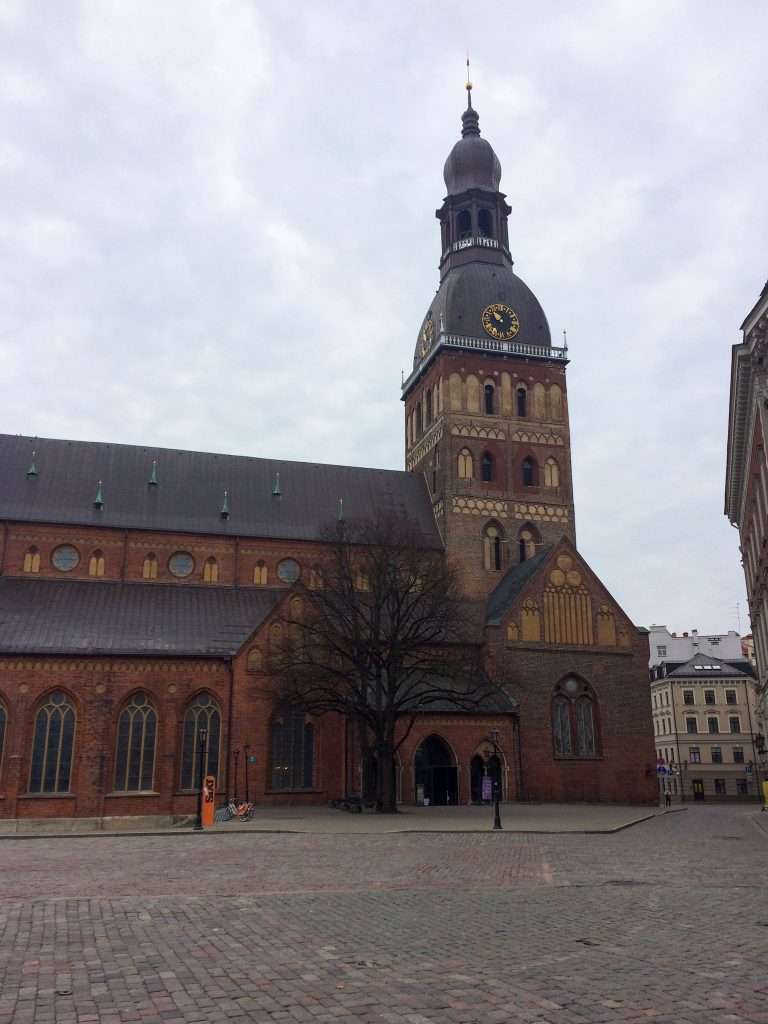
The Cathedral is the Evangelical Lutheran cathedral in Riga and seat of the Archbishop of Riga. It dates from 1211 and is considered the largest medieval church in the Baltic states. It’s one of the most recognisable sights in Riga. Ticket prices start at €3 for children aged 11 to 18 and €5 for adults. Tickets to climb the tower start at €15. Check the official Riga Cathedral website for up to date visitor information.
Be sure to see the bronze animals behind the Cathedral – a play area for young locals and visitors alike!

Look out also for the Stock Exchange building (the Riga Bourse). Built between 1852 and 1855 it today houses an Art Museum.
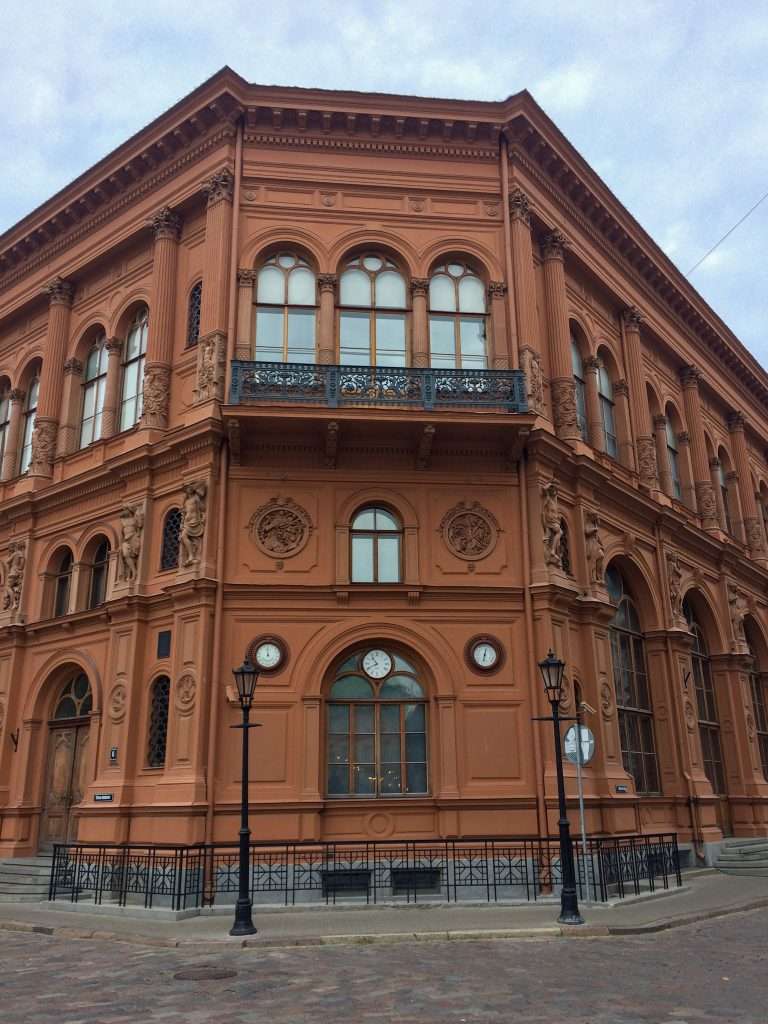
9. St. Peter’s Church
Riga’s tallest medieval structure, St. Peter’s Church was mentioned in chronicles as far back as 1209, although it has undergone various stages of reconstruction over the many years since then, including in the aftermath of World War II.
You can visit the Church and go up the tower (by lift!) for nice views over Riga Old Town, the modern city, Riga Bay and the Daugava River. The viewing area is 72 metres high, although the tower itself is a little over 123 metres tall. Tickets are €9 (concessions available).

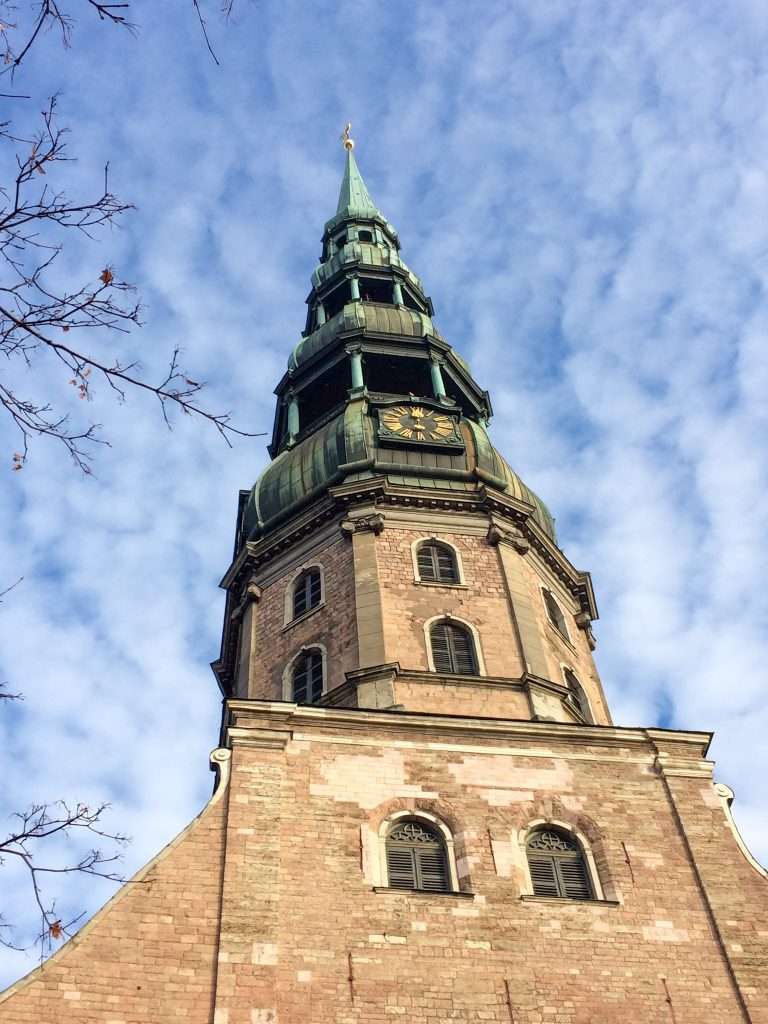
10. Riga Castle
Located on the banks of the Daugava River, Riga Castle dates from 1330 and is now the home of the President of Latvia.
The original Castle was rectangular in shape with small towers at the corners but in the 15th century, following destruction, the Castle was rebuilt with two round towers replacing two corner towers. Those round towers, the Tower of the Holy Ghost and the Lead Tower, today fly the flags of the President and the Republic of Latvia.
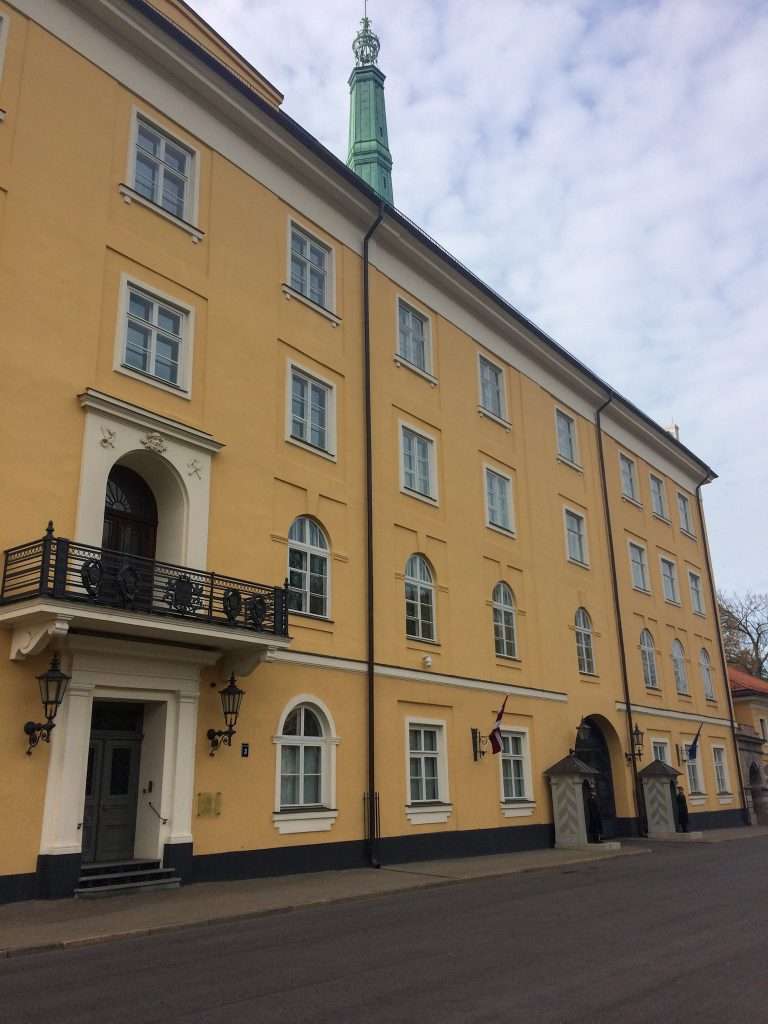
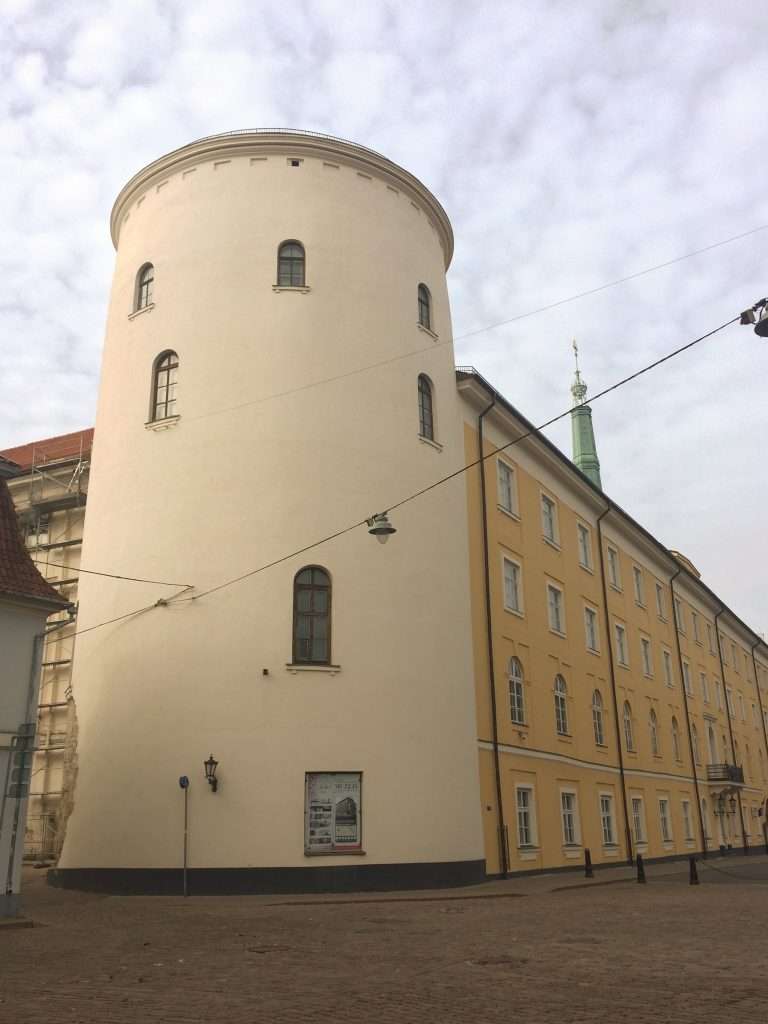
Not far from the Castle you will find a statue enclosed in a glass case. This is the statue of “Big Christopher” or Lielais Kristaps. According to legend, Christopher was a local giant who lived in a cave and helped carry people across the river. One day, he helped a child cross the river. The child told Christopher that he was Christ and on returning to his cave, Christopher found a pile of gold which he used to build the city of Riga.
A wooden statue first appeared on the river bank in the 16th century – it is now in the Museum of Riga. Today’s statue dates from 1997. Today, people still leave offerings to ensure safe journeys.

11. Pilsetas Canal
For a change of scene, head to Bastejkalna Park (also referred to as Bastejkalns Park) where you will find the Pilsetas Canal. The canal was once the city’s old moat protecting the Old Town from invaders. As I mentioned earlier, I visited in October so all the autumnal colours were on full display. I’m sure you will agree that it looks beautiful.


Today, you can wander through the Park which is also home to Bastion Hill, a man made hill, along with various monuments including the Peace Dance sculpture. I would highly recommend spending some time in the Park during your 3 days in Riga.

Alternatively, you can take a boat trip along the canal such as this option:
12. The Freedom Monument
One of the most important monuments in Riga is the almost 43 metre tall Freedom Monument. Unveiled in 1935 as a memorial to all those who fell in Latvia’s struggle for independence, it’s comprised of 56 sculptures on four levels depicting Latvian history and culture.
At the top of the Freedom Monument is a woman holding three stars. These represent the three historic provinces of Latvia and national unity. The words “For Fatherland and Freedom” are inscribed on the monument.

Not far from the Freedom Monument you will find the Laima Clock, a popular meeting place since it was erected in 1924, and the beautiful Latvian National Opera House.
13. Riga’s Museums
Riga has a number of highly regarded museums, including:
- Museum of the Occupation of Latvia – adult tickets are €8 (€15 for a guided tour)
- The Corner House (former KGB Building) – adult tickets are €15 (children under 12 are not permitted)
- Latvian National Museum of Art – adult tickets are €15
- Riga Ghetto Museum – adult tickets are €5
- Art Nouveau Museum (Riga Art Nouveau Centre) – adult tickets are €5 in Winter and €9 in Summer (guided tours are €30)
- Latvian National Museum of Natural History – adult tickets are €3.50 (free admission from 4.30pm to 5pm on Wednesday, Friday, Saturday and Sunday and from 4pm Thursdays; closed Mondays and Tuesdays)
- Latvian Ethnographic Open Air Museum – adult tickets are €8 in Summer and €6 in Winter (concessions available). The museum is about 30 minutes outside of Riga – check the website for public transport options
- Riga Motor Museum – adult tickets are €12 (closed Mondays)
- Laima Chocolate Museum – adult tickets are €9, children aged 4-6 are €3 and children aged 7-18 are €6
Although not a museum, the National Library of Latvia will impress with its collection of books and architectural style. In addition, the Latvian Academy of Sciences has an observation deck from which you can look over the Old Town and the Daugava River (Tickets are €8).
Shopping in Riga – What to Buy
Whilst I didn’t set out to spend 3 days in Riga shopping, there are a few items that the city is known for and which found their way into my suitcase! Fellow shoppers will want to look out for:
- Amber – this fossilised tree sap is very popular in the Baltic countries and you will see Amber products and souvenirs a lot in Riga
- linen – again, there are quite a few shops selling all manner of linen products including tea towels, napkins, tablecloths etc.
- Black Balsam – produced since the 1700s, this traditional Latvian drink has a high alcohol content so be careful!
- woollen/knitted goods – think gloves, scarves etc. It gets cold after all!
- chocolate – the Laima brand of chocolate has been around since 1870
All of these products make great souvenirs and gifts and don’t take up too much space in your suitcase!
More Time in Riga?
If you have more than 3 days in Riga or you are looking for some alternative sights to see or experiences to have, then you may want to consider:
1. learning more about Riga’s Art Nouveau buildings on a History of Art Nouveau Walking Tour through the Art Nouveau District
2. exploring one of the largest market places in Eastern Europe by joining a Riga Central Market Food Tour
3. experiencing some of Riga’s nightlife on an Old Town Pub Crawl
4. travelling outside Riga on day trips to visit:
- Gauja National Park
- Kemeri National Park and Bog Walk and beach town of Jurmala
- Hill of Crosses (Note: this is in Vilnius, Lithuania)
5. jumping on a hop on hop off bus tour
6. visiting Riga Zoo
Whatever time you have available, there really are a lot of things to see in Riga. You can review many more options and book here:
Final Thoughts
Riga is a perfect place for a European city break. Its relatively small size makes it a very walkable city whilst its long history means that there is much to see and do. Add to that the day trip possibilities and you have all the ingredients for a great visit! I hope that this post has enticed you to spend 3 days in Riga (or longer!) and given you plenty of options for your own Riga itinerary.
If you are considering exploring more of the Baltics then do read my posts 10 of the Best Things to Do in Tallinn Estonia and Vilnius in December for advice on what to see and do in these wonderful capital cities.
You’ll also find more travel planning advice on my Resources page.

Disclaimer – Information correct at the time of writing but do check before visiting.


Leave a Comment