

Last updated on February 7th, 2026 at 01:09 pm
Lake Karapiro was a place I saw fairly often growing up in the city of Hamilton in New Zealand but Kayaking Lake Karapiro was not something I did until a recent trip home. I wish I had done it sooner!
The vast, calm waters of Lake Karapiro are perfect for kayaking and the opportunity to paddle through a real hidden gem is hard to resist.
In this post I’ll describe my experience of kayaking Lake Karapiro and help you plan your own trip. I’ll explain what you can expect and share some tips so that you too can have a wonderful time experiencing this beautiful corner of New Zealand.

Where is Lake Karapiro?
Lake Karapiro is an artificial reservoir lake on the Waikato River. It’s located about 50 kilometres (31 miles) from Hamilton and about 8 kilometres (5 miles) from the town of Cambridge in the North Island of New Zealand.
Lake Karapiro is a world class rowing venue, having hosted the World Rowing Championships in 2010. It is also a popular venue for water skiing, paddle boarding (including to the Lake Karapiro waterfalls) and jetboating.
The lake was formed in 1947 when the river was dammed in order to store water for the hydroelectric Karapiro power station. The power station is currently in the midst of an upgrade and as a result, the road that runs over the Karapiro dam facilitating access to the lake is closed. Alternative access is available however along Maungatautari Road.
Lake Karapiro’s location within the Waikato region makes it a convenient stopping point for those road tripping in the North Island. If you are planning to visit some of the regions’ other main tourist spots, notably Hobbiton, Waitomo Caves and Raglan, then you should consider including Lake Karapiro in your New Zealand itinerary.
Kayaking on Lake Karapiro
As I mentioned earlier, there are various water activities available to visitors and locals alike on Lake Karapiro, but I decided to join a guided kayaking trip.
I have been kayaking before – in Alaska, Costa Rica and Cancun – but wouldn’t consider myself much beyond beginner level. Fortunately, Lake Karapiro is perfect for beginners!
I joined this daytime kayaking tour operated by Riverside Adventures Waikato and definitely recommend it.
If you prefer an evening kayaking experience to see glow worms, then make sure you book this glow worm kayaking trip operated by the same company but at night:
Why Choose Kayaking?
There are a number of reasons why kayaking on Lake Karapiro is a great choice:
1. Environmental
- kayaks are powered by a person and not a machine and therefore they have less impact on the surrounding environment than alternative modes of transport.
- you feel as though you are part of the environment within which you’re kayaking, close to the vegetation and wildlife (including glow worms!) in their natural habitat whilst maintaining respectful distances
2. Exercise
- your arms and core muscles will get a good workout
- notwithstanding what were generally calm waters, kayaking can help improve your balance
3. Being Outside
- fresh air, nature and vitamin D are always welcome
- kayaking is a fun and relaxing way to explore and learn and is often a real adventure!
4. Confidence
- kayaking is relatively easy to learn, especially with the assistance of a good tour guide
- you can build your confidence in your kayaking technique and water sports generally


What to Expect on a Kayaking Trip on Lake Karapiro
I’m setting out below a summary of the experience I had kayaking Lake Karapiro. Obviously, my experience and comments are based on the tour I did, but I suspect that any other kayaking trips on the lake would operate in much the same way.
1. Before Kayaking Lake Karapiro
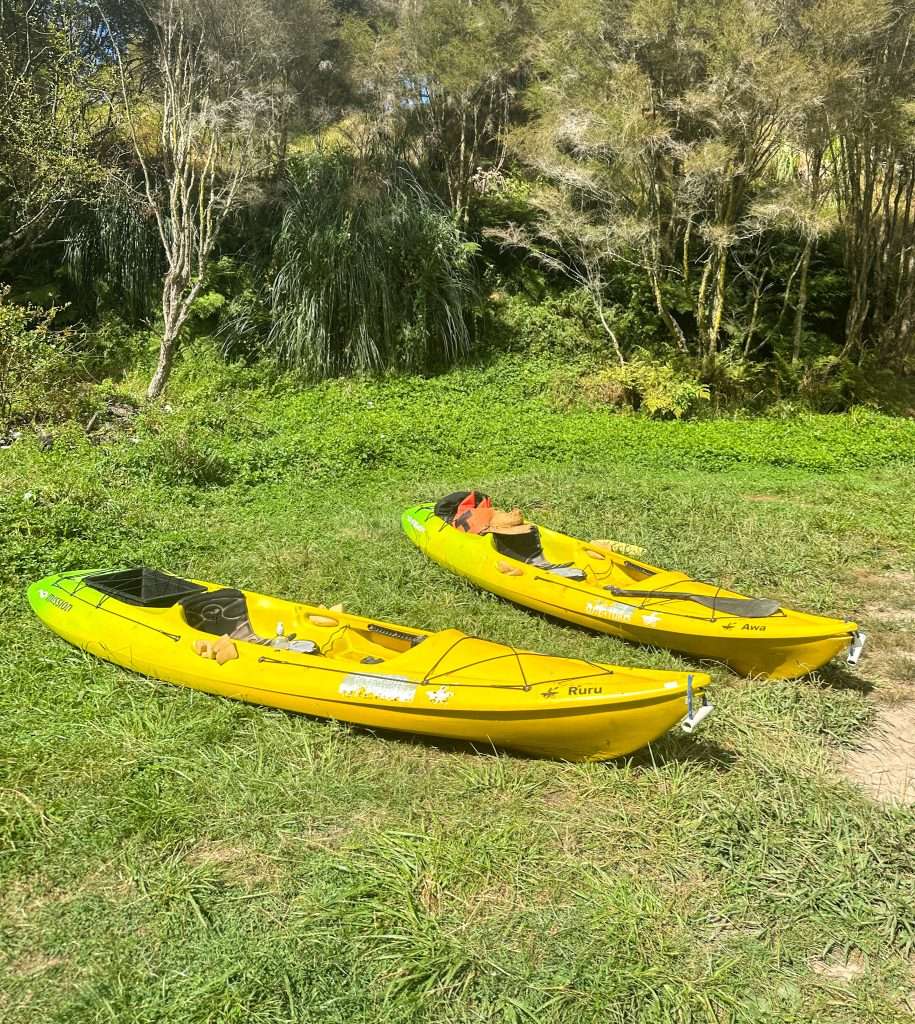
As with most organised water sports activities, the kayaking trip I joined began with the issuing of a life jacket and safety briefing. If you haven’t been kayaking before, then you can expect to receive some instructions on what to do and if you don’t…make sure you ask for them!
2. On the Lake!
Once we had our kayaks and were launched, we paddled along the southern edge of the lake.
My tour then took us over the submerged Horahora village and power station that had once produced electricity for the early goldfields in the town of Waihi in the Coromandel Peninsula. The Horahora power station was flooded as part of the development of the Karapiro power station in 1947.
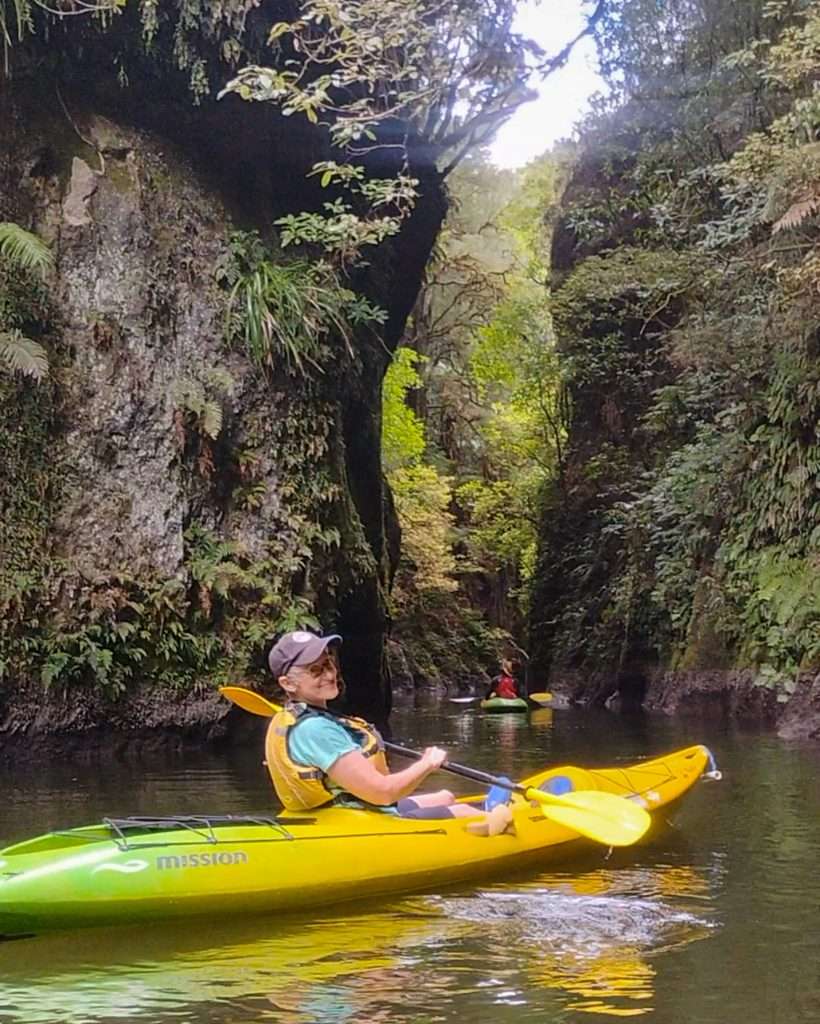
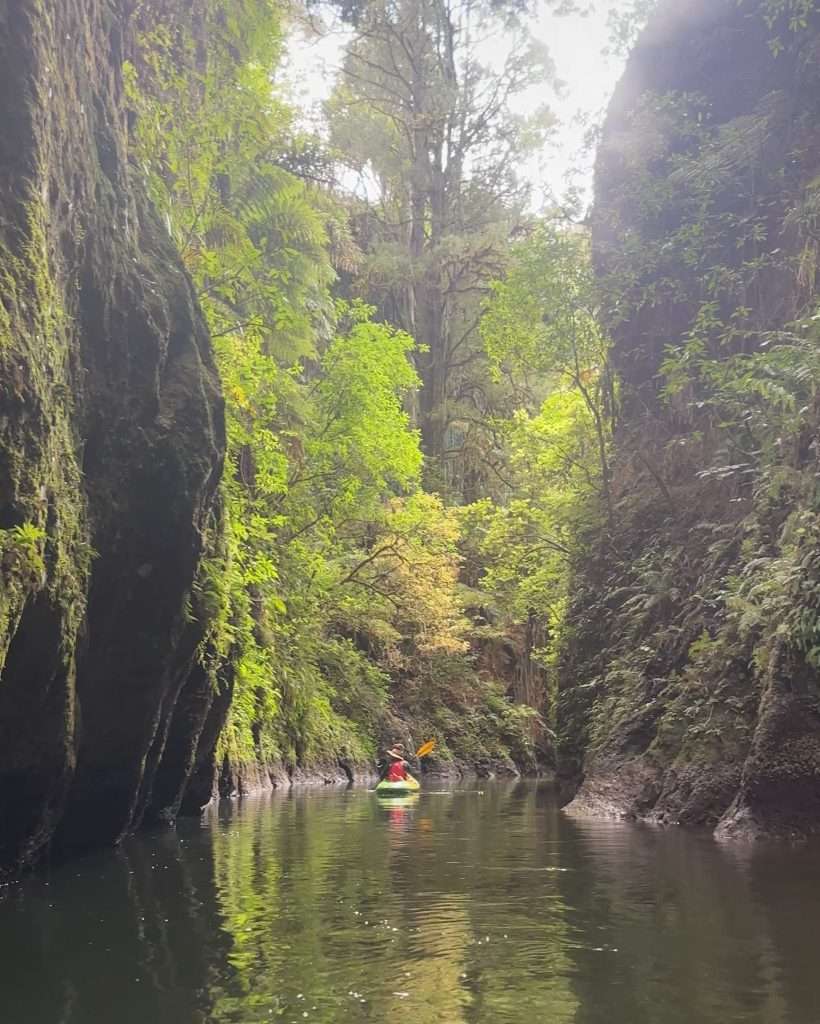
After leaving the submerged power station, we paddled beneath a road bridge before entering the Pokaiwhenua Stream and a specular canyon that will have you feeling all kinds of prehistoric vibes! The silence here is broken only by the sound of water and birdsong. Lush ferns and old giants create a rooftop that has you feeling secluded and as if you have stepped back in time! It really did feel to me that the time in the canyon was very much an authentic New Zealand nature experience and the Pokaiwhenua Stream a true hidden gem.
It’s interesting to note that the Pokaiwhenua Stream starts in the hills near the Mamaku Plateau, the same area where the stunning waters of the Putaruru Blue Spring originate.


If all that paddling sounds tiring, don’t worry! We did stop along the way for a rest, drink and snack.
The current of the stream on the return journey allows you to float along with no real effort needed. You can just enjoy the experience and soak up the atmosphere. Once back onto the river however, you may need to paddle into the wind depending on weather conditions at that time.
Throughout the tour, our guide provided a lot of information on the history of the lake and its ecology. Asking questions, sharing stories and generally having a great time were the order of the day.


3. What’s Included
The tour I joined last around 2.5-3 hours and included the following:
- kayak and paddle
- life jacket
- water shoes
- small dry bag
- drink and snack
- tour guide
4. What to Take Kayaking
You don’t really need to take much, however I would suggest the following:
- water
- waterproof case for phone/camera
- spare clothes in case you get wet
- towel
I also took my own water shoes, however as I mentioned above, these are supplied by the tour company.
5. What to Wear Kayaking
The official Riverside Adventures website states that overpants and splash jackets are provided. I was not offered these during my tour, but I was there in summer when it was hot and dry. I imagine these will be provided if the weather conditions require it and/or for the evening tours. That said, here are my suggestions for what to wear:
- quick drying shorts or trousers – no jeans!
- short or long sleeved rash guard for protection against the sun
- sunscreen – the New Zealand sun is very strong so protect yourself/your family
- sunglasses (if its really sunny) – you may want to take these off however once in the canyon where the sun doesn’t penetrate as much through the trees
- hat for extra sun protection

My Tips for Kayaking Lake Karapiro
I found kayaking on Lake Karapiro fairly straightforward but here are a few tips to help you have the best time too:
- arrive a little early to give yourself time to get ready, go to the toilet etc.
- whether you’re a beginner or experienced, listen to the guide and follow their instructions
- make sure your phone battery is charged
- put sunscreen on before you leave land

Final Thoughts
I had been near and past Lake Karapiro many times growing up in Hamilton but this was my first experience on the lake and I highly recommend it.
The real gem however was kayaking along the Pokaiwhenua Stream where the vibe was prehistoric! It felt very much as if this is how New Zealand was before human habitation and in that regard, it was a real treat to experience it. For even more atmosphere, a glowworm kayak tour option is available…and now on my own to do list!
Lake Karapiro’s location in the Waikato makes it a perfect stopping off point for those exploring the region so I hope I have convinced you to include a Karapiro kayak adventure in your itinerary!
If you are planning a road trip through the North Island or simply want to discover more, then do read my posts 8 Things to Do in the Waikato and 12 of the Best Things to Do in Hamilton.
Finally, if you need any further assistance with planning a trip to New Zealand, do check my Resources page.

Disclaimer – Information correct at the time of writing but do check before visiting.



Leave a Comment