

Last updated on July 28th, 2026 at 03:07 pm
Budapest is a city that keeps drawing me back. With its magnificent architecture, fascinating history, vibrant café culture and spectacular setting on the Danube, it’s easy to see why it’s considered one of Europe’s best city-break destinations.
Having visited Budapest several times, I’ve explored many of its iconic landmarks as well as some lesser-known corners. In this guide, I’ll share 12 of the best things to do in Budapest to help you make the most of your time in this remarkable city.
Before You Go
To help you plan your trip to this beautiful city, I’ve set out below some basic information.
1. How Many Days Do You Need in Budapest?
There are a lot of wonderful things to see in Budapest and as is always the case, the longer you stay the more of them you can see. That said, I do think that three days is a perfect amount of time to explore the city and get to many of the main attractions, but be warned, you’ll need comfy shoes….!
2. How to Get to Budapest
Direct flights are available from most major airports in the U.K. and from other main European cities with most flights taking 2-3 hours. You can review flight options and book here:
Alternative ways of getting to Budapest include trains and buses, renting a car and maybe even arriving as part of a river cruise!
3. How to Get from the Airport
If you are arriving by air then getting from the airport to central Budapest is fairly straightforward. Your options are:
- taxi
- public transport – bus route 100E. Check the Budapest transport website for up to date visitor information
- shared transfer. I used the miniBUD and purchased my tickets on arrival at the airport. Check the miniBUD website for up to date information including prices.
4. Where to Stay in Budapest
You are spoilt for choice in Budapest! Regardless of which side of the River Danube you stay on you will have the choice of budget through to more luxury hotels and accommodation.
I stayed at (and can recommend) the Novotel Budapest Danube which is located on the Buda side, directly opposite the Hungarian Parliament Building. I would add a word of caution however – Buda is a quiet, more subdued part of Budapest and there weren’t as many evening restaurant options once back at the hotel.
You can review all available accommodation and book here:
5. What Currency to Use
Hungary is a member of the European Union but it has not adopted the Euro. Instead, it retains its own currency, the Forint, referred to in this post as HUF.
A Little History
Budapest has only existing since 1873 when the cities of Buda, lying on the western bank of the River Danube and Pest, located on the eastern, were united. Before that, the area was conquered by the Romans, then Atilla the Hun before seven Hungarian tribes conquered the Carpathian Basin, within which Hungary lies, in 896.
Hungary’s first king, King Stephen, was crowned on 25 December in the year 1000. The Árpád Dynasty, of which Stephen was a part, survived until 1301. Several European dynasties thereafter fought for the Hungarian throne. It was during this time that Hungary’s greatest medieval rule was crowned, King Mátyás. By 1541 however, the Ottoman armies had conquered Hungary and occupied Budapest.
In 1686 the Habsburg armies captured Budapest from the Turks, massacring the Jews and destroying Buda and Pest in the process. Over time their ruthless hold on the cities lessened and although rebellions were put down, eventually Hungary became a more prosperous player within the Hapsburg Empire leading to the creation of the ‘dual monarchy’ of Austria and Hungary which lasted until 1918.
The twentieth century brought anti-Semitic rule, Nazi occupation (despite joining the Axis powers in 1941), Communist takeover, an uprising in 1956 and the eventual end of Communism in 1989 with the twenty first bringing EU Membership.
How to Get Around
The River Danube separates Buda and Pest and therefore getting around on foot, whilst entirely possible, can be quite tiring and, of course, eat into your time in the city.
There are some alternative ways for getting around Budapest you can consider including:
- Public Transport – easy to use and affordable!
- Taxis – convenient but more expensive than public transport
- Hop On Hop Of Bus Tour – has the added benefit of a commentary and included walking tour.
One of my favourite activities when in a new city however is to join a walking tour. A guided tour is a great way to get around, to get orientated and to learn about the history, stories and scandals of a city. There are a number of wonderful walking tours in Budapest. I used Guruwalk and can highly recommend the tour run by Robert!
What to Do in Buda
Located on the western bank of the River Danube, Buda is the quiet, more residential side of Budapest. The Vár (or Várhegy – Castle Hill) dominates Buda and offers wonderful views over the Danube and Pest. It’s in this area, also referred to as the Castle District, that you will spend most of your time when on this side of the river.
Here are my suggestions of wonderful things to do on the Buda side of Budapest:
1. Ride The Sikló
The Sikló, or funicular, is an easy and unique way to get up to and down from the Castle District. It is located at Clark Adam Square, a short walk from the Chain Bridge.
Opening in 1870, the Sikló functioned until it was destroyed in 1945. The wooden carriages are replicas and are divided into three sections to ensure everyone has a good view – the bottom carriage offers the best views.
An adult ticket on the Sikló costs HUF5500 for the return journey and HUF3000 for kids aged 3 to 14 (under 3s are free).
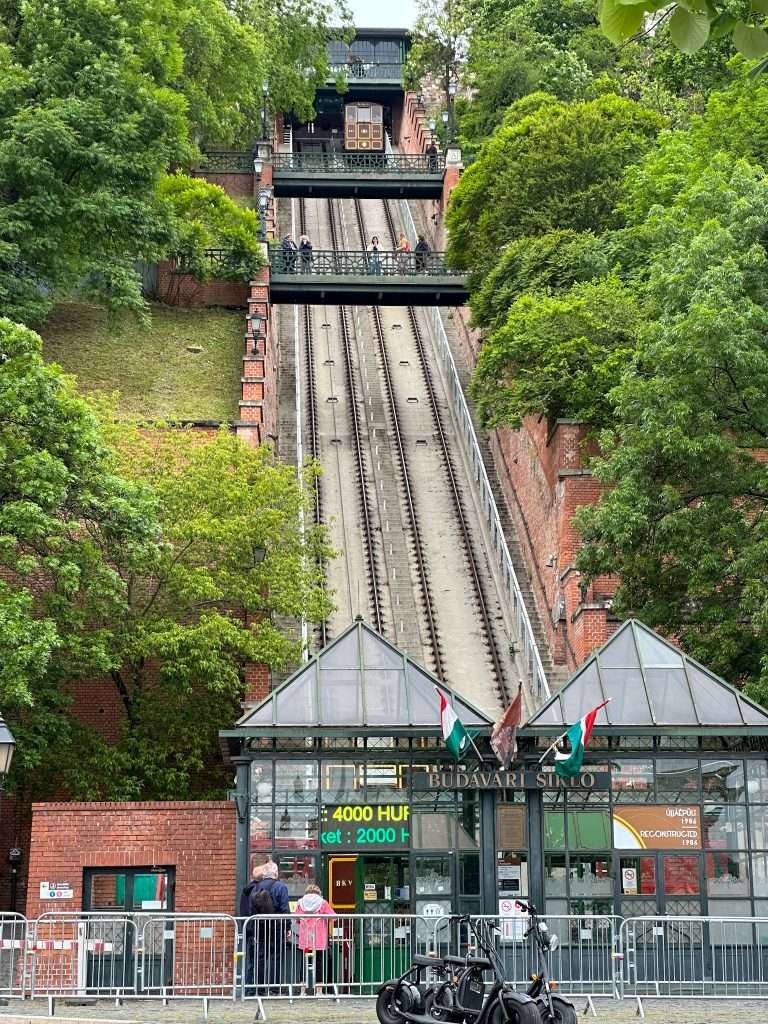
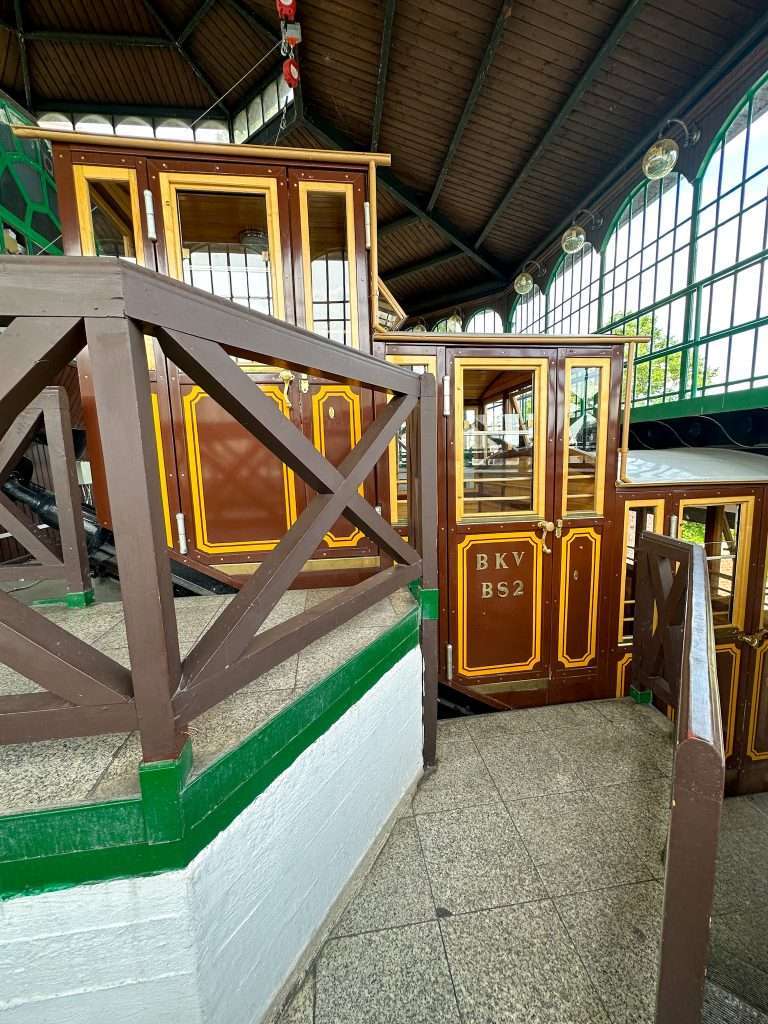
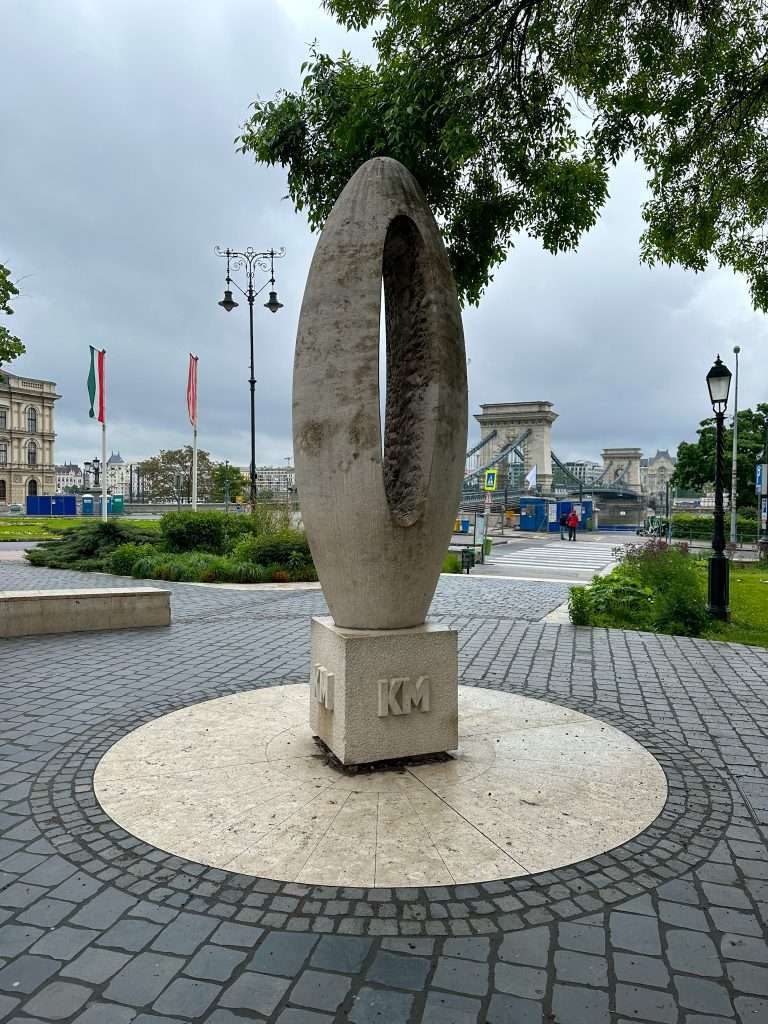
At the foot of the Sikló is kilometre zero, a monument from which all distances from Budapest are measured. The upper station of the Sikló is located next to the Royal Palace.
2. Visit the Royal Palace
The Royal Palace (or Buda Castle) is located at the southern end of the Vár and is made up of buildings reconstructed following World War II. In fact, I read that this was the 86th time that the Vár had to be rebuilt over seven centuries!
There are two major museums located at the Royal Palace – the Hungarian National Gallery and the Budapest History Museum.
The terrace of the Royal Palace offers stunning views over the Danube River, Parliament Building and Pest generally.
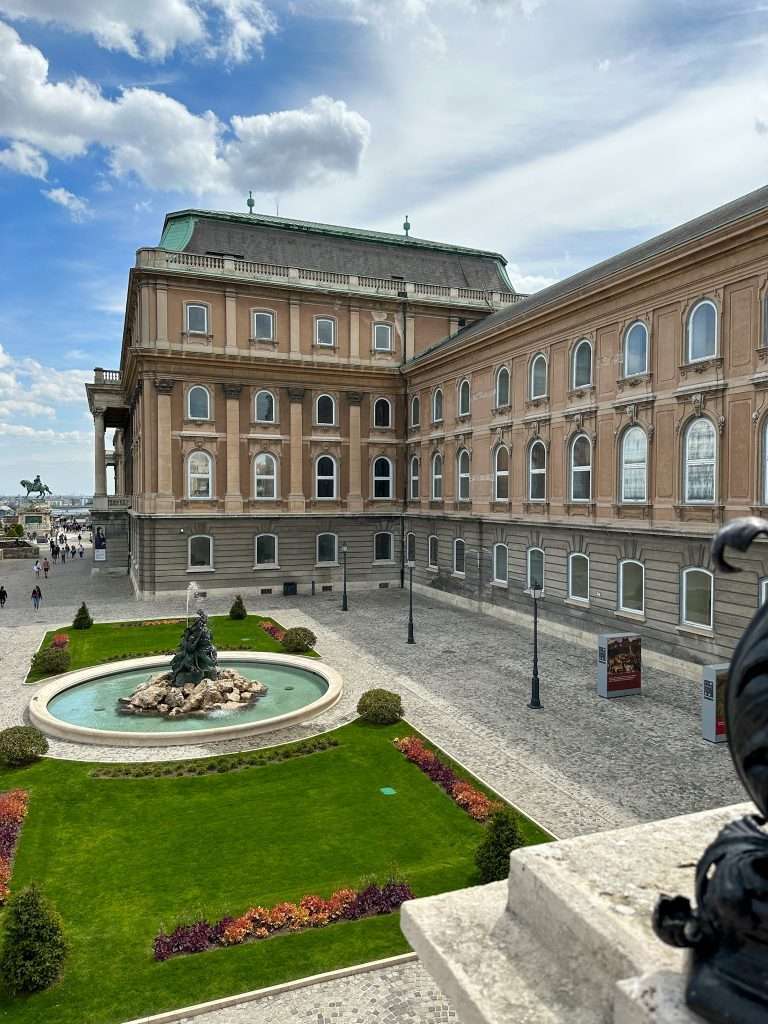
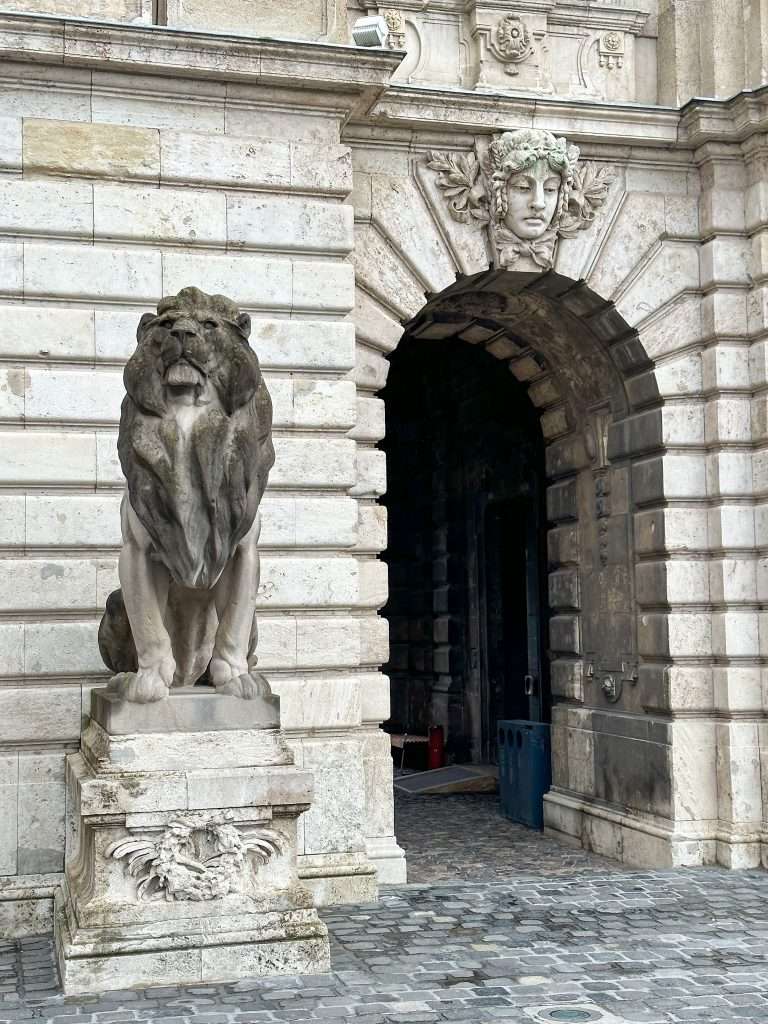
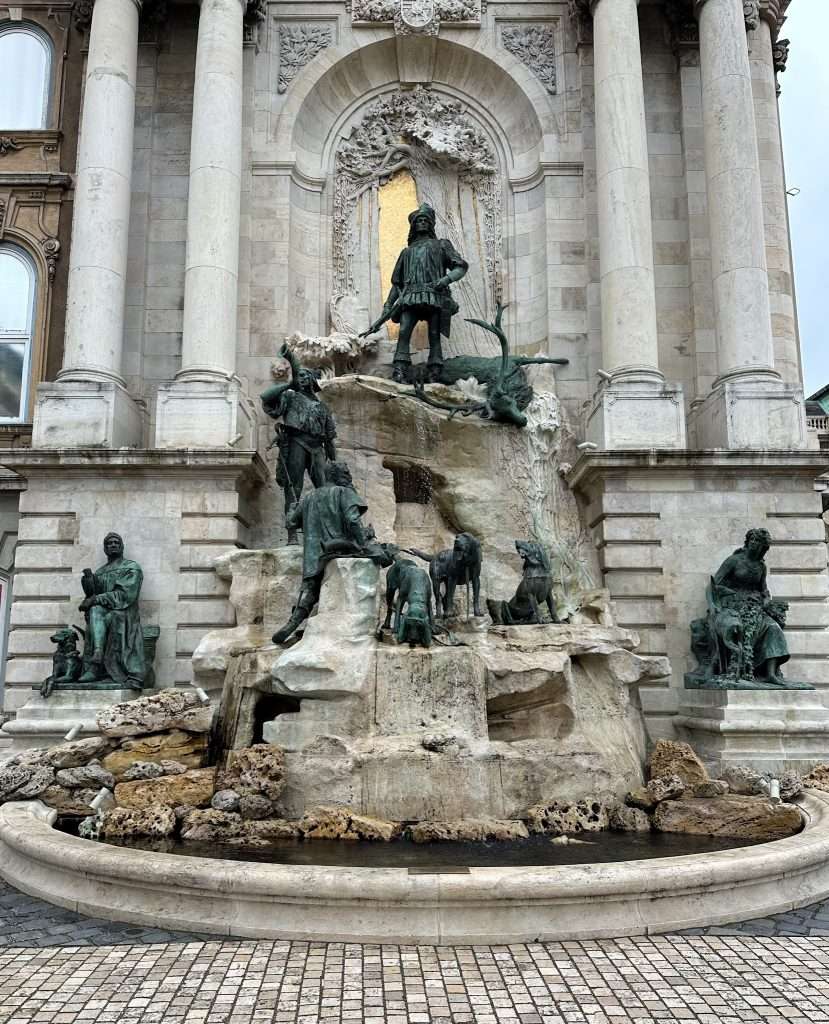
Nearby are Lion Courtyard and Mátyás Fountain. The courtyard, which is accessed through an archway guarded by lions, is totally enclosed by wings of the Palace. The Mátyás Fountain is an impressive fountain whose bronze figures tell the story of a peasant girl who meets the King out hunting, falls in love with him and dies of a broken heart when she learns his identity and realises the futility of her dream.
3. Explore Matthias Church
North of the Royal Palace is the imposing Matthias Church (also known as the Mátyás Church). Although constructed in the late 19th century, it is built onto portions of the original 13th century church. Its colourful tiled roof and rich interior make it a wonderful attraction and one of Budapest’s most popular.
Tickets cost HUF3400 for the church and HUF4000 for the tower for adults (concessions are available). The ticket office is located opposite the main door into the Church. Check the official Matthias Church website for up to date visitor information.
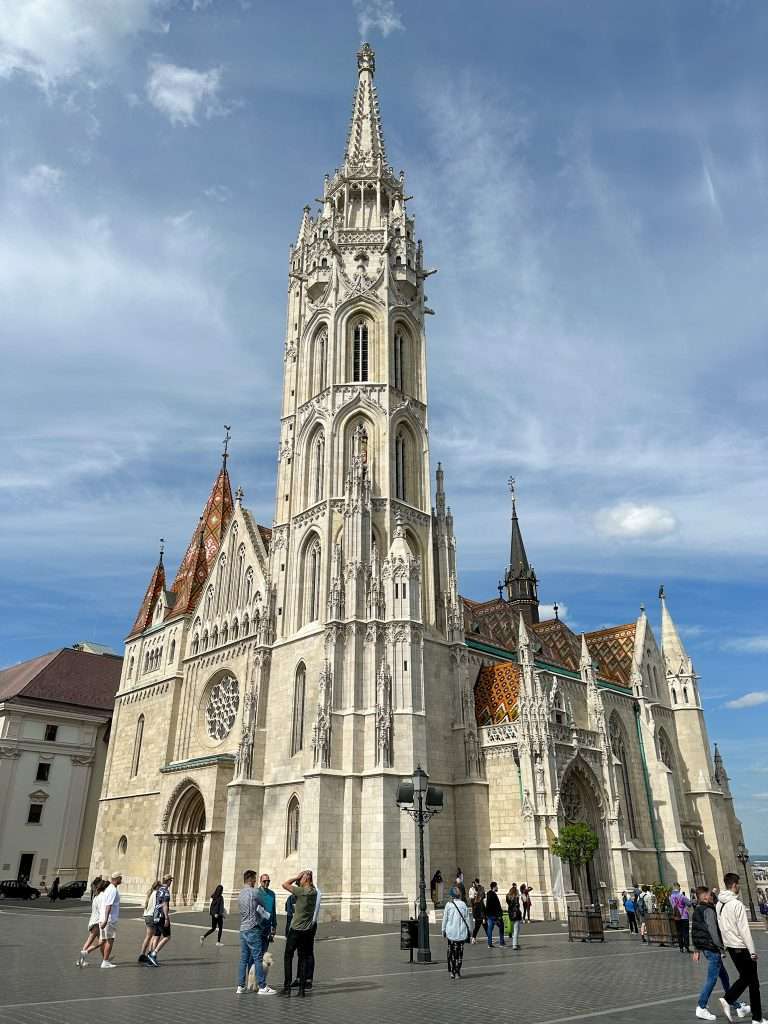
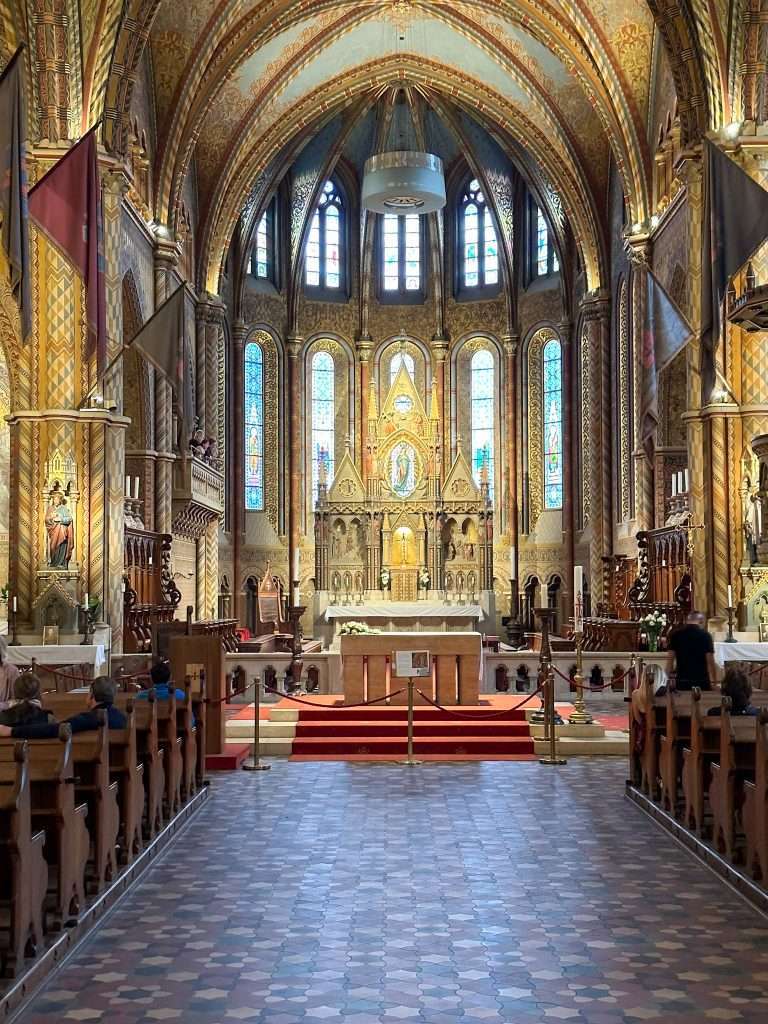
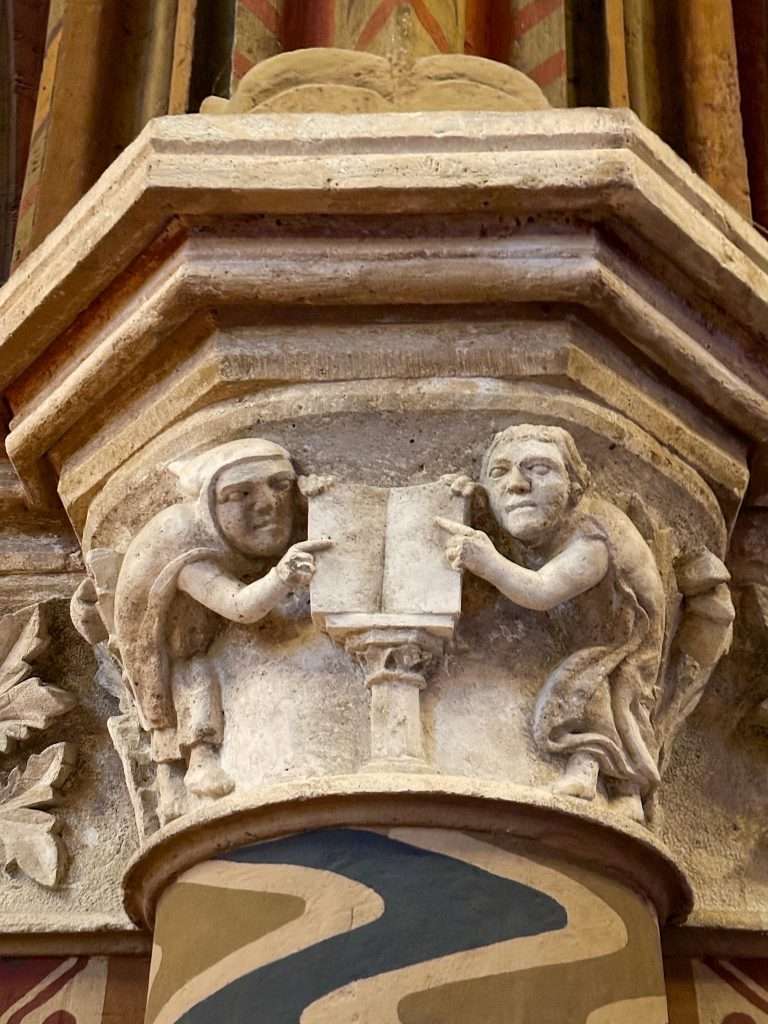
When visiting Mátyás Church do look out for Holy Trinity Column located on Trinity Square. Erected in 1713 in thanksgiving for the abatement of a plague, the Column is very ornate and depicts a scene of people dying from the Black Death.
4. Stroll Around Fisherman’s Bastion
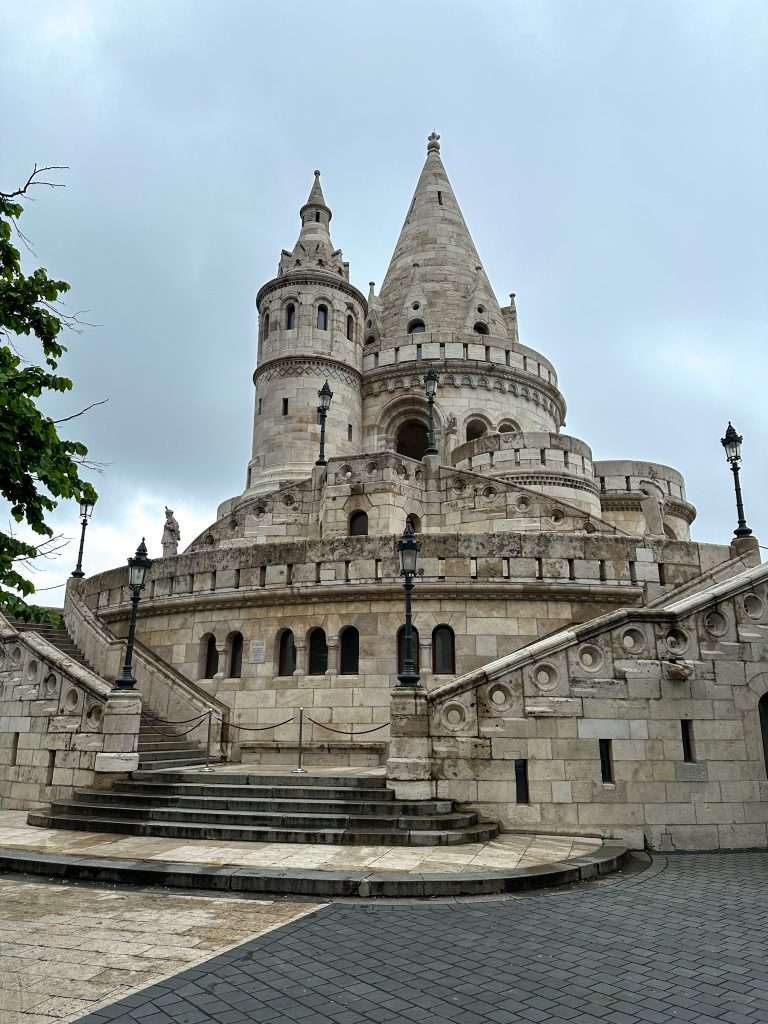
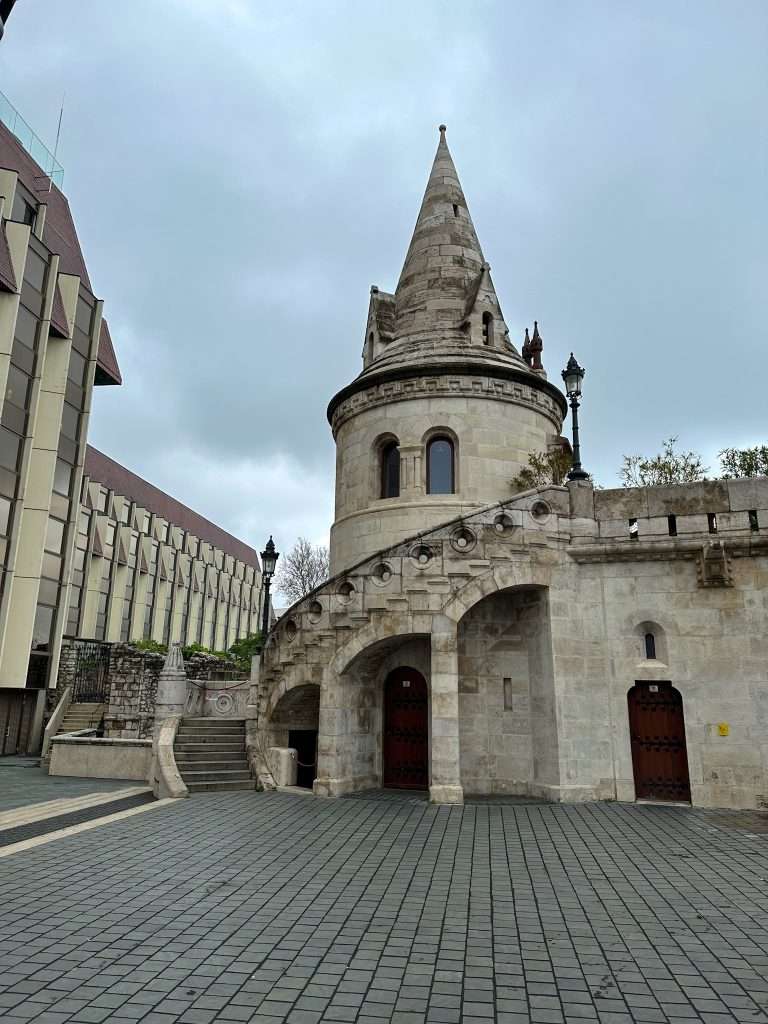
A short walk from Mátyás Church is Fisherman’s Bastion. Another impressive sight, its main facade runs parallel with the River Danube, is 140 metres long and offers fabulous views. The 7 turret-like towers symbolise the 7 Magyar tribes who founded Hungary.
It is free to access unless you want to go to the upper level – I didn’t do that but can’t imagine that the view are much better.
Fisherman’s Bastion is a popular place for those seeking an ‘insta’ worthy background!
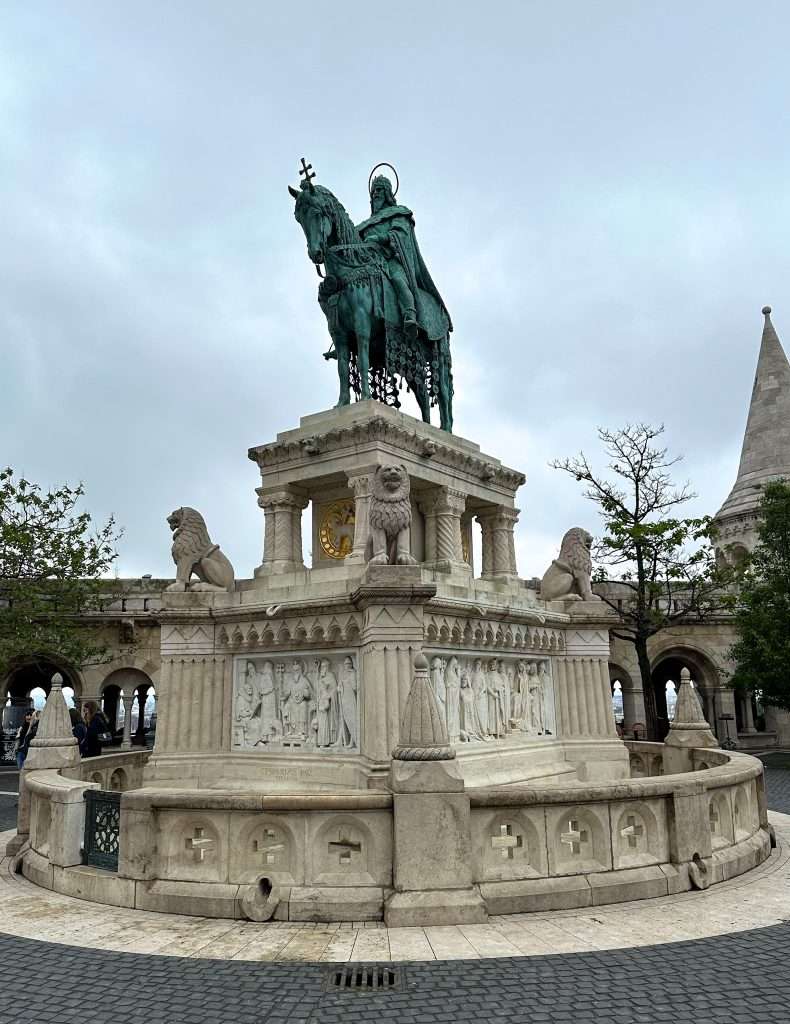
Located between Fisherman’s Bastion and Mátyás Church is the large statue of King Stephen pictured above.
5. Visit Museums
The Vár is home to a number of really interesting museums. I set aside time to visit two – the Budapest History Museum and the Semmelweis Medical Museum.
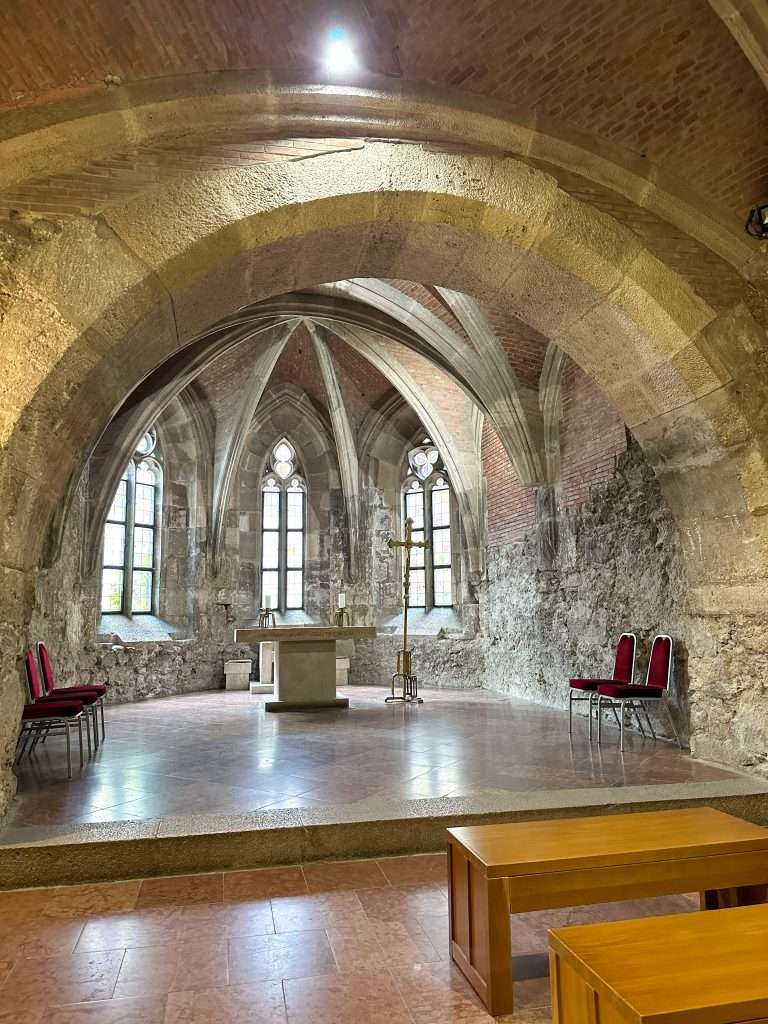
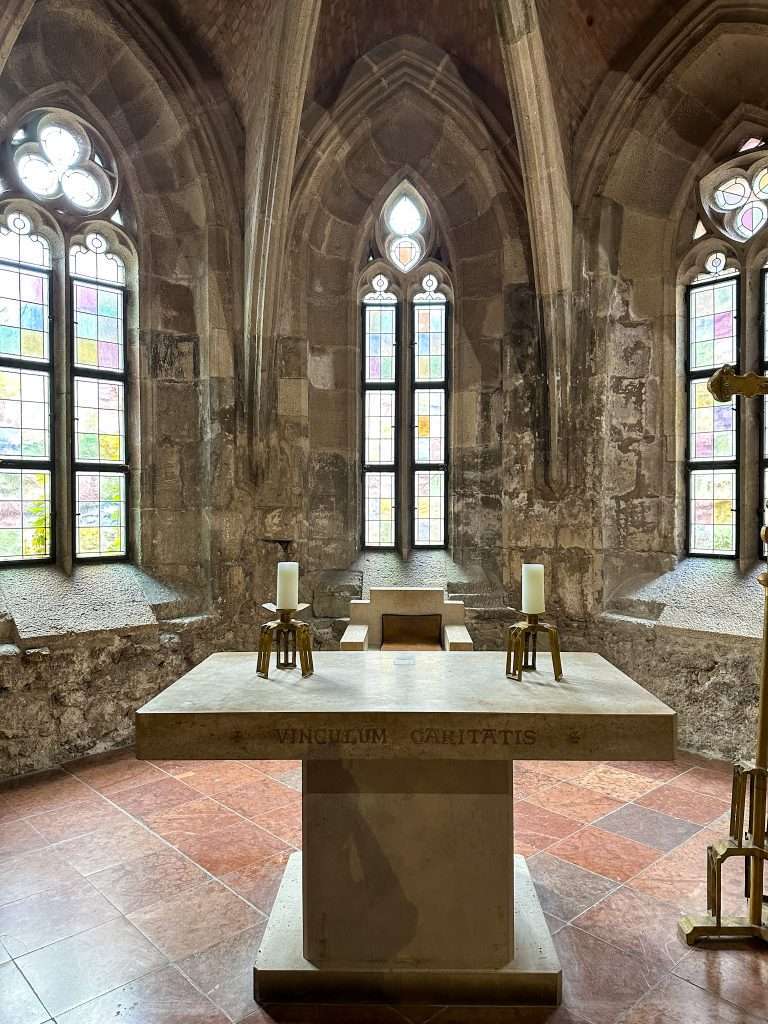
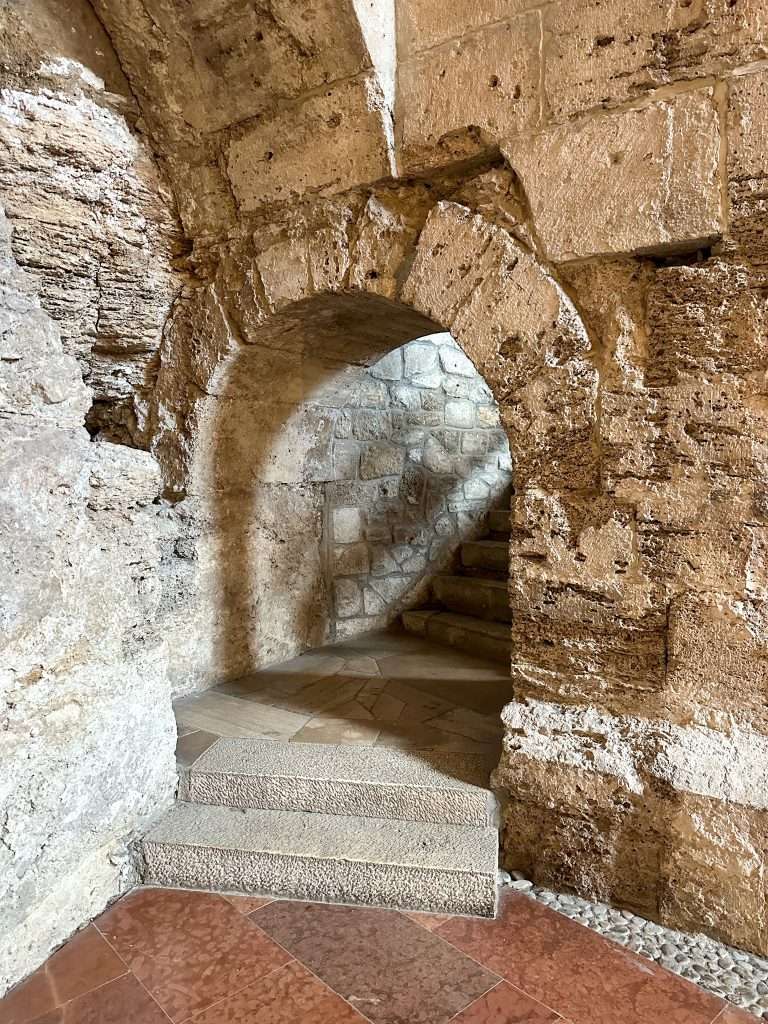
The Budapest History Museum is located within the Royal Palace and tells the 2000 year history of the city over several floors and through many artefacts. Visitors can see parts of the medieval castle and the former castle chapel.
Tickets for the museum of HUF3800 (concessions available). Combination tickets for the museum and St Stephen’s Hall are also available. Check the official Budapest History Museum website for up to date visitor information.
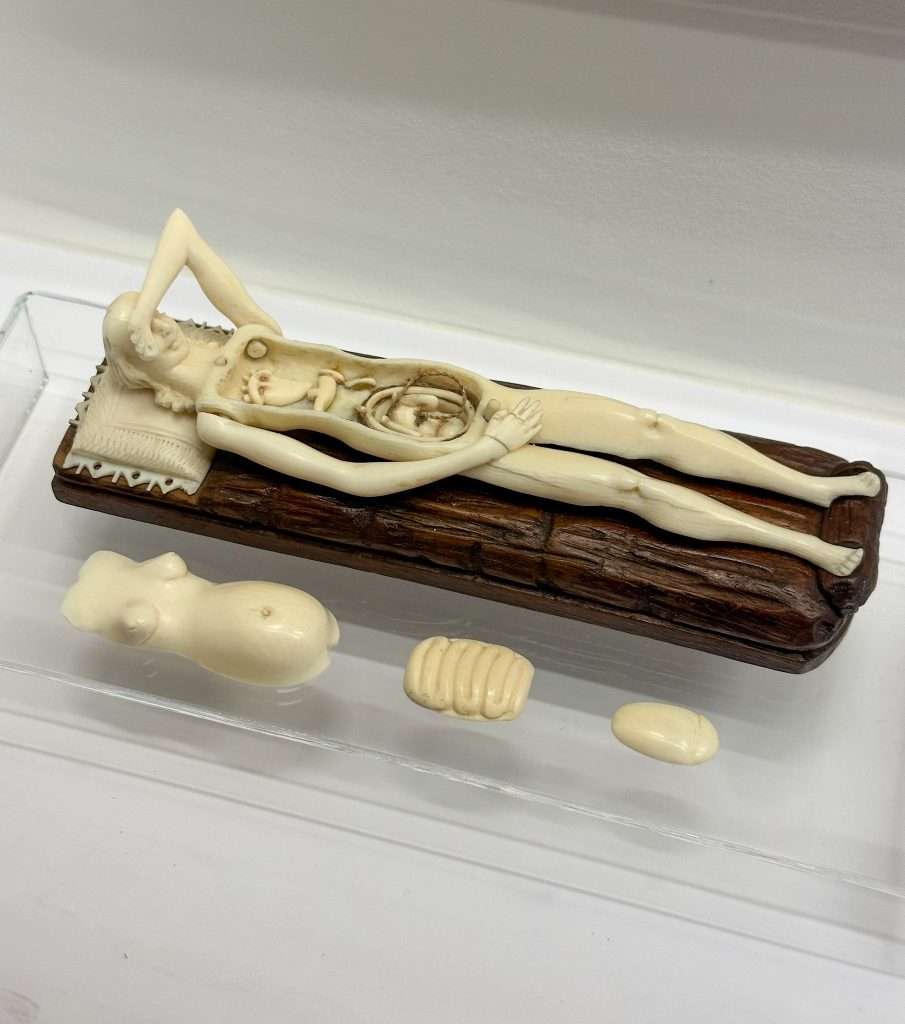
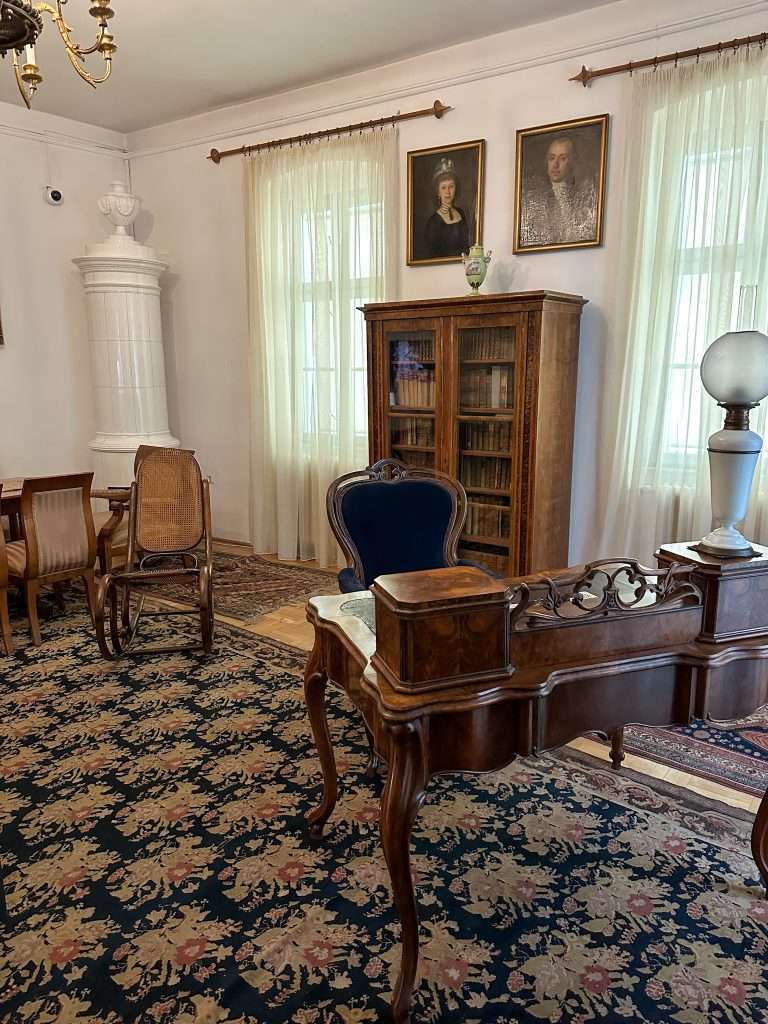
The Semmelweis Medical Museum displays an interesting range of artefacts relating to the history of medicine. The museum is named after Doctor Ignaz Semmelweis (b. 1818) who lived in the house within which the museum is located. An early pioneer of antiseptic procedures, he is credited with saving many women from ‘childbed fever’ (puerperal fever).
Tickets cost HUF1400 for adults.
What To Do in Pest
Located on the eastern bank of the River Danube, Pest is known for being the place where all the action happens. Many of Budapest’s wonderful attractions are located here along with a wide range of restaurants and shops.
Here are my suggestions of wonderful things to do on the Pest side of Budapest:
1. Visit the Hungarian Parliament
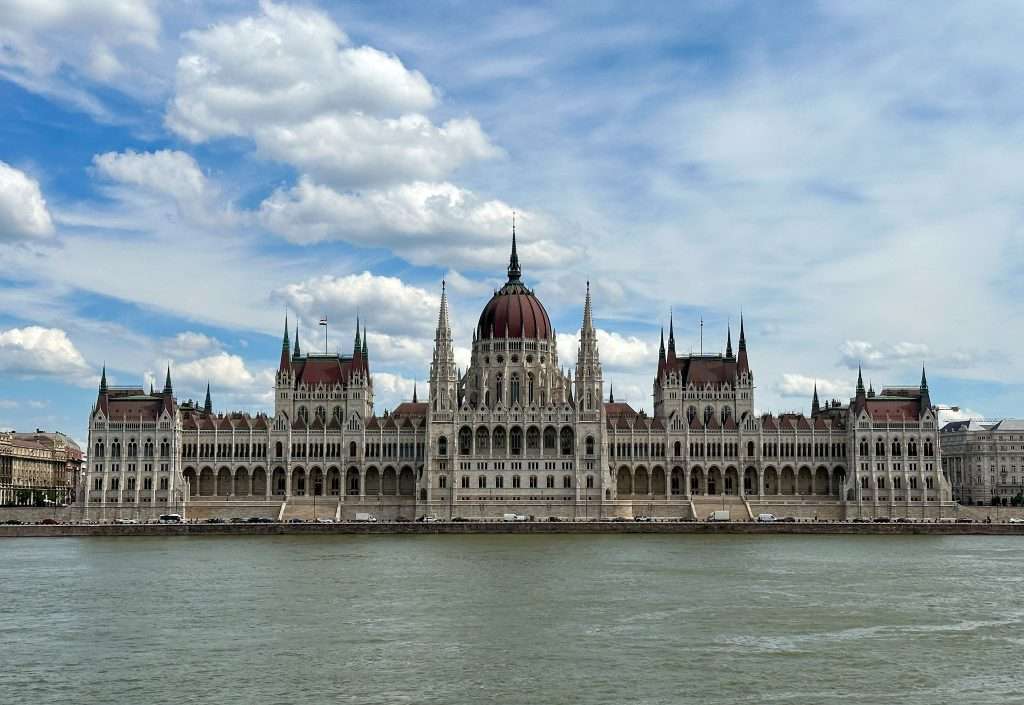
Dominating Pest is of course the famous Hungarian Parliament building and what a sight it is! A must see in Budapest, the Parliament building occupies 268 metres along the banks of the River Danube in Kossuth Square. It opened in 1902 and the centre dome is 96 metres high, a nod to the year Hungary was founded (896).
Tours of the Parliament are available but do book in advance. Check the official Visitors Centre site for up to date visitor information and a link to the site for purchasing tickets online. Tickets are available for purchase on the day at the Visitors Centre, but these are limited and sell out quickly so avoid being disappointed (like I was!) and book in advance.
The Visitors Centre is located underground to the north of the Parliament in Kossuth Square.
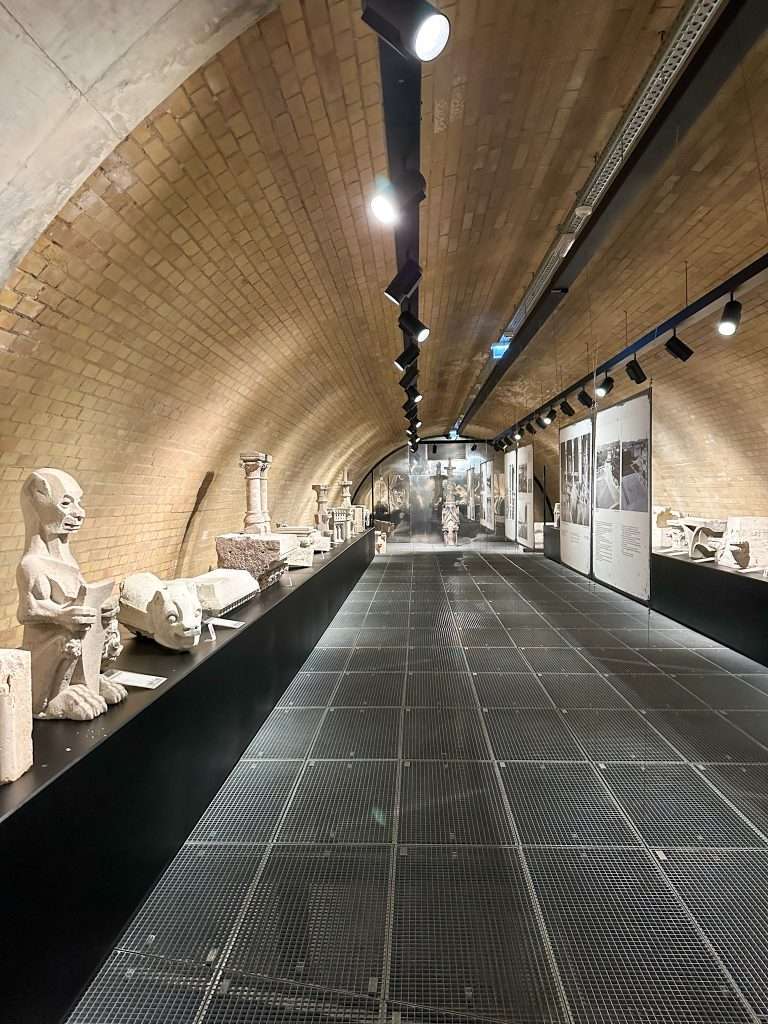
Located in Kossuth Square are a couple of small, free museums – the Lapidarium and the 1956 Memorial site.
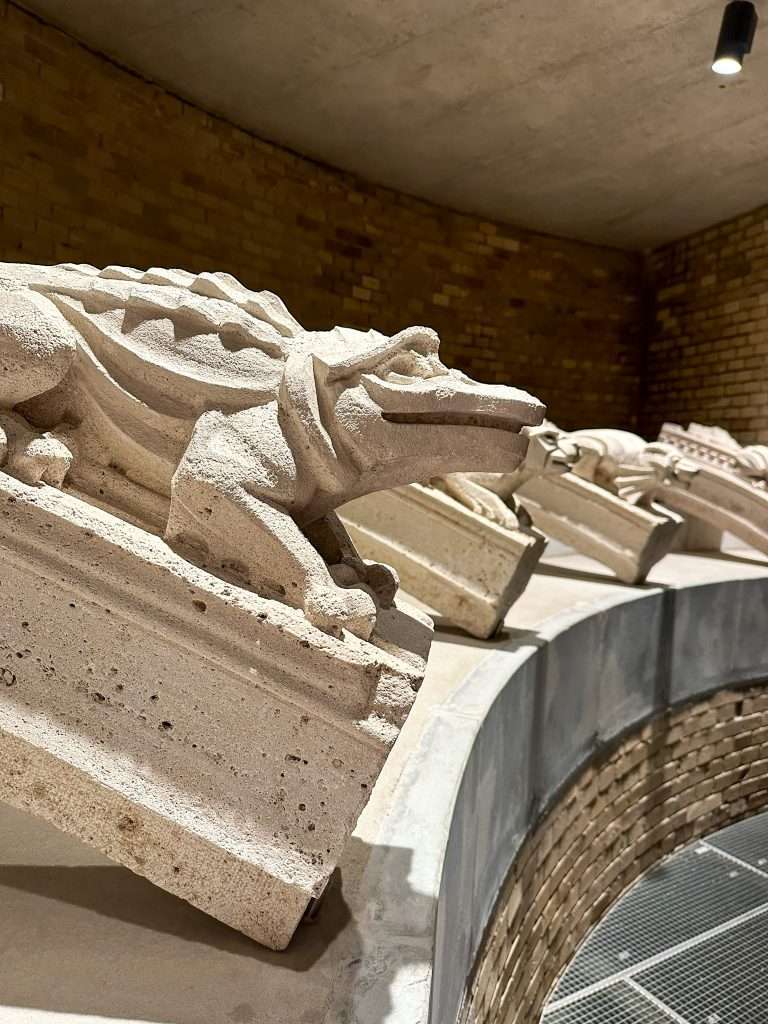
The Lapidarium contains a lot of stonework including gargoyles, removed from the Parliament during restoration works. It is housed within the old northern ventilation tunnels that were part of the original heating and cooling system for the Parliament building.
The 1956 Memorial is housed within the southern ventilation tunnel and is a memorial to those who were killed in Kossuth Square during the 25 October 1956 uprising against the communist regime. There is a moving interactive display where visitors can learn about the individual victims.
2. Pay Your Respects at the Shoes on the Danube
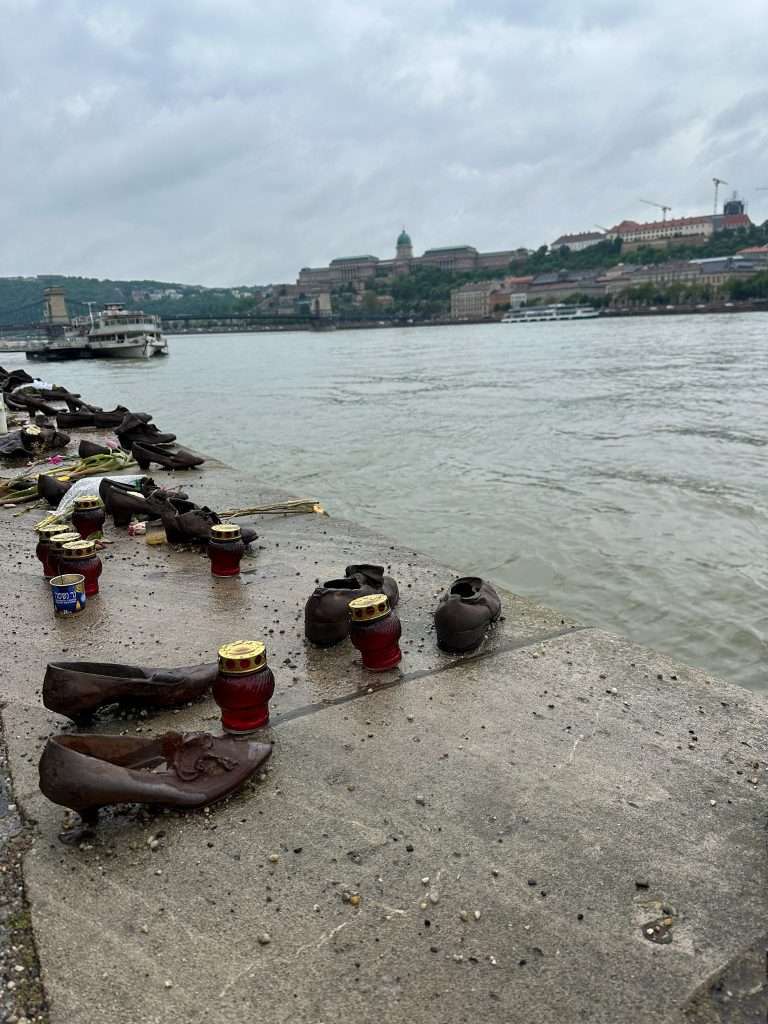
Located between the Parliament building and the Chain Bridge on the banks of the River Danube is another moving memorial, Shoes on the Danube. The cast iron shoes honour Jews murdered in Budapest in 1944-45, the victims having been told to remove their shoes (which were valuable at the time) before being shot, their bodies falling into the river.
3. Visit St Stephen’s Basilica
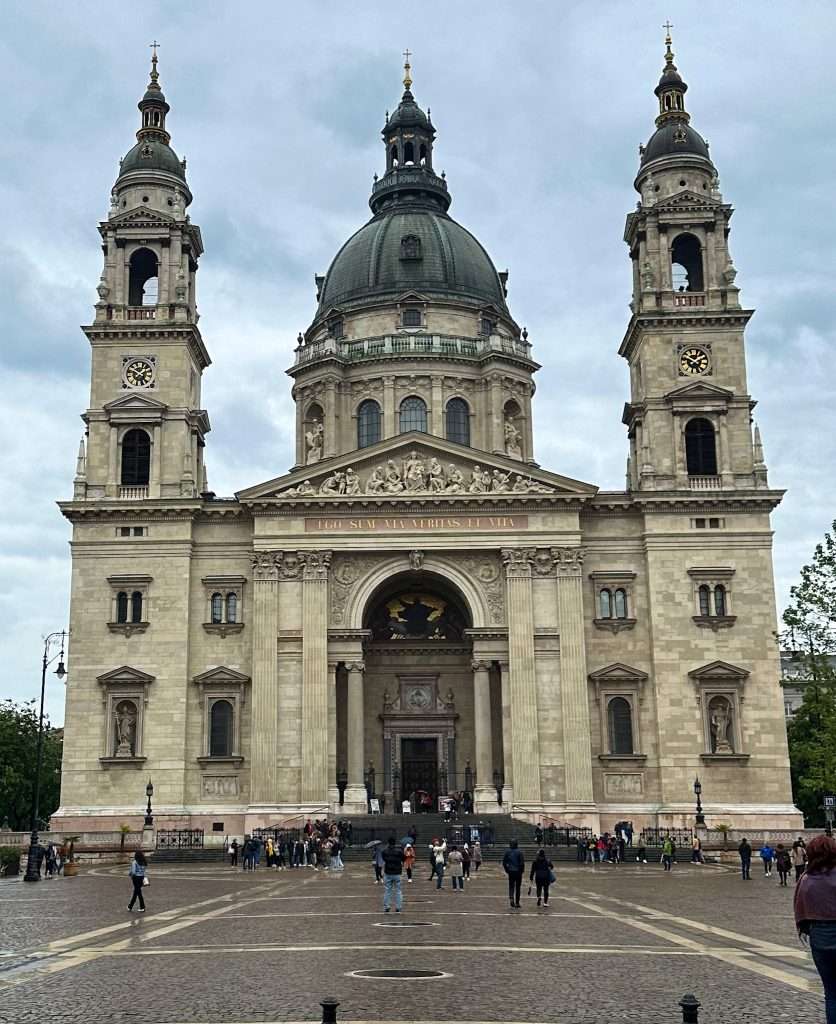
Another wonderful thing to do in Budapest is to visit the majestic St Stephen’s Basilica. Construction began in 1851 but the Basilica wasn’t completed until 1905 – the dome had in fact collapsed during a storm in 1868 and had to be rebuilt which contributed to the delays. Now standing 96 metres high (again, that significant number 96!) the dome is flanked by two bell towers.
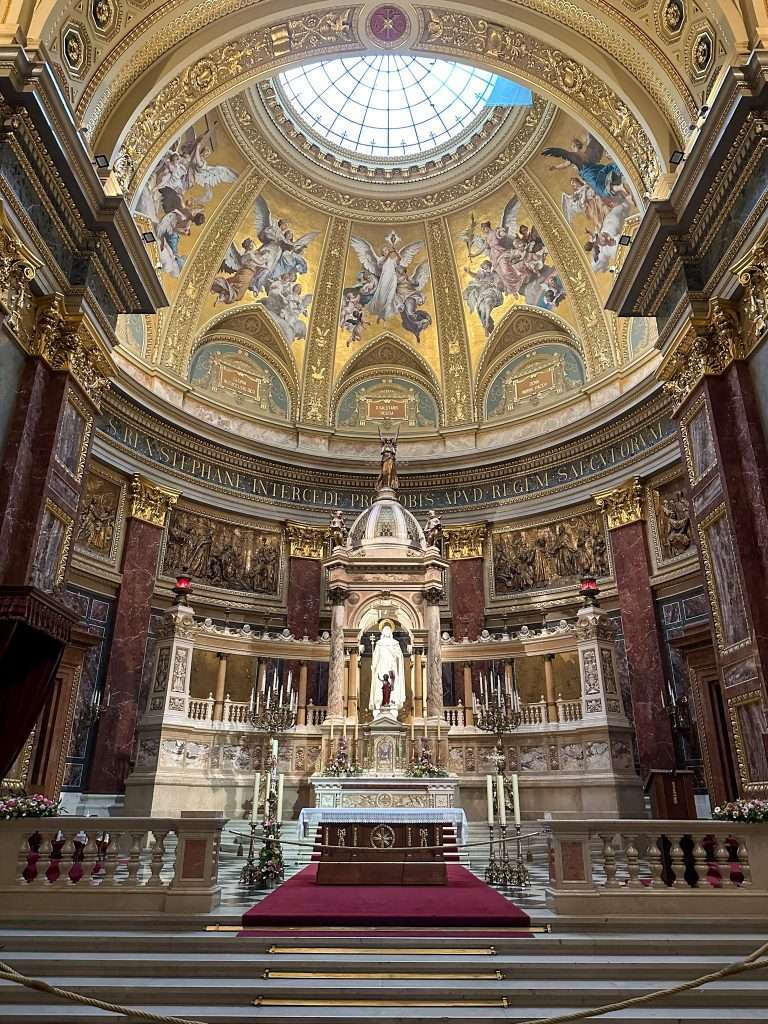
The Basilica is, as you would expect, as impressive inside with its ornate chapels, altar and statuary as it is out. One of the main attractions however is the mummified hand of St Stephen, Hungary’s holiest relic.
There are various ticket prices depending on what you want to see – I chose just to see the Church which costs HUF2600 – check the official Basilica website for up to date visitor information including pricing.
4. Visit the House of Terror
Once the headquarters of the state secret police – the fascist Arrow Cross Party during WWII and then the Communist ÁVO – the House of Terror is now a museum detailing the crimes of Hungary’s fascist and communist regimes. From the large tank in the central atrium to the lift which descends into the basement where reconstructed torture chambers and cells are located, the whole experience is one you won’t forget.
I would recommend the audio guide when visiting – this cost HUF2000 in addition to my ticket price of HUF4000. Check the official House of Terror website for up to date visitor information. Photography is not permitted inside.
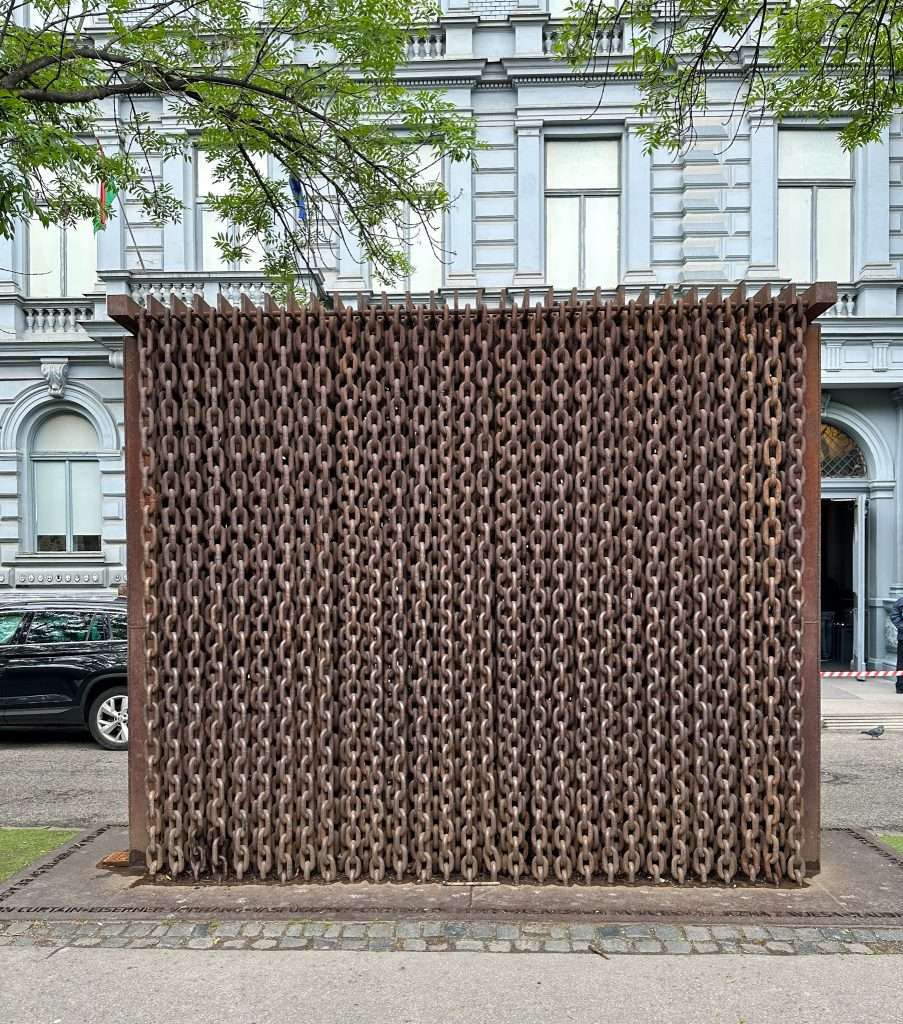
This Iron Curtain is located in front of the House of Terror and is a monument to the existence of the wall dividing people and the victory in tearing it down.
5. Admire the Architecture
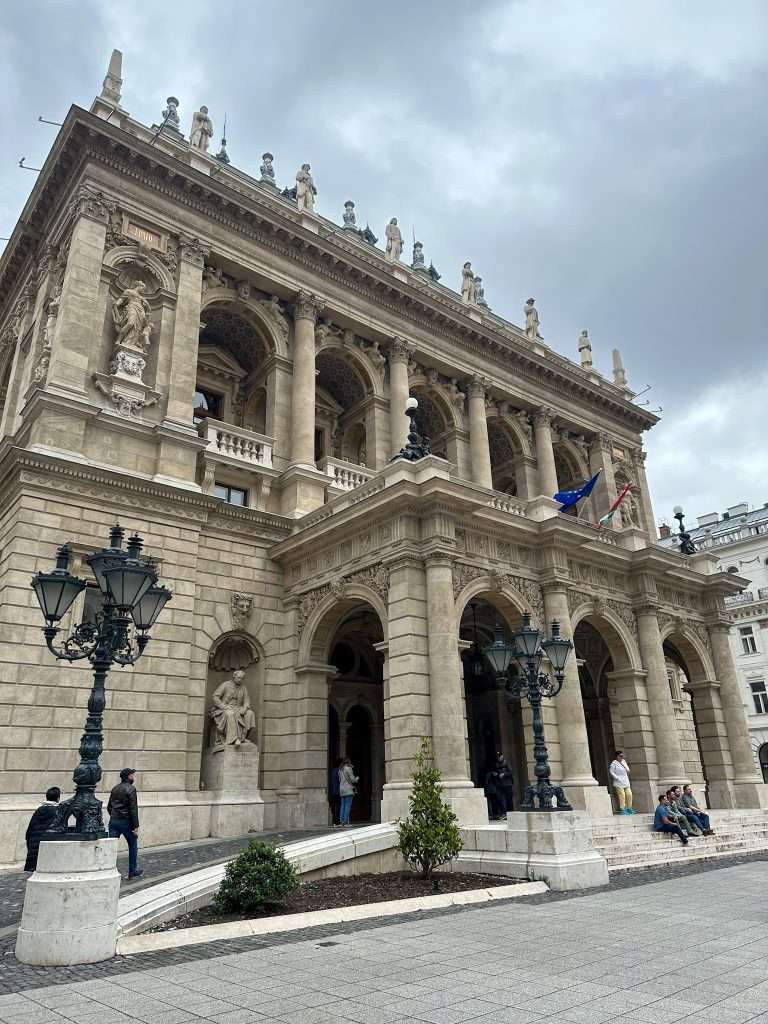
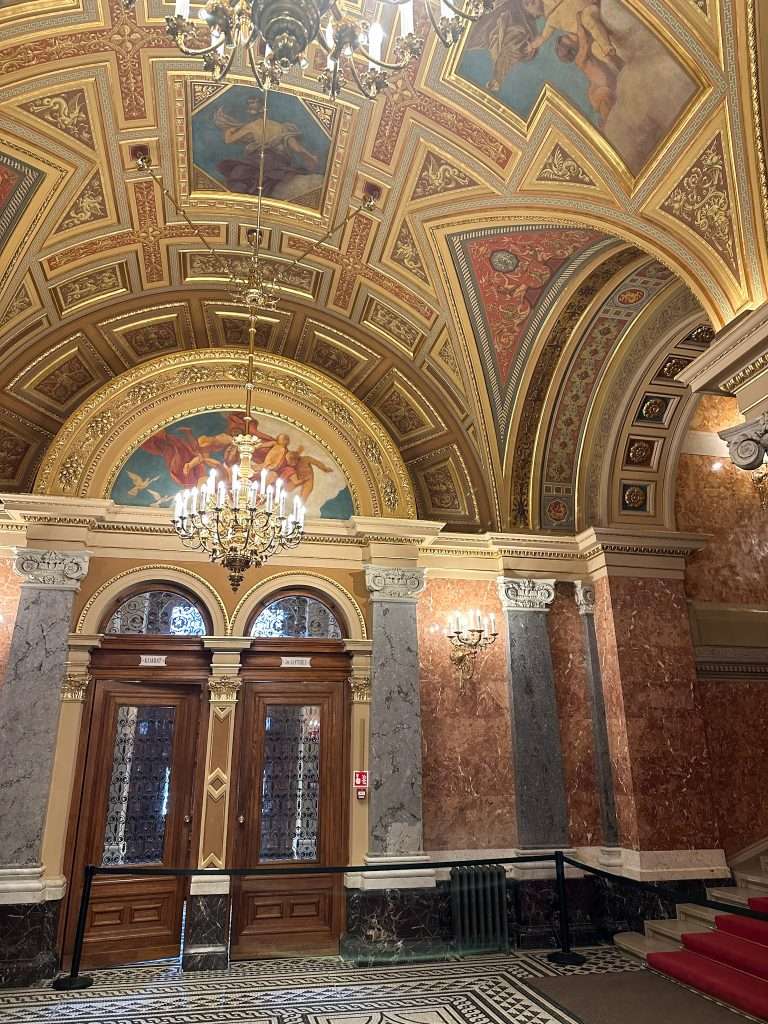
Budapest is blessed with so many gorgeous buildings you could just spend the day wandering around admiring them! One that stands out is the beautiful Hungarian State Opera House. You can take a tour if you wish otherwise just pop in and admire the beautiful interior for free.

What to Eat and Drink
Whilst there is plenty of choice in Budapest when it comes to eating and drinking, there are a couple of things I’d recommend you do:
1. Eat Goulash!
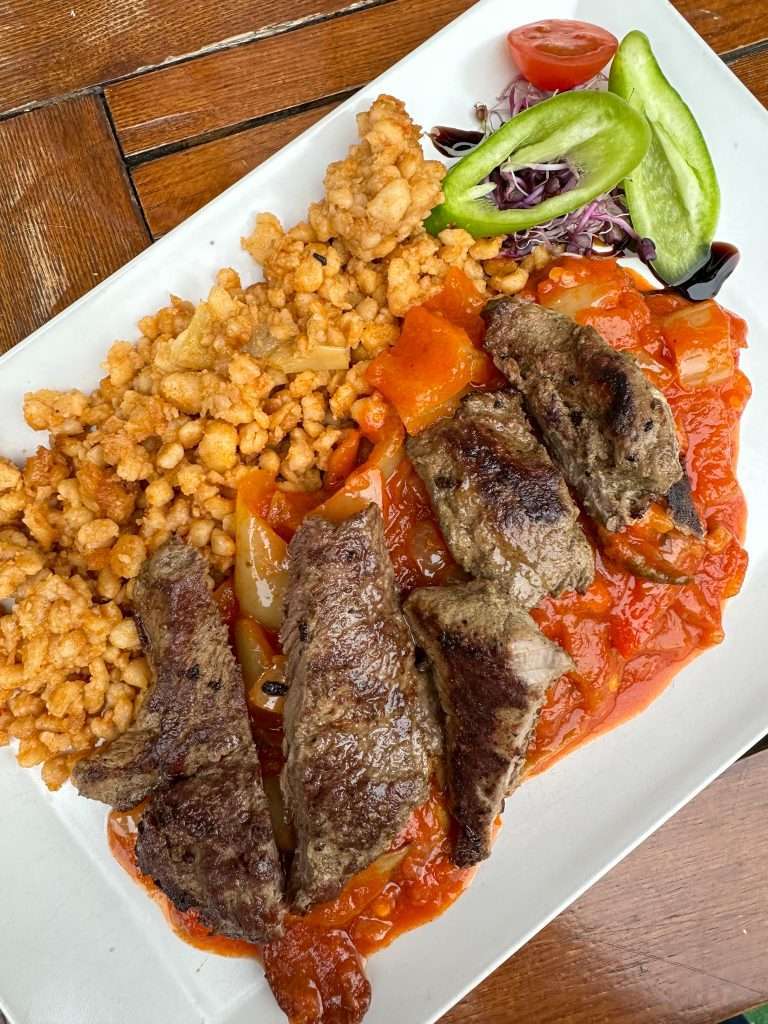
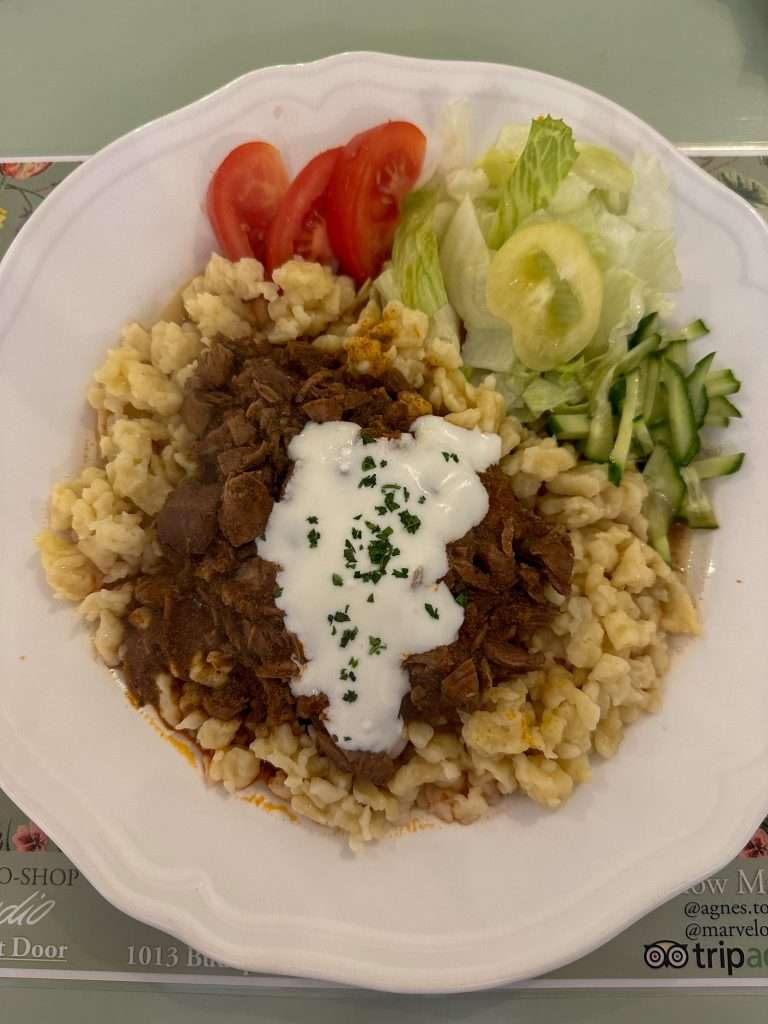
Hungarian goulash is likely one of the first things to come to mind when you think of Budapest. It was certainly high up on my list of meals to eat and it did not disappoint.
Goulash is a soup or stew of meat and vegetables seasoned with paprika. I tried it in a couple of different restaurants and although slightly different in taste, they were both equally delicious!
2. Drink Coffee and Eat Cake!
The Turks first introduced coffee to Hungary in the 16th century and since then, coffee houses have played a central role in Budapest life. I read that Budapest had around 600 cafes in the final decades of the Austro-Hungarian Empire! Cafes often catered to different groups, for example the famous New York café hosted many notable writers.
Experiencing café culture is without doubt a wonderful thing to do in Budapest so I made sure to visit a couple cafes and to try a famous pastry (or two!).
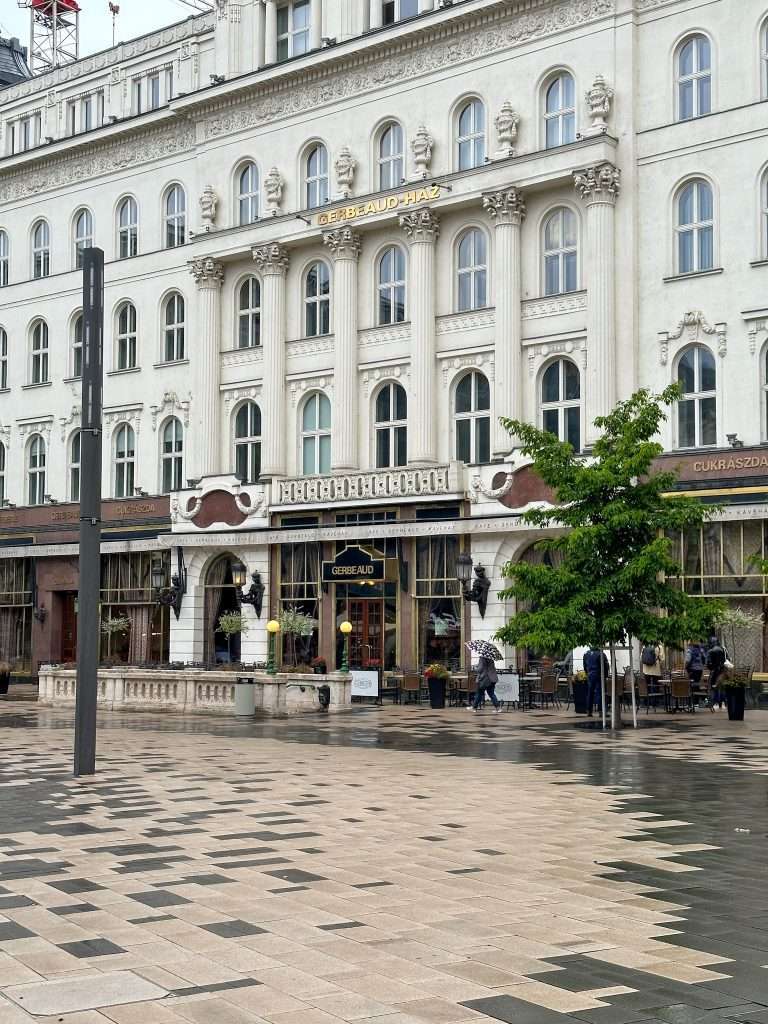
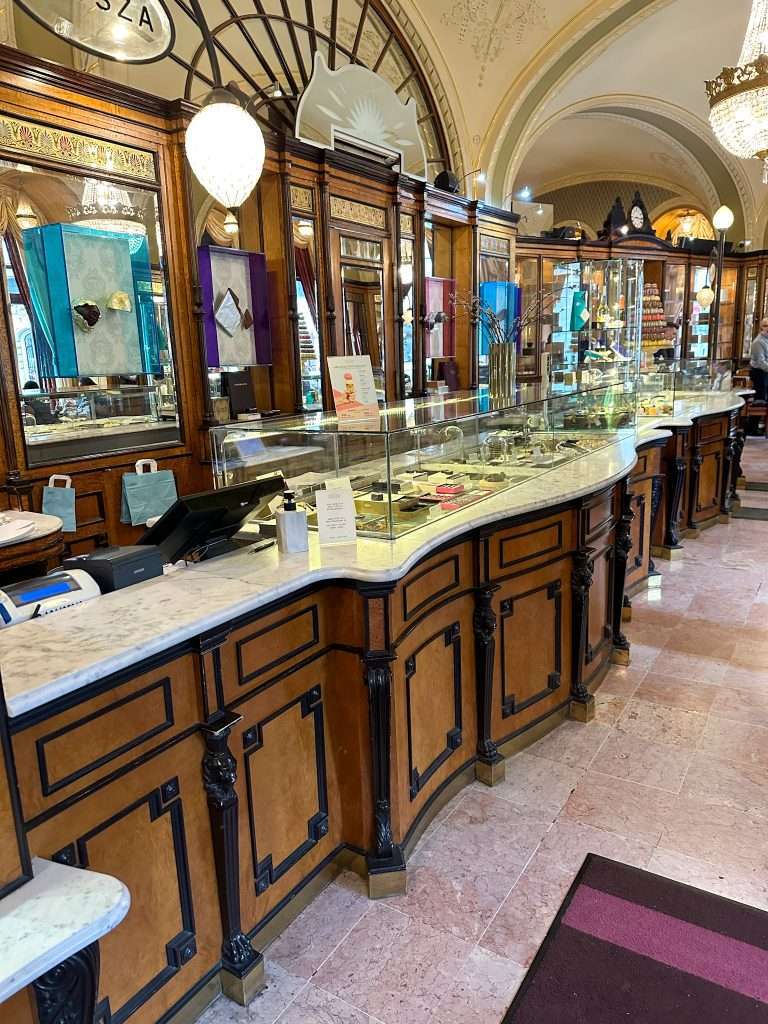
The Gerbeaud patisserie on the Pest side of the river has been around since 1858. Its beautiful interior preserves the grand old coffee house tradition and although the prices may make your eyes water, it is a wonderful indulgence!
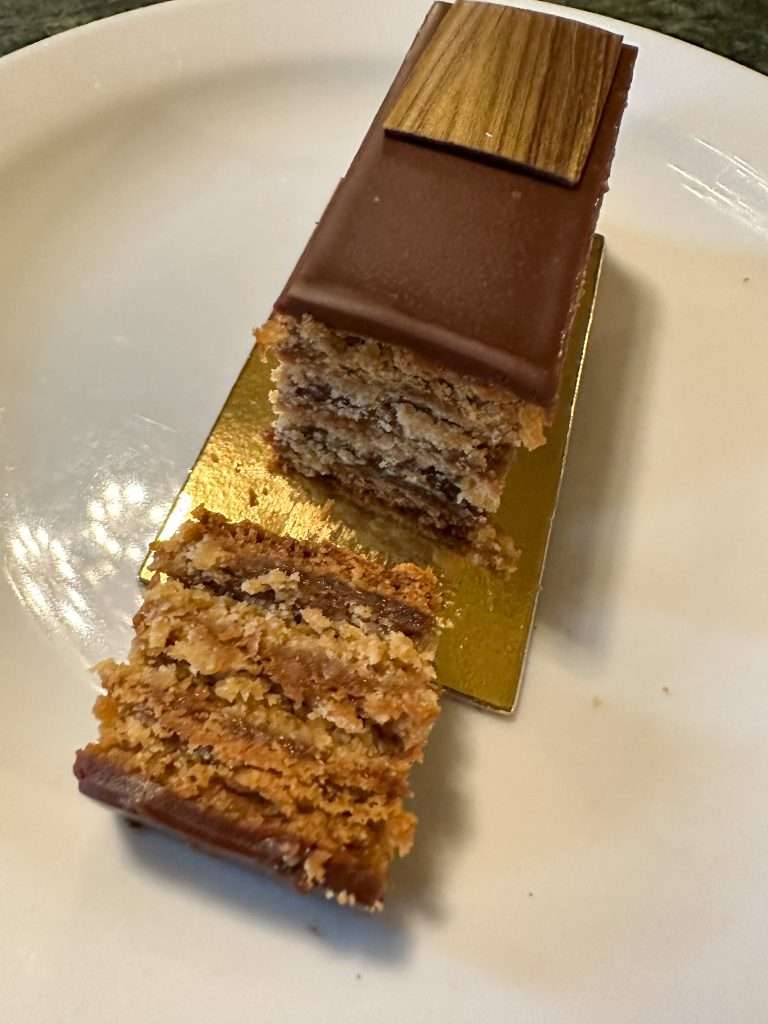
I had a slice of their own Gerbeaud slice. Comprising layers of short crust pastry, homemade apricot jam, ground walnuts, white rum and dark chocolate coating, it was delicious.
The Ruszwurm confectionery on the Buda side of the river, a short walk from Mátyás Church, has been in operation since 1827. Before that, in the Middle Ages, it was a gingerbread shop. A much smaller café than Gerbeaud, the Ruszwurm is very popular and it can be difficult to get a seat.
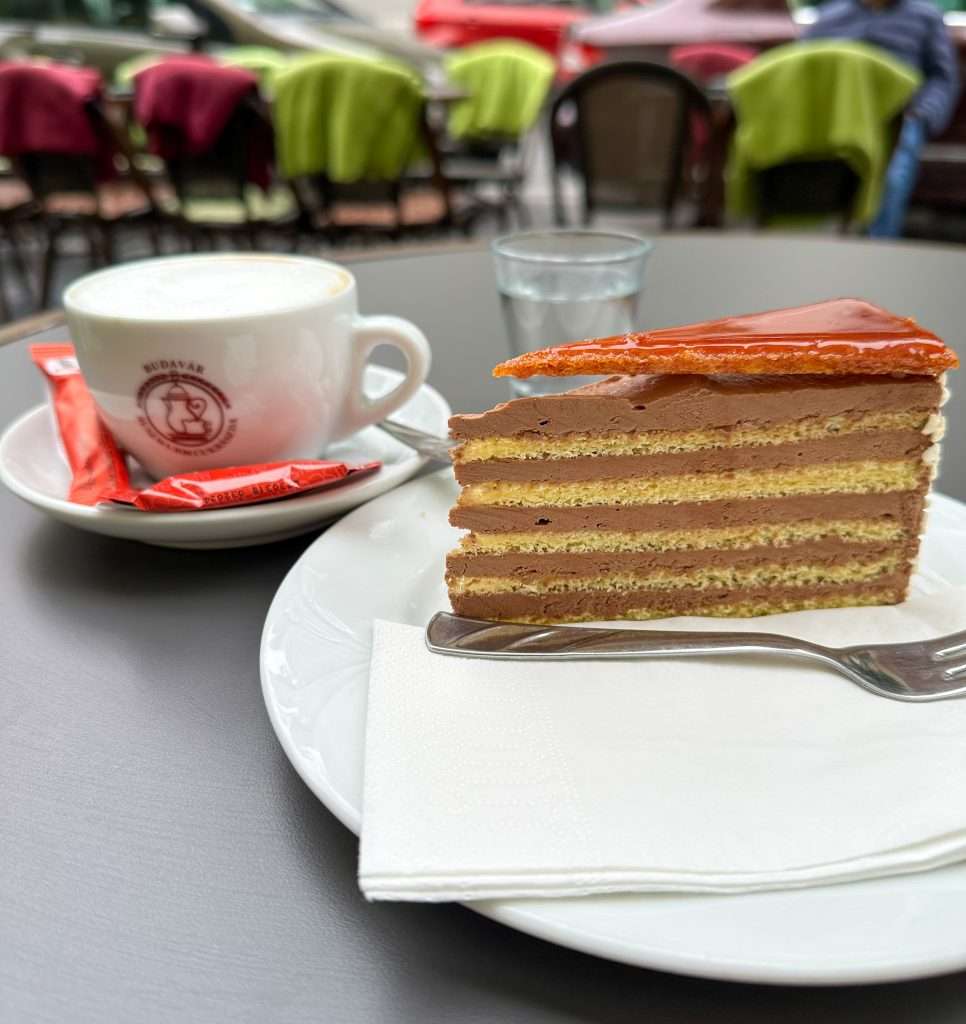
I had a slice of the Dobos cake, a layered sponge cake with chocolate buttercream and a caramelised brown sugar topping. It too was yummy!
Have Extra Time in Budapest?
If you have more time to spend in Budapest or you prefer to do something other than (or in addition to) the 12 wonderful things I have listed then you may want to consider:
- taking a trip along the River Danube – daytime cruises and evening cruises are available, the latter definitely one of the things to do in Budapest at night!
- having a soak in one of Budapest’s many thermal baths such as the hugely popular Széchenyi Baths
- visiting the various museums around the city, including the Hungarian National Gallery, Hospital in the Rock, Golden Eagle Pharmacy Museum or the Pinball Museum
- visiting Margaret Island
- exploring Budapest’s Jewish Quarter and history (and stopping off at a ruin bar)
- visiting Central Market Hall
- exploring Memento Park
- visiting Heroes Square and the nearby City Park
You may also want to consider heading out of Budapest on a day trip – check here for possible options:
Final Thoughts
Budapest is one of those cities that rewards repeat visits. From its grand architecture and fascinating history to its vibrant food scene and beautiful setting on the Danube, there’s always something new to discover. Whether it’s your first visit or your fourth, these 12 experiences will help you make the most of your time in Hungary’s captivating capital.
If you need further help planning your Budapest itinerary, be sure to check out my Resources page, where you’ll find useful tools and travel essentials to help you prepare for your trip.

Disclaimer – Visitor information was correct at the time of writing but do check before visiting.


Leave a Comment