

Last updated on July 28th, 2026 at 04:27 pm
No trip to the Andalusian region of Spain would be complete without visiting Seville. Although perhaps best known for its Moorish architecture, flamenco and tapas, Seville really does have so much more. I spent 3 days in Seville and loved it.
In this post I’ll share my list of 14 of the best things to do in Seville. I’ll give you some further options to add to your itinerary and offer up a general travel guide and travel tips so you too can have a wonderful time in Seville.
Getting to Seville
Direct flights to Seville’s San Pablo airport (SVQ) are available from many European cities and from London. Flight times will vary depending on where you are flying from, but from the UK you’re looking at around 2.5 hours.
You can research flight options and book here:
Seville is also accessible by train and bus, however if you want more independence, then you may want to consider renting a car to explore the region.
I would suggest however that you won’t need a car in central Seville as the city is walkable and many of the roads in the historic centre are too narrow for cars in any event.
Getting to/from the Airport
To get to Seville city centre from the airport (about 10 kilometres (6 miles) away) there are the following options:
1. Shuttle Bus EA
The bus is operated by Tussam and the route is marked EA – check the official Tussam site for up to date route information. A single trip costs €6 and a return is €8 (valid same or next day). Tickets can be purchased from the driver. I used the shuttle for my journey to the airport. The service ran to time and I would recommend it.
2. Taxi
Several official taxi companies operate from the airport. They are white vehicles with a yellow stripe on the back doors. Check the airport website for up to date information including as to pricing.
3. Private Transfer
If you prefer to arrive knowing transport is already arranged, then you can pre-book a transfer to your accommodation.
Travel Tip: Be aware that if you choose to stay in Seville’s old town (Barrio Santa Cruz) your taxi will likely have to drop you off away from your hotel given the narrowness of the streets. I would therefore recommend having Google Maps on your phone so you can find your way, especially if you are arriving at night. To avoid paying mobile roaming charges, I recommend purchasing an e-Sim from Airalo.
Currency
Seville is part of the European Union and uses the Euro (€).
Where to stay in Seville
As with most major European cities, Seville has a variety of accommodation to suit all budgets.
My recommendation would be to stay in Seville’s old town, Barrio Santa Cruz. This area is the old Jewish quarter of Seville, and is where most of the sites you will want to visit are located. Although it is a touristy area, there are enough little, winding streets to get away from your fellow travellers if you want!
I stayed at Hotel Murillo which is located toward the end of the street shown in the photo below. An excellent location!
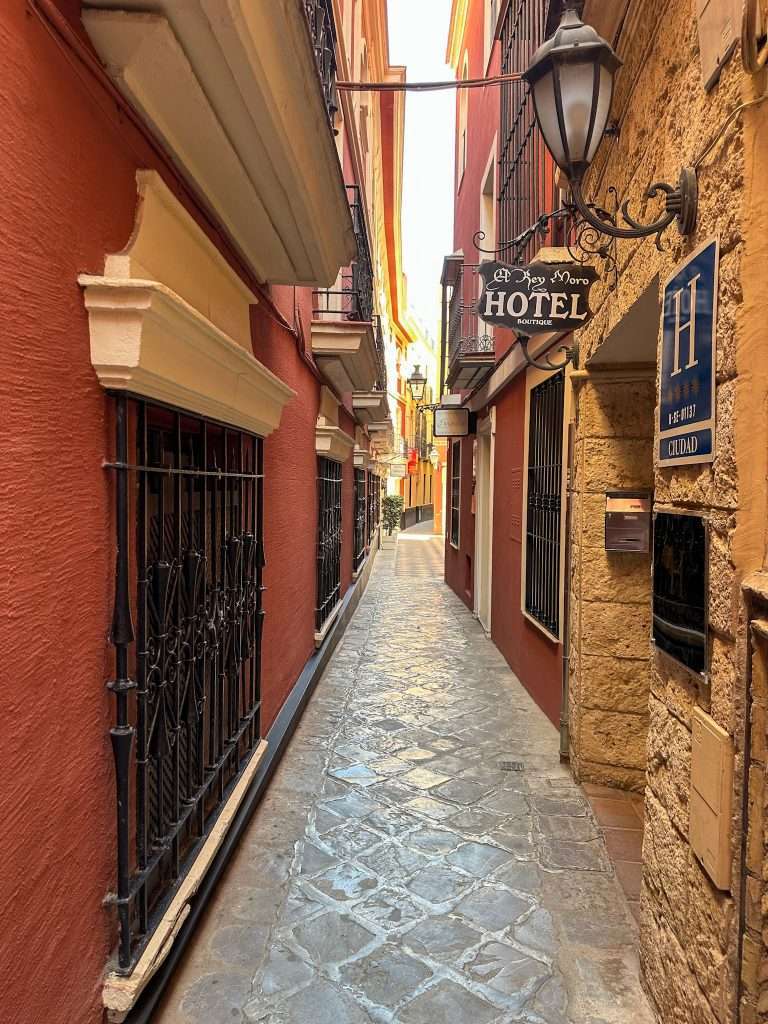
You can check all available hotels and other accommodation options and book here:
Is Seville Worth Visiting?
Yes! There are many reasons why Seville is worth visiting. From architecture to history, culture to food, there is something for everyone in Seville.
How Many Days Do You Need in Seville?
I spent 3 days in Seville and would recommend that as a perfect amount of time to get a taste of what the city has to offer. Of course, the longer you can stay, the more you will be able to see and do, but in 3 days you will be able to achieve quite a lot. I experienced all 14 of the activities listed below, therefore you can consider this post the perfect Seville itinerary!
When is the Best Time to Visit Seville?
Seville has a Mediterranean climate and as such, it has hot summers and mild winters:
- December and January are the coolest months with average highs of around 16/17°C (61/63°F) and average lows of 6/7°C (43/45°F)
- July and August are the hottest months with average highs of 35/36°C (95/97°F) and average lows of 20/21°C (68/70°F)
The peak season for visitors to Seville is the summer (July, August and September). The shoulder season is autumn (October, November and December) and spring (April, May and June). Seville’s low season is winter (January, February and March).
All that said, Seville is a popular destination year round, so in my view, when you go will depend on your personal preference and how well you cope with the heat (see my tips below on this!).
Coping with the Heat in Seville
As I mentioned above, Seville is hot…and even more so in summer when I visited! Dehydration and too much sun can be disastrous (not to mention life threatening) at any time, let alone when travelling, so do take precautions.
My tips for coping with the heat are:
- prebook tickets online – the Cathedral and Royal Alcázar are very popular and you want to avoid standing under the sun in a long queue for tickets
- for attractions with timed entry, select a time slot that will take you inside and out of the sun during the hottest part of the day
- carry water with you and drink it!
- wear a hat, sunglasses and sunscreen (don’t forget to put sunscreen on your ears!)
- for those who wear makeup, use a foundation with a high SPF – I used a SPF50
- use your umbrella for additional shade
- take a break – there is seating throughout the city so use it
- wear loose fitting, cooling clothing e.g. cotton
- plan your visit – be honest about your capabilities and what you can realistically do e.g. consider a hop on hop off bus if walking would be a challenge
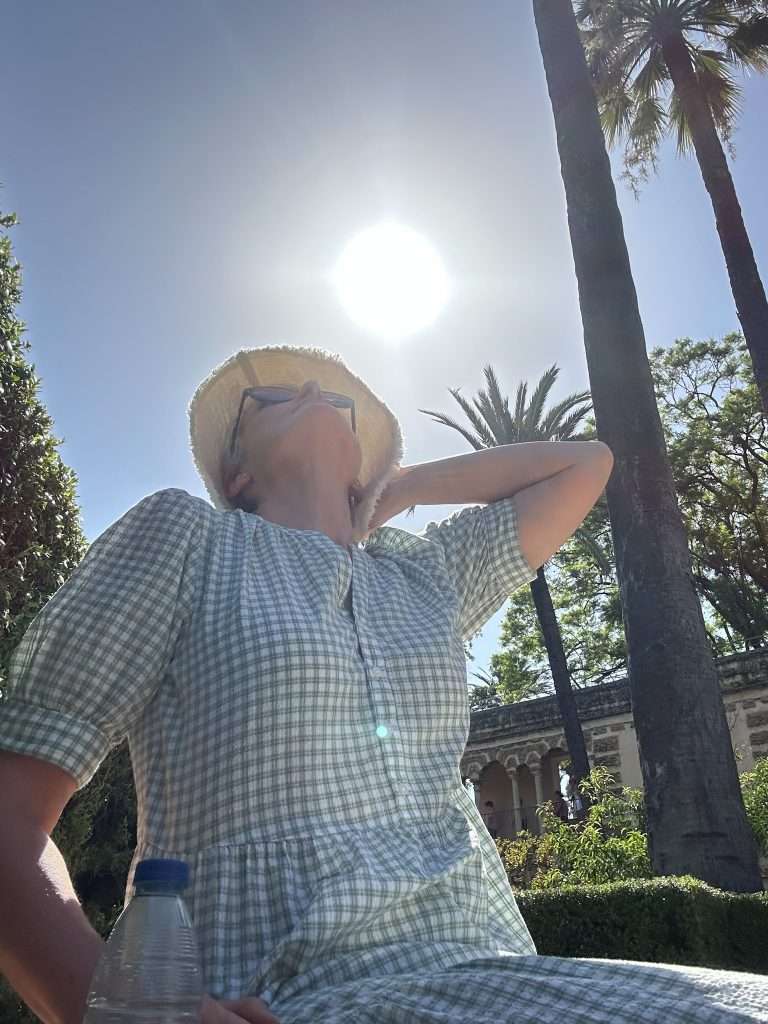
Best Things to do in Seville
Whatever time of the year you decide to visit, Seville has plenty to keep you busy. Here is my list of 14 of the best things to do in Seville:
1. Join a Walking Tour
I’m a big fan of walking tours and therefore it’s no surprise that I joined one in Seville! I used GuruWalk to find a tour and can highly recommend the White Umbrella free tour. This is a tips based tour meaning you pay what you think the tour was worth.
Walking tours are, in my view, a great way to get your bearings in a new city and to get recommendations as to where to eat, shop etc. As I mentioned earlier, Seville is hot, especially in summer, so first make sure that a walking tour is suitable for you and if so, follow my tips for coping with the heat. Our walking tour did include a break part way through….where an ice cold beer was the order of the day!
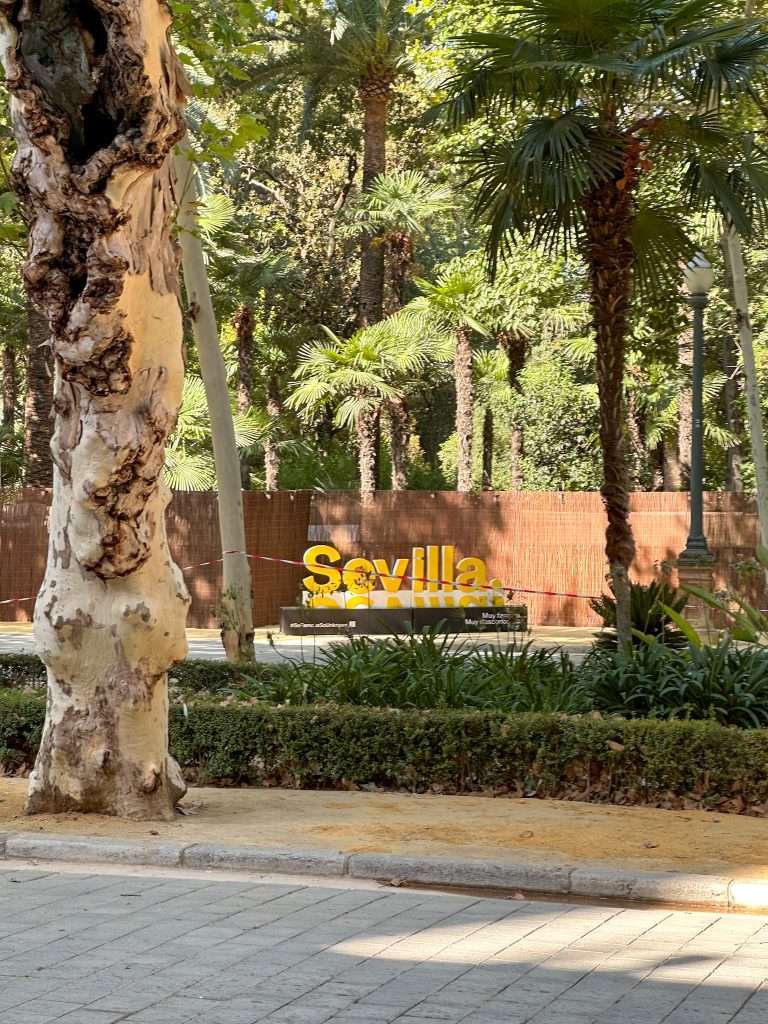
2. Visit the Royal Alcázar
No trip to Seville is complete without a visit to the stunning Royal Alcázar, a UNESCO World Heritage Site since 1987.
The Royal Alcázar (also known as the Real Alcazar) is a royal palace built for the Christian King Peter of Castile on the site of a former Muslim residential fortress (an Alcázar). The fortress was destroyed in 1248 when Christians conquered Seville.
The upper floors of the palace are still occupied today by the Spanish Royal Family when they visit Seville.

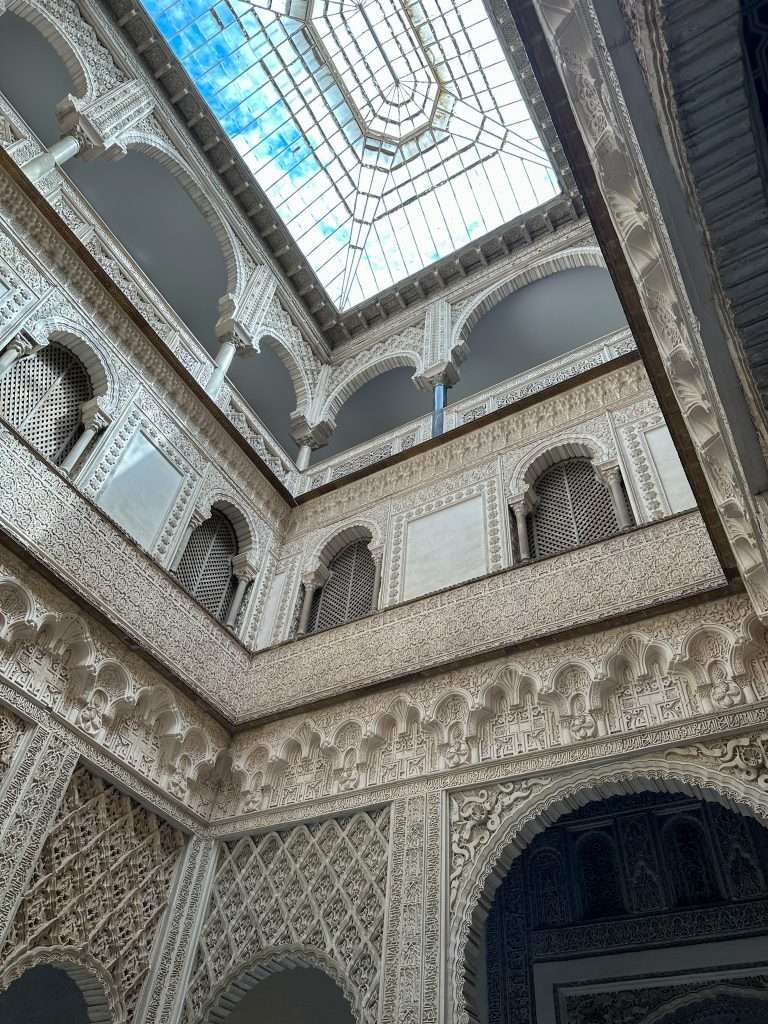
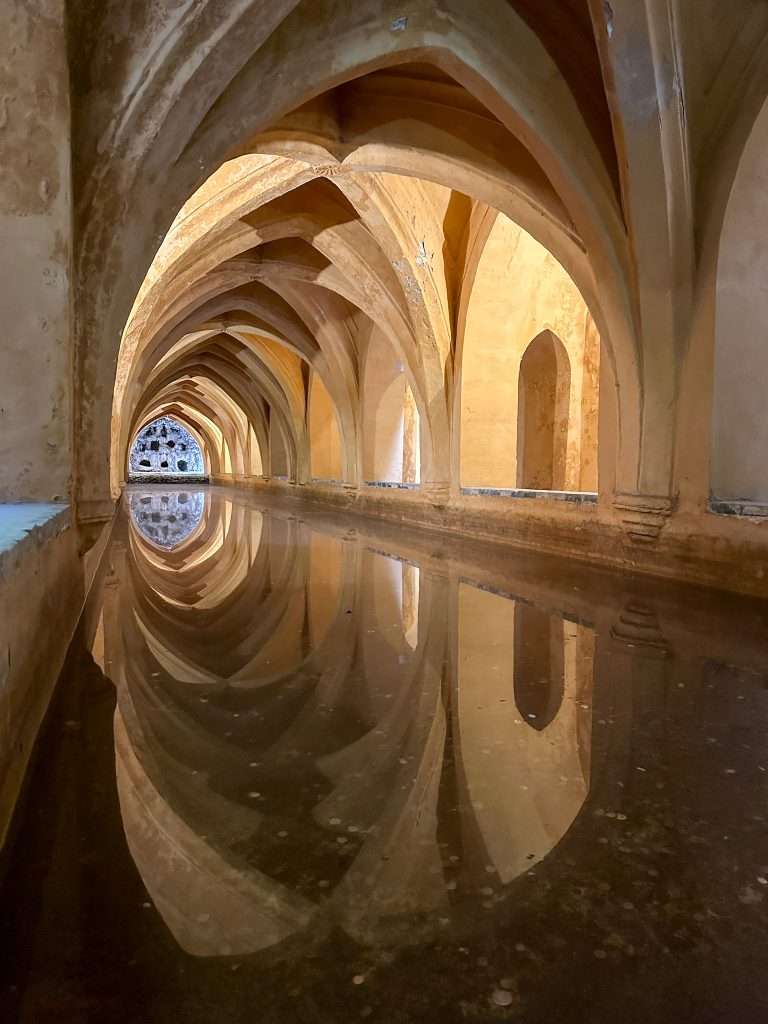
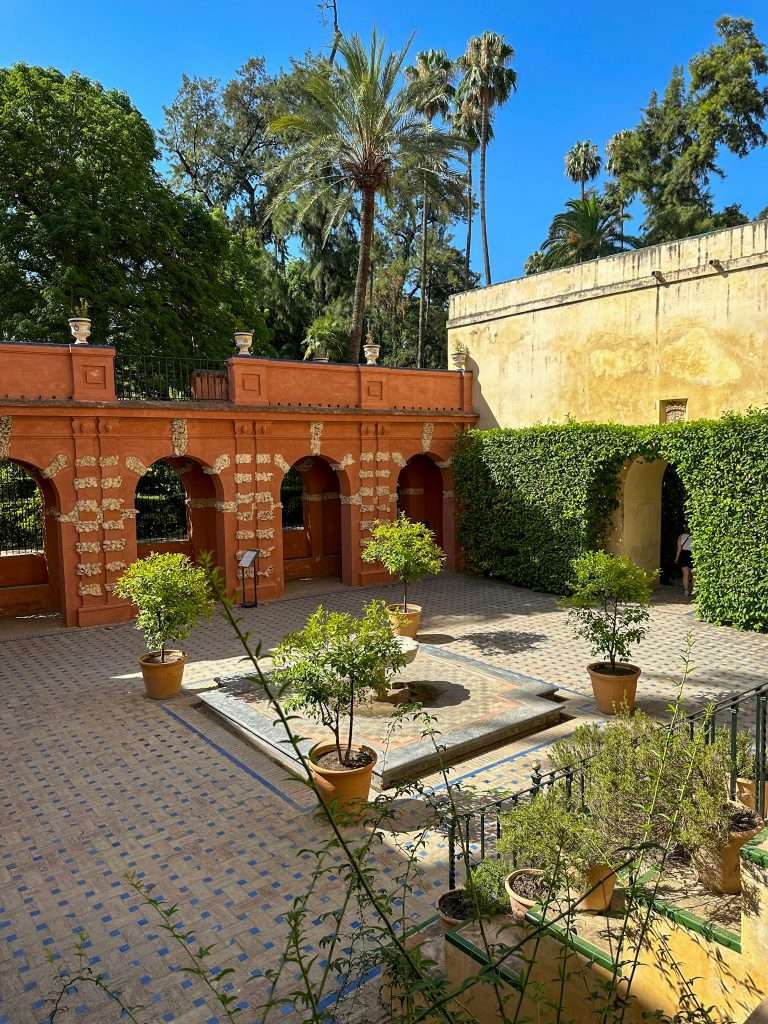
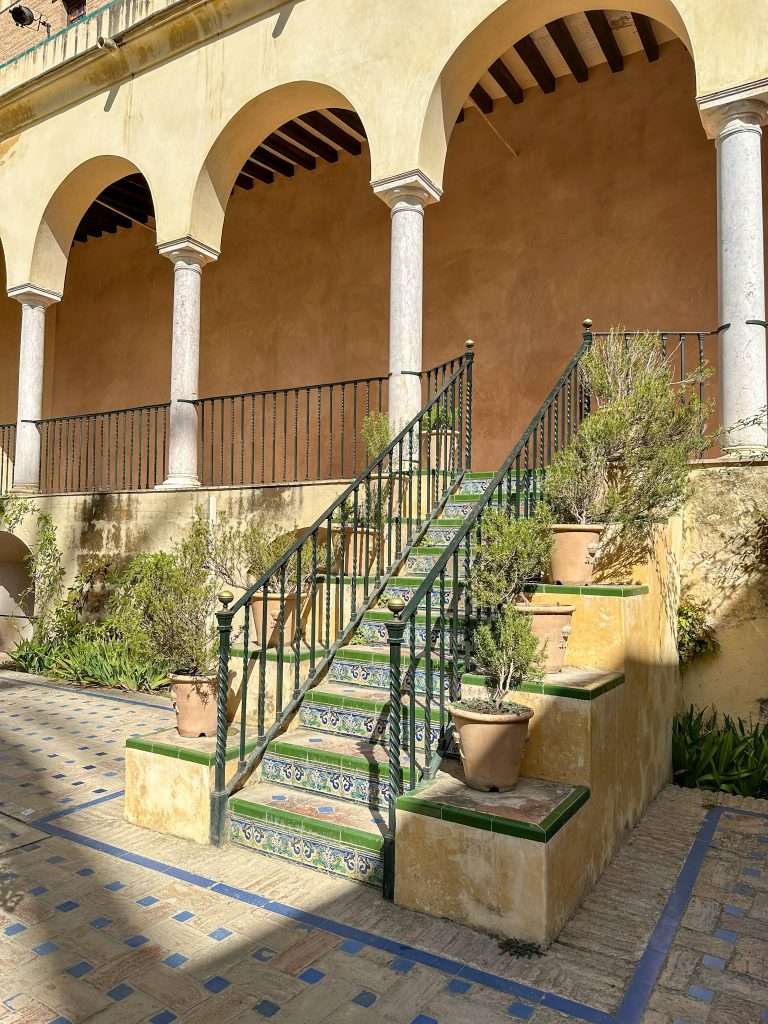
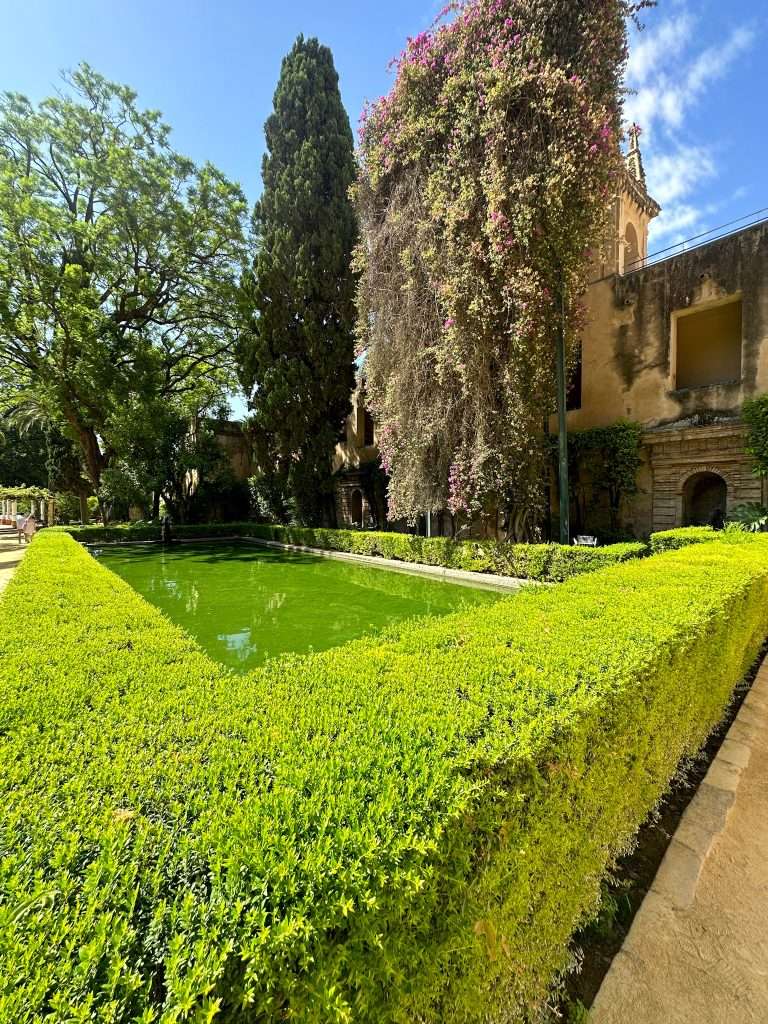
Architecturally, the Royal Alcazar is recognised as a stunning example of Mudéjar style combining Gothic and Renaissance elements too. Beautiful arches, tiles and lattice work dominate the palace while the gardens are very impressive – look out for the peacocks!
The Royal Alcázar is a very popular attraction and queues can be lengthy. I would therefore recommend booking tickets in advance online. This will also help avoid the need to stand in a queue under the hot sun for too long.
General admission to the ground floor is €15.50 and €21 to visit the ground floor and Royal Bedroom (concessions are available). You can also buy an audio guide which you download to your phone.
I booked this ticket:
Do check the Official Royal Alcázar website for up to date visitor information.
3. Visit Seville Cathedral
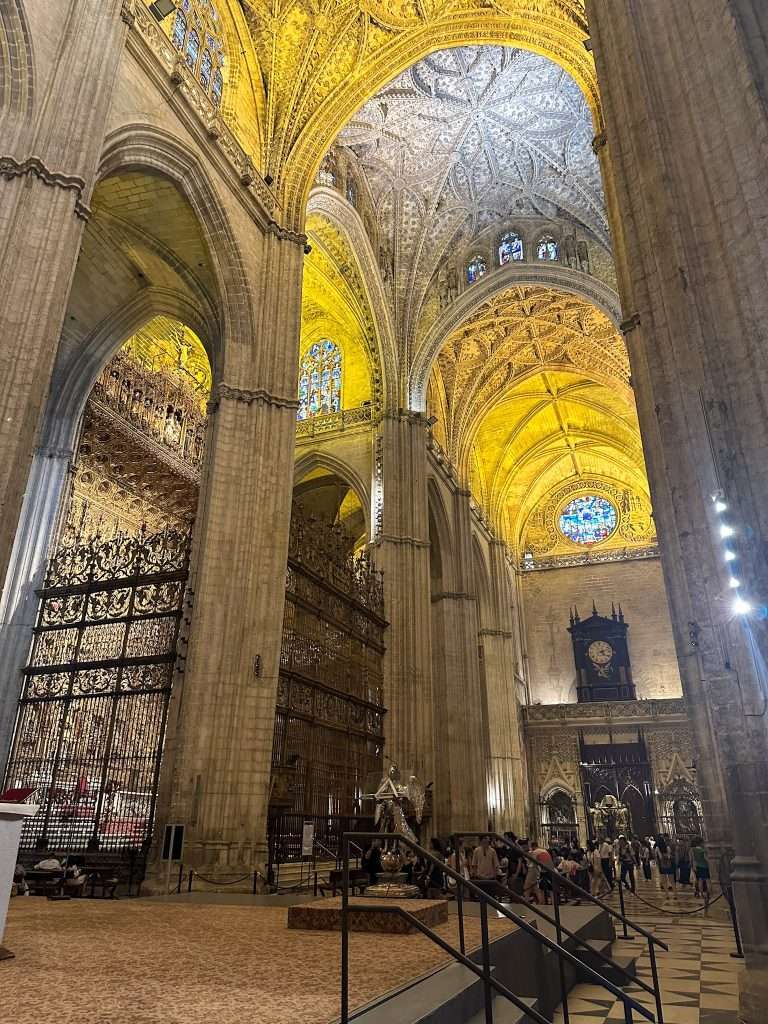
It goes without saying that a visit to the Cathedral is one of the best things to do in Seville. Located on the opposite side of the Plaza del Triunfo from the Royal Alcázar, the Cathedral is enormous! In fact, it’s one of the largest churches in the world and the largest Gothic cathedral.
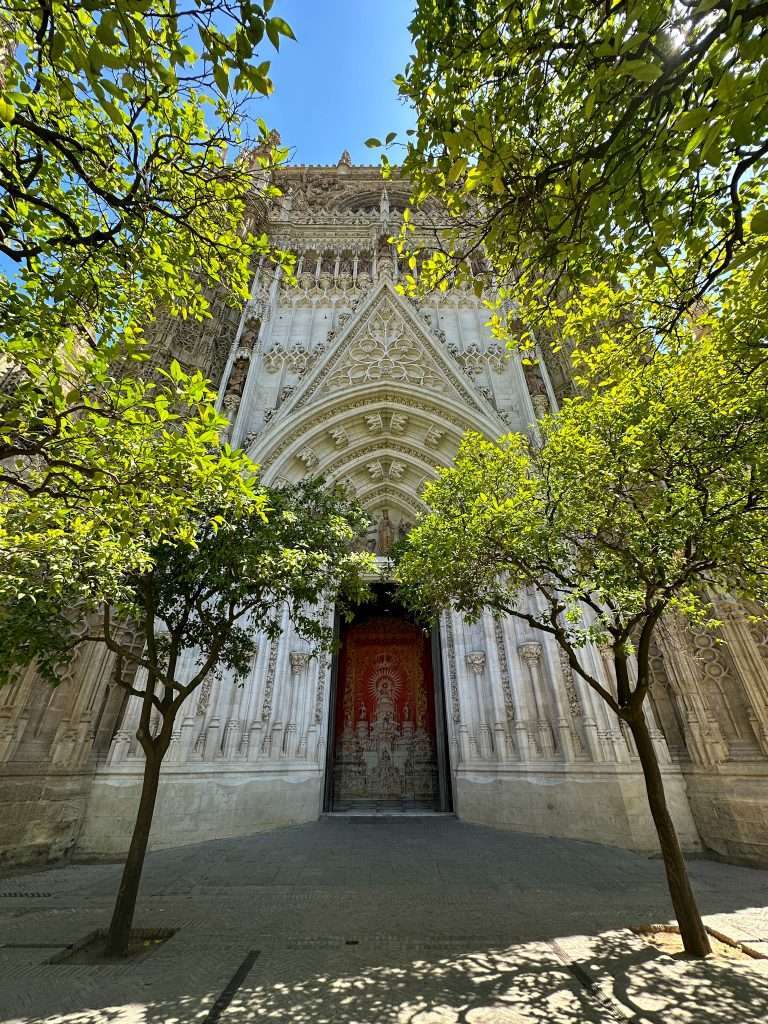
A mosque once stood on the site of the Cathedral, however following the Christian conquest of Seville in 1248 it was adapted and used for Christian services. In 1401, a decision was taken to build a new Cathedral and, following some reconstructive works, it was finally completed in the early 16th century.
The Cathedral does retain some elements from the ancient mosque, including:
- the courtyard where the faithful undertook their ablutions before entering the mosque (now known as the Patio de los Naranjos); and
- the minaret which was converted into a bell tower known as the Giralda (see below)
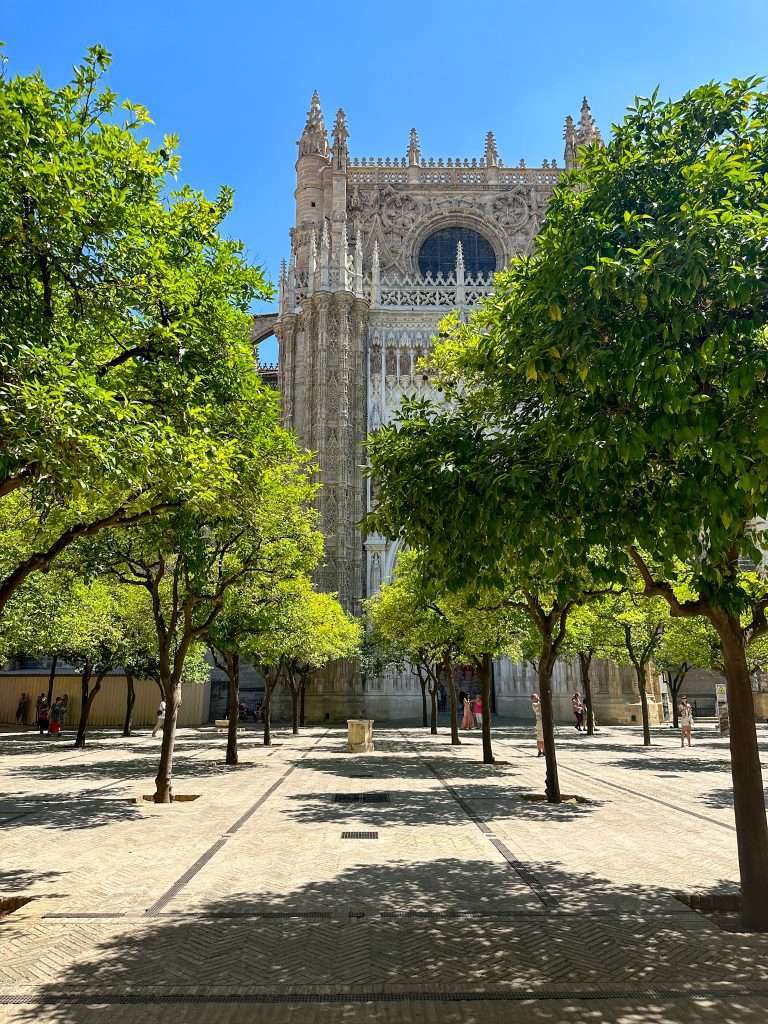

There is so much to see in the Cathedral you should set aside a couple of hours for a visit. I recommend booking a ticket online in advance and including the audio guide. Entry fees begin at €13 (online) or €14 (in person) for general admission which includes the Giralda (concessions available) and €5 for the audio guide. You can also book a guided tour – current prices are €20 (online) or €21 (in person).
This is the ticket I booked:
It is possible to visit the Cathedral for free between 2 and 3pm Monday to Friday (excluding holidays) but these tickets go quickly so book well in advance! Do check the official cathedral website for up to date visitor information including as to pricing and opening hours.
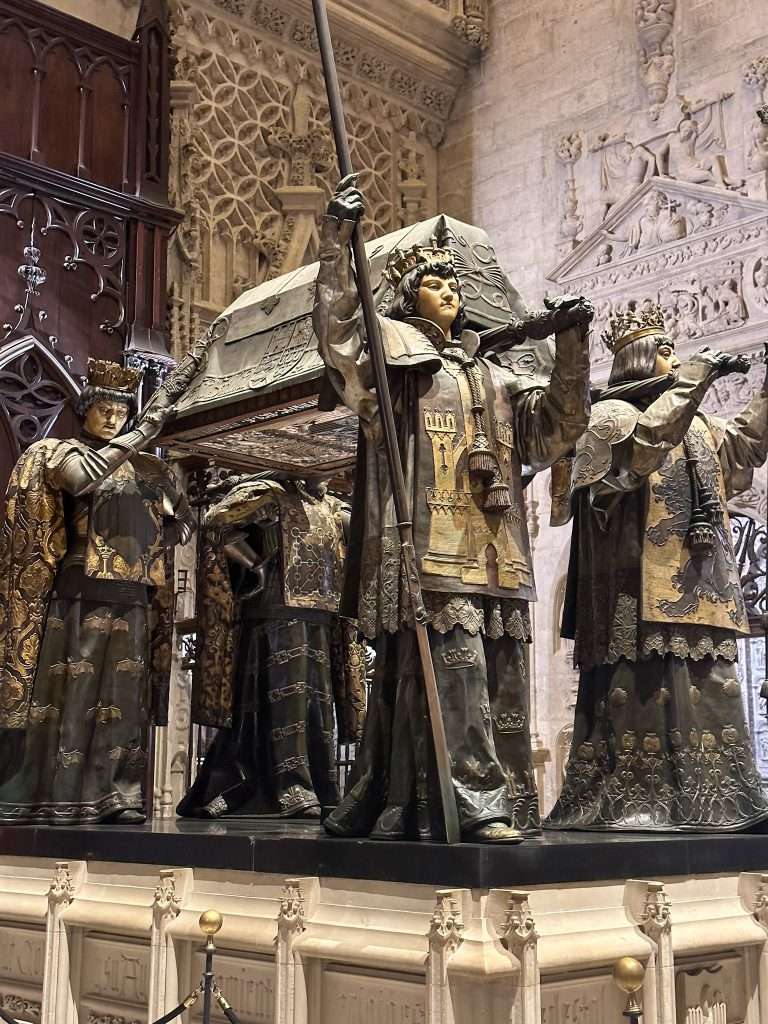
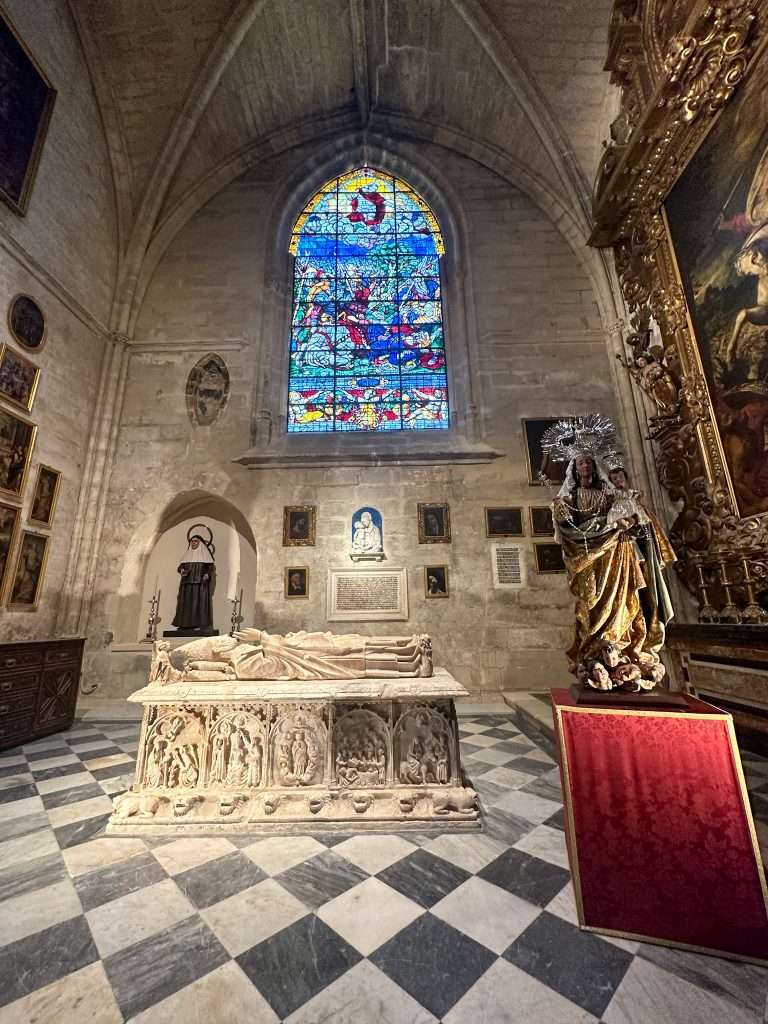
There are a great many chapels to see as well as stunning stained glass windows, beautiful artwork and of course, the tombs of Christopher Columbus and Seville’s conqueror, Ferdinand III of Castile.
The Cathedral is a UNESCO World Heritage Site.
4. Climb La Giralda
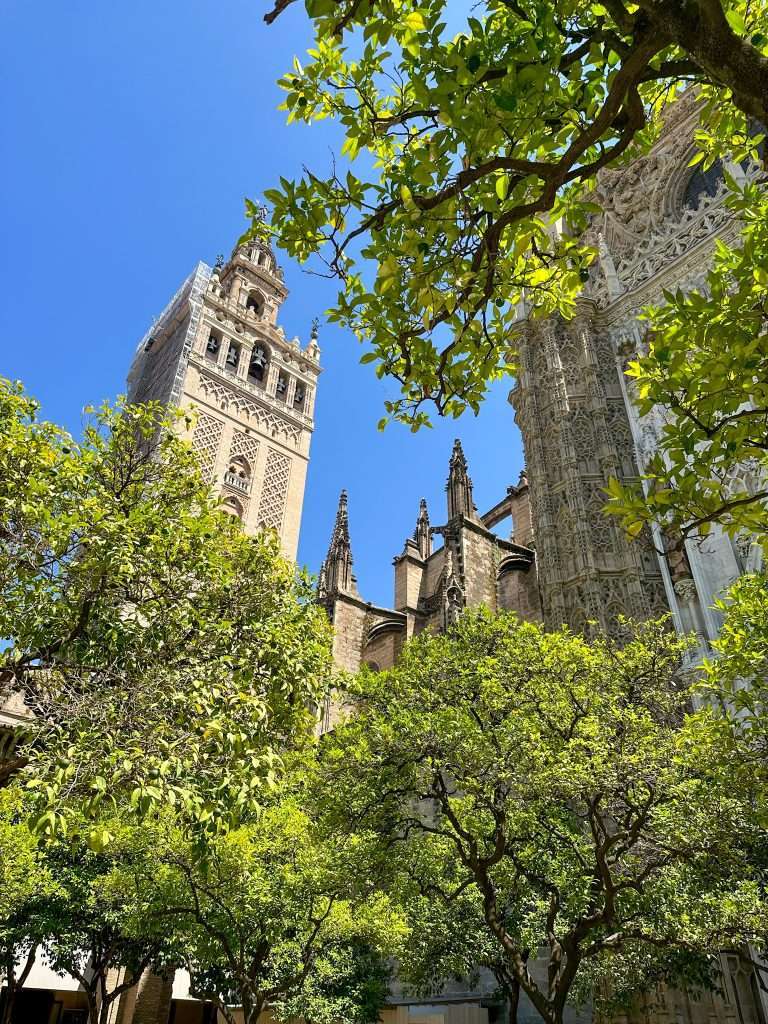
As I’ve said above, your ticket into the Cathedral includes access to Cathedral’s bell tower, the Giralda (also referred to as the Giralda tower or the Giralda bell tower). Once the minaret of the ancient mosque, the bell tower stands just over 104 metres tall and yes, you can climb to the top!
There are 35 floors to walk up, but thankfully there are no stairs. Instead, the Giralda contains ramps, constructed apparently to allow the muezzin, the man calling the faithful to prayer, to climb the minaret on horseback.
The views from the top are impressive, not just of the surrounding city, but also of the Gothic structure of the Cathedral.
The Giralda is also a UNESCO World Heritage Site.

5. Visit La Casa de Pilatos
The Casa de Pilatos is a real gem and making a visit here is one of the best things to do in Seville!
A civil (as opposed to Royal) Andalusian palace dating from the last quarter of the 15th century, it remains the permanent residence of the Dukes of Medinaceli.
It’s a mix of Italian Renaissance, Gothic and Mudéjar architecture and contains thousands of colourful tiles. The centre courtyard and fountain are beautiful. However, for me, the gardens were equally as enjoyable. In fact, I could have sat in the gardens all day but I had a plane to catch!
As one of the largest private homes in Seville, I would allow a couple of hours for your visit.


General entry fee is €12 which includes a very informative audio guide. Note that there is reference online to tours of the upper floors costing €6, however this was not offered to me. I was able to climb the staircase to the upper floors but the rooms themselves were not accessible.
You can explore this ticket option and book here:
6. Wander around Plaza de España
One of the most recognisable sites in Seville, the Plaza de España is located along the edge of the beautiful Maria Luisa Park.
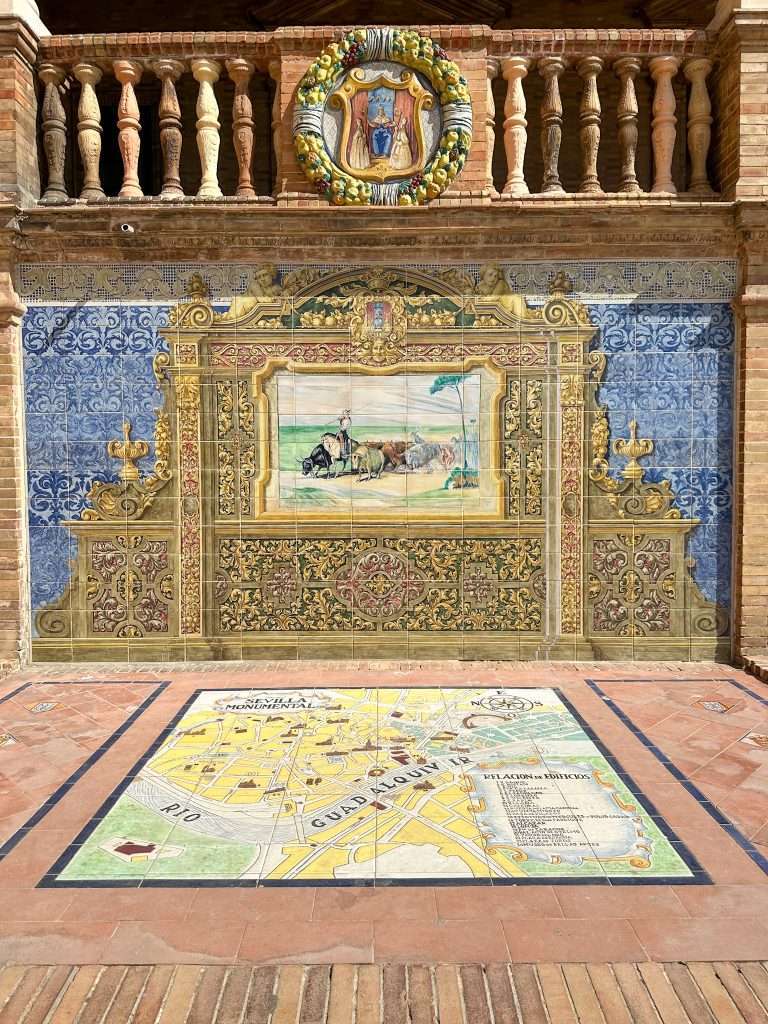
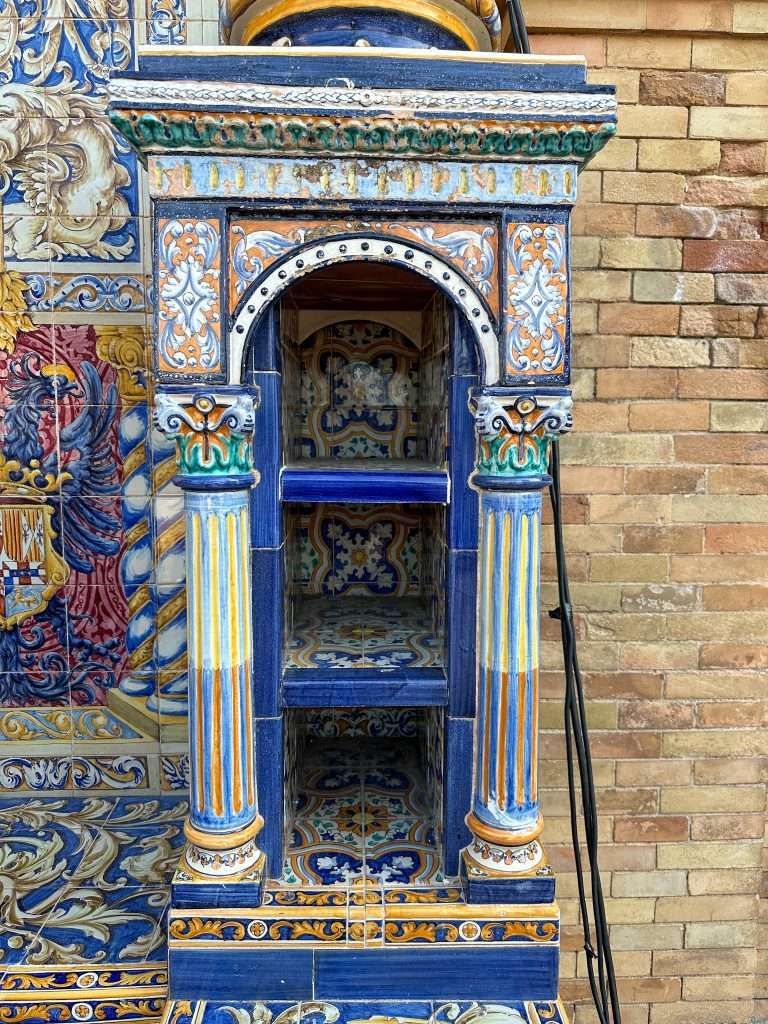
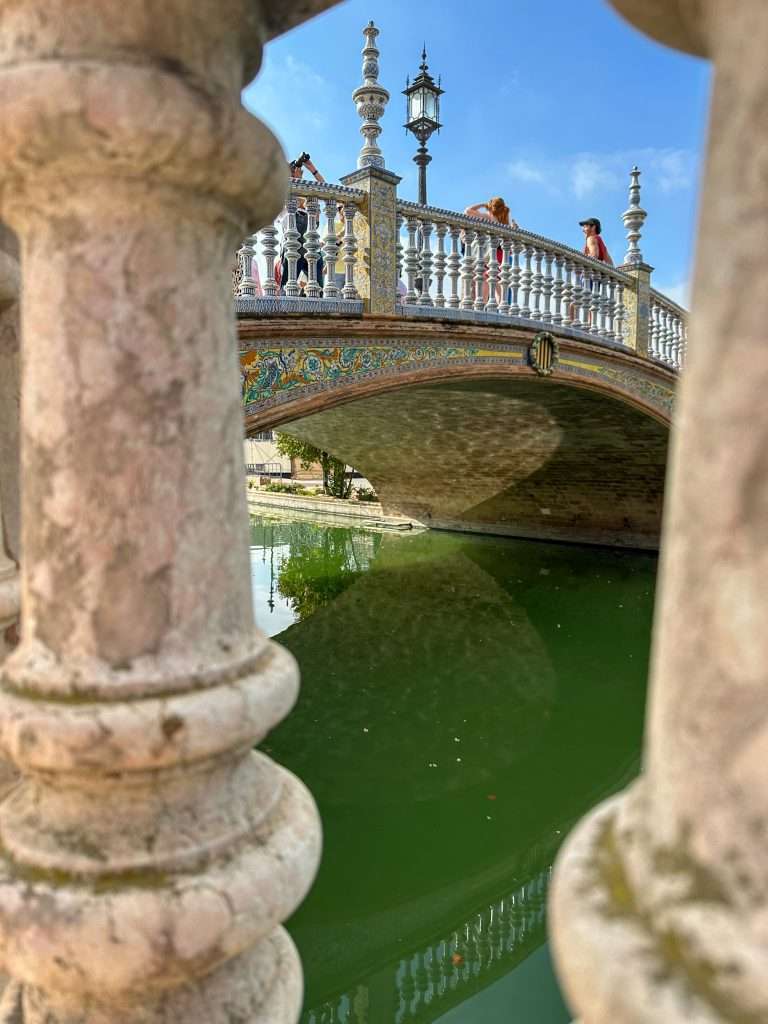
The Plaza was built for the 1929 Ibero-American Exhibition, is semi-circular in shape and contains a mix of architectural styles. Its thousands of beautifully decorated tiles and series of alcoves, each dedicated to a different province of Spain, together with the four, Venetian style bridges spanning the moat make for a lovely backdrop….but it does get busy! That, combined with a lack of shade, means you should try and get there early.
A visit to the Plaza is also one of the free things to do in Seville!
7. Visit the Archive of the Indies
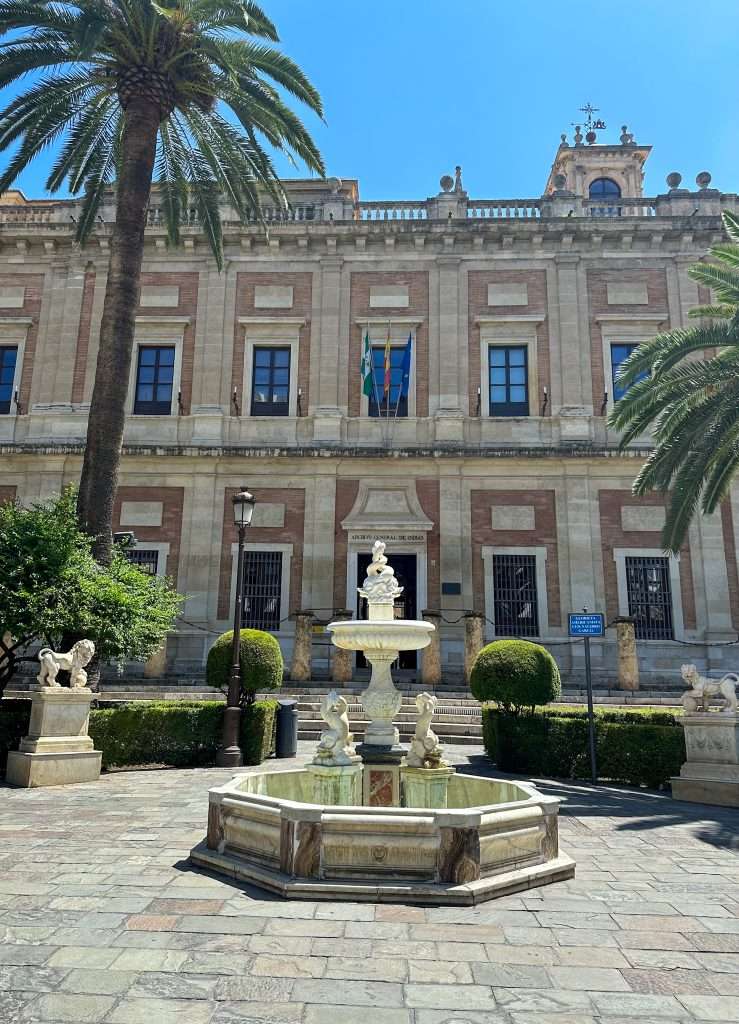
Speaking of free things to do in Seville, located close to the Cathedral and the Royal Alcázar, you will find the Archive of the Indies. Housed in an ancient merchant’s exchange, the Casa Lonja de Mercaderes, the Archive contains some of the most important documents relating to the Spanish Empire in the Americas and Asia.
Construction of the building, known as the Lonja, began in 1584 but was not finished until 1646. Following abandonment by the merchants by 1660, the Longa was used for other purposes until 1785 when the first documents arrived and the archive was established.
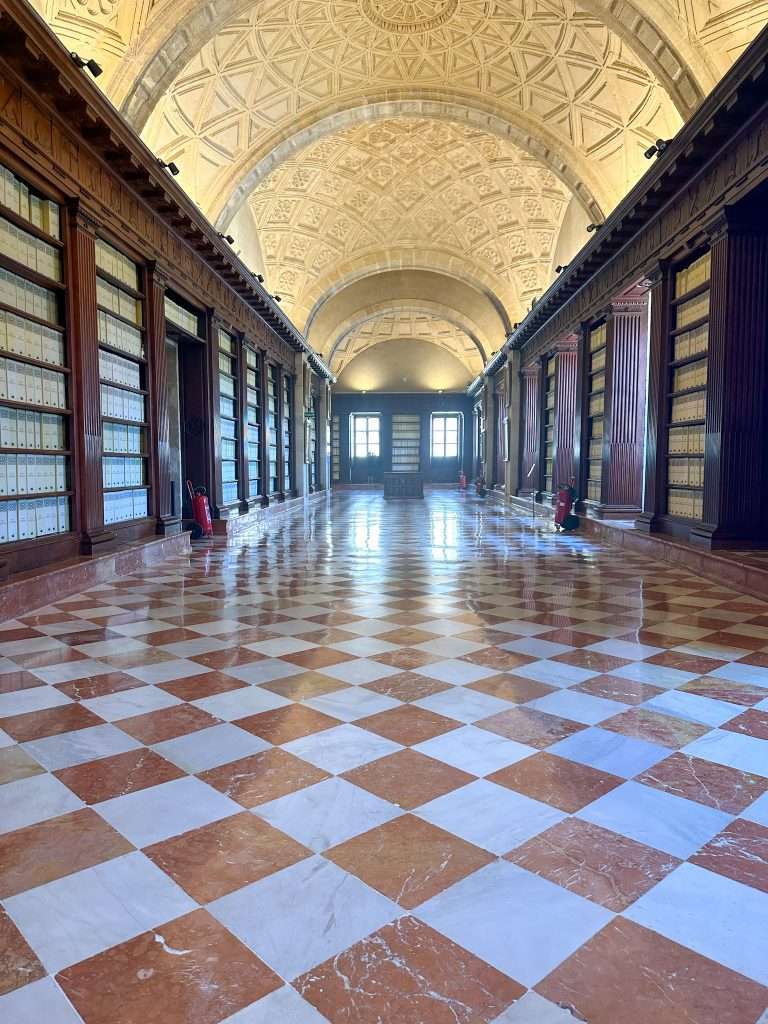
The archive contains some 80 million pages of documents and 9 kilometres of shelving. Today, much of the archive is accessible online.
The building and its contents are a UNESCO World Heritage Site.
There is a lovely garden in front of the Lonja and inside, by the windows, you can enjoy a lovely blast of cool air-conditioned breeze! You will definitely want to include that in your Seville itinerary!
8. Climb the Torre del Oro
The Torre del Oro (the Tower of Gold) is a watchtower built in the first third of the 13th century by the Almohad Caliphate to control access to the city from the Guadalquivir River.
There are various theories as to why it’s called the Tower of Gold, including suggestions it was covered in gold tiles or housed treasure but restoration work concluded that the walls were covered in a lime mortar and pressed straw mix which gave them a golden hue.
The Torre del Oro is 36m high and today it houses a small maritime museum. Climb up the spiral staircase to the top for lovely views over Seville.
Entry fee is €3, concessions are available.

9. Take a Tour of Plaza de Toros Seville – the Bullring
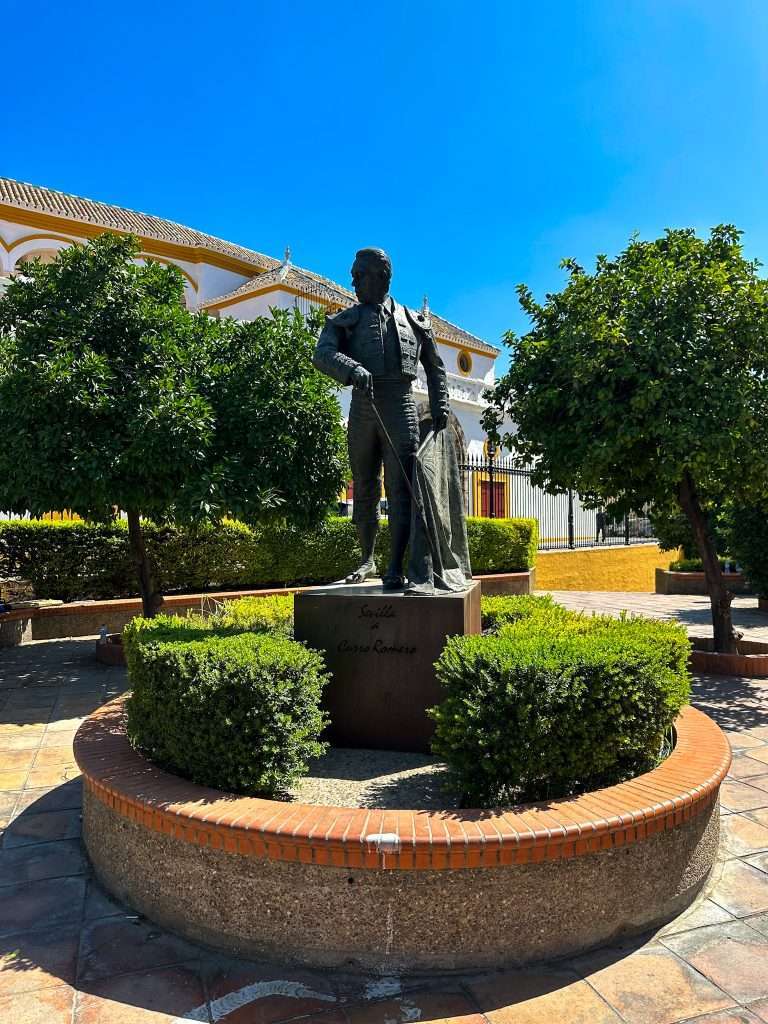
I will say from the outset – I have no intention of ever going to a bullfight. That said, bullfighting, although banned elsewhere in Spain, is very important to the people of Seville. In fact, the bullring (full name – La Plaza de Toros de la Real Maestranza de Caballeria de Sevilla) is one of the most important in Spain and the 3rd most visited monument in Seville.
The most important bullfights take place daily during the festival week Feria de Abril (held annually 2 weeks after the Semana Santa festival in the week before Easter). The regular season will run from March/April (depending on when the Semana Santa festival falls) until late September.
Construction of the bullring began in the 1700s and today it has a capacity of 12,000 spectators. Within the building is a small museum telling the history of bullfighting and displaying various artworks, sculptures, clothing and equipment. You can also see the chapel bullfighters visit before their fights and you can walk out into the ring.
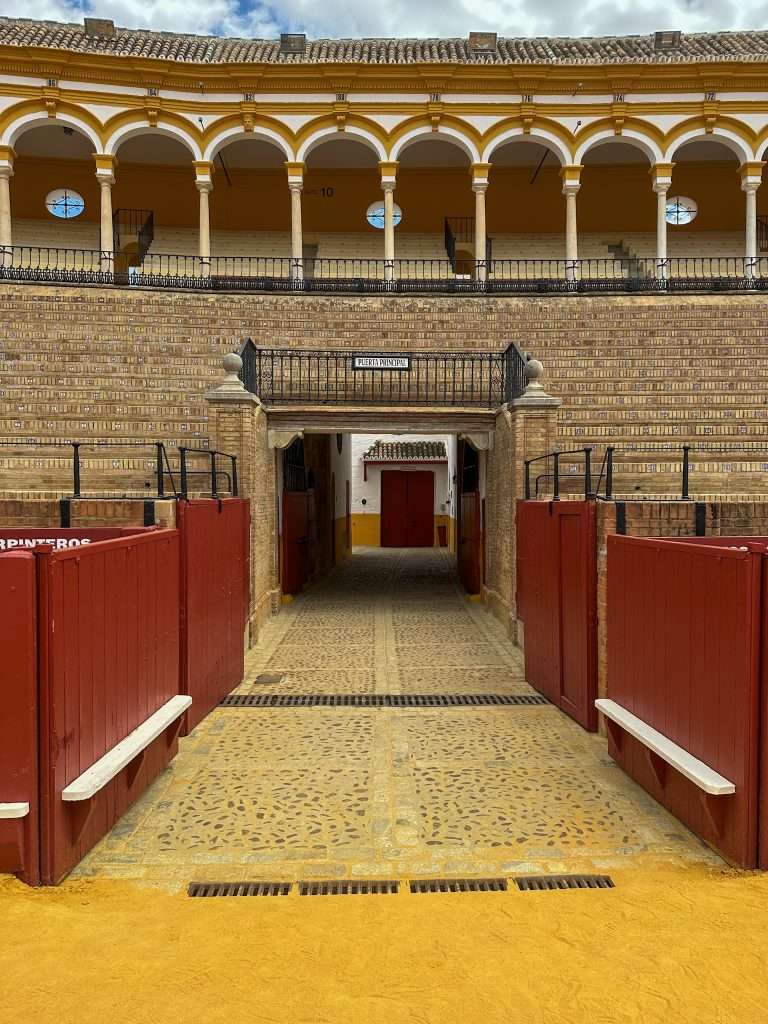
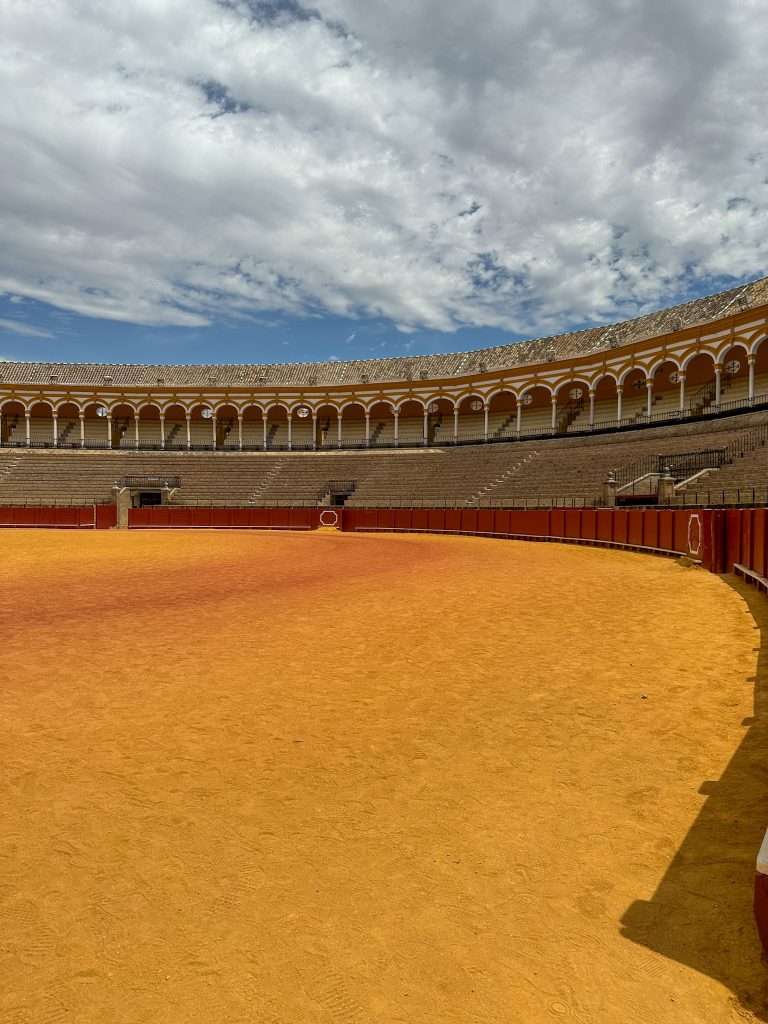
A general admission ticket costs €12 (concessions available). Note – this is the price of the ticket to visit the bullring (without a guide) and not the price of a ticket to a bullfight.
If you prefer a guided tour, consider this option and book here:
10. Stop by Setas de Sevilla (Mushrooms of Seville)
Metropol Parasol (also known as the Mushrooms of Seville) is a very large, mainly wooden structure encompassing a market, archeology museum and a rooftop walkway. It looks rather incongruous in the old quarter of Seville, yet it’s clearly an incredible architectural achievement. In fact, it’s the largest wooden structure in the world!
It was designed by a German architect and completed in 2011 following a city sponsored competition. In addition to the views over the city, the structure also offers much needed shade.

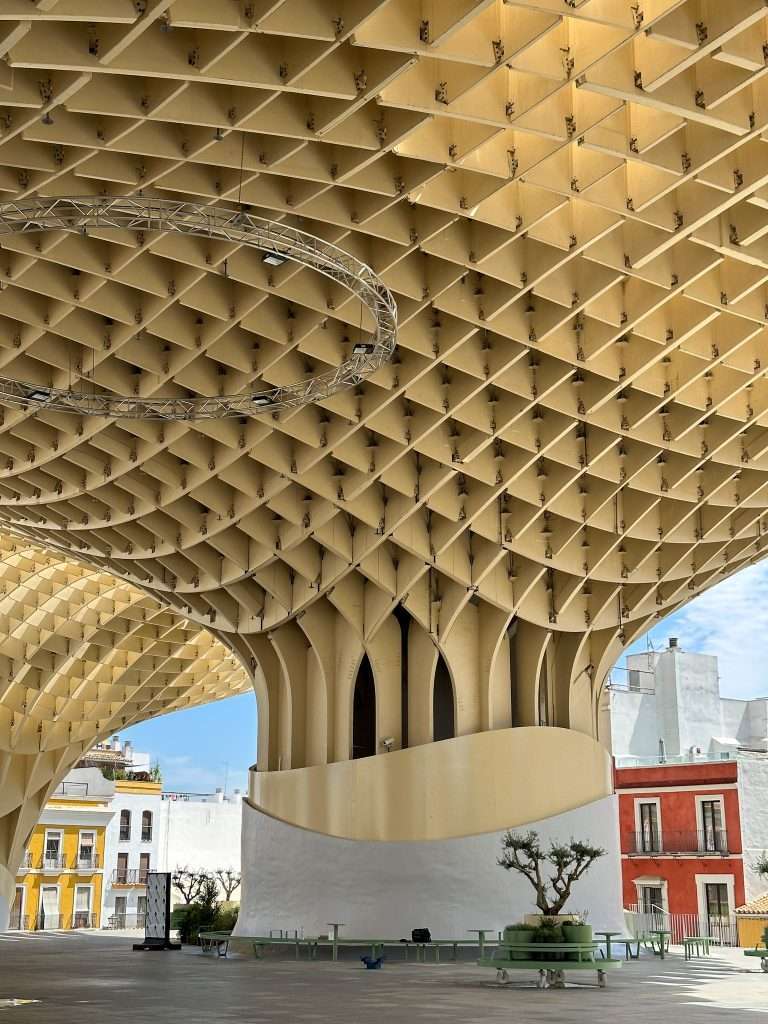

The admission fee is €16 (concessions are available). Check the official Setas de Sevilla site for up to date visitor information. If you want to skip the line then check out this tour:
I decided not to buy a ticket as I had already climbed La Giralda and Torre del Oro. In addition, my hotel had a rooftop terrace, all of which provided lovely views over the city. However, I did very much want to see the structure itself….and it didn’t disappoint!
11. Explore the Barrio de Santa Cruz – Seville Old Town
One of the best things to do in Seville is to just wander through the old town neighbourhood of Santa Cruz.
Dating back to 1248, Barrio Santa Cruz was once the Jewish Quarter of the medieval city. Today, it’s a touristy area, but don’t let that put you off – it’s also home to the Cathedral and Royal Alcázar. The maze of narrow, winding passageways not only take you back in time, but will provide you with some much needed shade in the summer months. Small tapas bars, cafes, shops and shady plazas will all tempt you!
It’s also fun to just wander and be surprised by what’s behind the next corner!


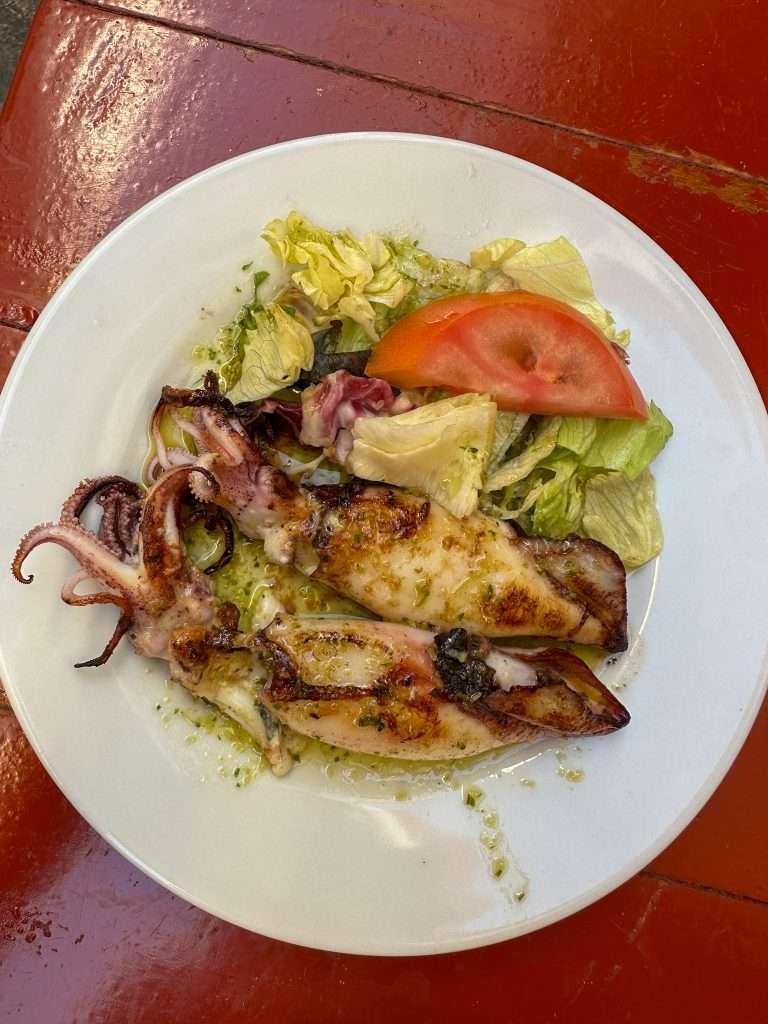
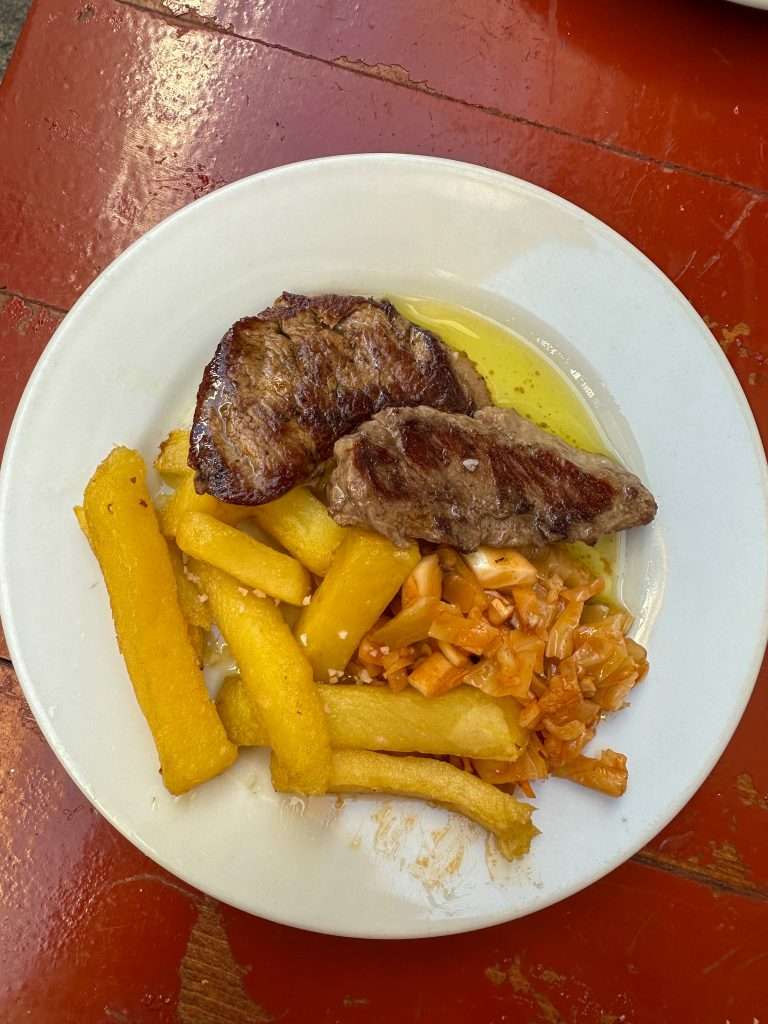
12. Eat Tapas!
Seville is the city where tapas are reputed to have originated so they are a speciality and therefore are not only one of the best things to do in Seville, but an absolute must!
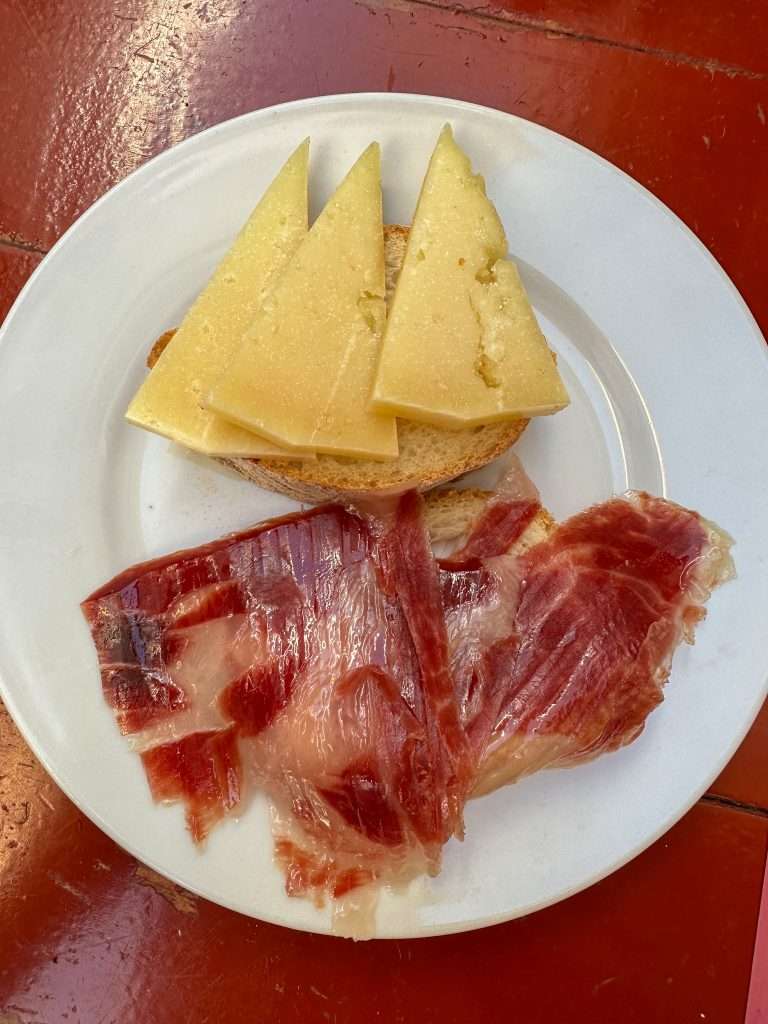
So, what are tapas? Basically, they are small plates of food – think appetiser or snack size. They can be combined to make a full meal and can be hot or cold. You would typically have them with a glass of wine or beer.
I would recommend enjoying tapas in a small bar in the Santa Cruz neighbourhood…something I did on several occasions (research you understand!).
In addition to the dishes pictured below, I also enjoyed Gazpacho, goats cheese and sirloin with blue cheese. This was all washed down with a glass (or 2) of orange wine!
13. Relax on a Panoramic Cruise along the Guadalquivir River
When it’s hot, head for the water! An hour long cruise along the Guadalquivir River to be precise.
I joined a sightseeing cruise that left from near the Torre del Oro and for an hour I was able to sit on the shaded upper deck and enjoy a cool breeze as we first went one way and then the other along the river. Views of historic Seville, the Triana district, structures from the 1929 Exhibition and an array of interesting bridges glide past accompanied by an audio guide.
The cruise I joined had an on board bar service and offered 2 free walking tours as part of the ticket price. Unfortunately, I was not able to join those as I had a plane to catch!

My ticket would normally cost €20 however I only paid €15….some kind of special deal just for me, ha ha. I purchased my ticket directly from the cruise company close to the departure point. However, if you prefer to book in advance, check out these options and book here:
14. Visit Barrio de Triana – the Triana District of Seville
The Triana district is located across the river from the historic centre of Seville and is easily accessed by crossing the Isabel II Bridge (Puente de Isabel II). However, if, like me, you fancy a longer walk in the searing heat, cross the Puente San Telmo closer to the Torre del Oro (yes I did do that in July!). As you walk, keep an eye open for the orange trees growing along the way.
The Triana district is famous for being the home of flamenco in Seville as well as for ceramics, and in particular, the azulejo tiles. When in this area, you must visit the daily fresh market, the Mercado de Triana. Fresh vegetables, meat and fish abound and you’ll have a hard choice deciding what to eat. I went for the empanadas in the end and they were great!
The market is built on the ruins of the Castle of San Jorge, once headquarters and prison for the Spanish Inquisition.


For those keen to attend one of Seville’s famous flamenco shows, including at the well-known Teatro Flamenco Triana, you can check available options and book tickets here:
More Time in Seville?
If you are able to spend longer in Seville or you’re looking for something more to do, then you may want to consider:
- visiting the Museum of Fine Arts (Museo de Bellas Artes Sevilla)
- joining something like this Spanish cooking class
- visiting the Seville Flamenco Show and Museum (Museo del Baile Flamenco Sevilla)
- taking a day trip such as these options:
You can review many more options from individual activities to day trips here:
Final Thoughts
I loved my time in Seville! Interesting history, lovely architecture, beautiful gardens and delicious food combine to make Seville a perfect city break destination. Oh, and the locals were very friendly also!
Three days in Seville is a perfect amount of time to experience much of what the city has to offer, whilst its southern Spain location makes it a perfect base from which to explore the rest of the region and Gibraltar.
If you need any further assistance in planning your visit to Seville check my Resources page.
Looking for some other European city break options? Make sure you stop by my Europe page for guides to many more wonderful city break destinations.

Disclaimer – Visitor information was correct at the time of writing but check before travelling.


Leave a Comment