
Last updated on January 13th, 2025 at 01:44 pm
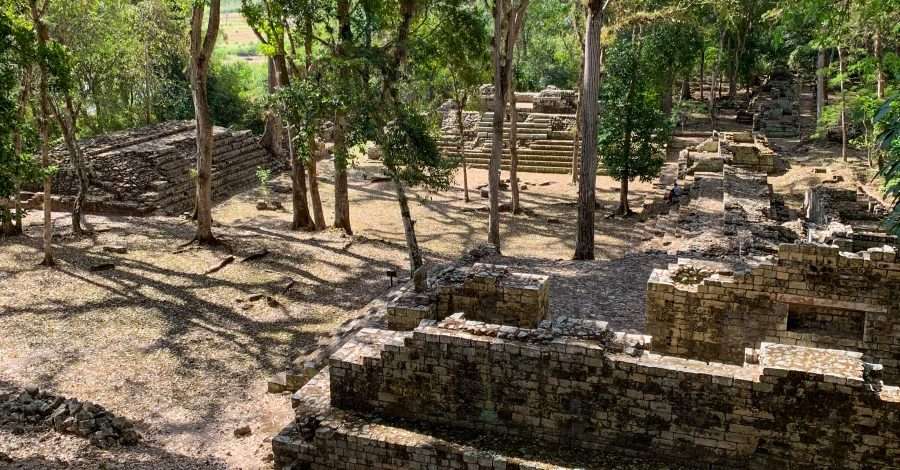
The Mayan Ruins of Copán were once home to a powerful dynasty ruling a vast kingdom within the southern Maya area.
Widely recognised for its intricate sculptures and hieroglyphics, the archaeological ruins are considered by many to be one of the best in Central America. It’s not surprising therefore that today, the Mayan Ruins of Copán are one of the must see places for visitors to Honduras.
In this post, I’ll set out what there is to see and do at this ancient Mayan archaeological site. I’ll provide a bit of history, offer up a general travel guide and give you some tips based on my experience to enhance your visit to this wonderfully preserved ancient city.
A Brief History of Copán
I’m not an historian, but I do think it helps to know a little about Copán before visiting. I have therefore distilled what is a long history, into this very short summary:
1. The founding of Copán
Although people have lived in the Copán valley since 1200 B.C., the city emerged as the capital of a major kingdom during the Classic Period of 200-600 AD. As a result, the ruined city seen today dates from that time.
The traditional named founder of the dynasty ruling the kingdom was King K’inich Yax Kuk Mo’ (Great Sun Lord Quetzal Macaw). He is credited with making Copán a major centre and was revered by the 16 subsequent kings.
The population, along with the military and trading power of the city, grew and under the 13th and perhaps greatest King Uaxaclajuun Ub’aah K’awill (known as 18 Rabbit) intricate artwork and sculpture began to flourish.


In 738 A.D., 18 Rabbit was captured and beheaded by his former vassal, the king of Quirigua, a city to the west at the meeting of the Copán River and the Motagua River. Despite this setback, the rulers continued to build large monuments.
The last recorded ruler of Copan was Ukit Tool who came to the throne in 822 AD. As was the case elsewhere in the Mayan world, this Maya site began to decline and was finally abandoned in the 10th century.
At its peak, the kingdom had a population of around 20,000 and covered an area of over 250 square kilometres with an estimated population in central Copán of 6,000 to 9,000. However, several droughts ultimately resulted in the city being abandoned by the 9th century.
2. Discovery of the Ruins
The ruins were discovered in 1576 by Spaniard Diego Garcia de Palacio but it wasn’t until almost 300 years later, after the site has been rediscovered by Americans John Lloyd Stephens and Frederick Catherwood, that archeological investigations, including those led by the Peabody Museum of Harvard and the Carnegie Institution, began, investigations that continue to this day.
Copán gained UNESCO World Heritage Site status in 1980 and cultural monument status from the Honduran government in 1982.
Getting to the Mayan Ruins of Copán
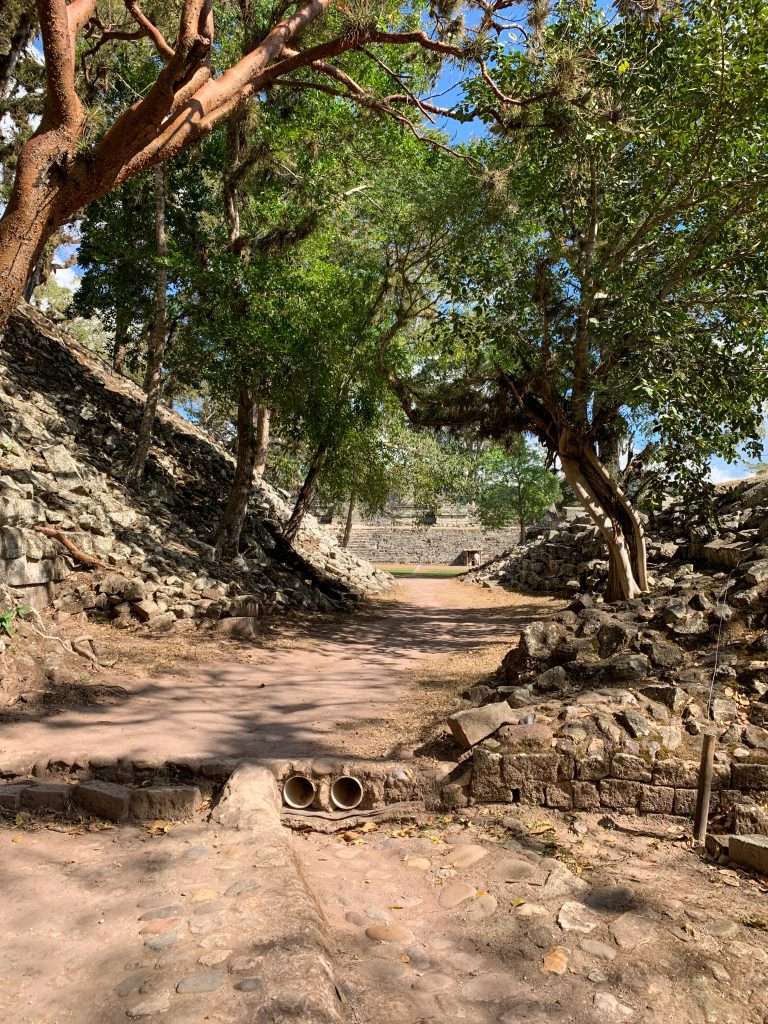
Now for the slightly confusing part….in order to visit the Mayan Ruins of Copán, you will first need to arrive in the small town of Copán Ruinas!
Copan Ruinas is located in western Honduras, not far from the border with Guatemala. The Honduran city of San Pedro Sula is about 180km away. I was travelling on an organised group tour and we made for Copán Ruinas after crossing the border from Antigua Guatemala.
The ruins of Copán are located a short distance (about 1km) from Copán Ruinas and are easily accessible on foot or by vehicle (eg tuk tuk).
If you are planning to stay in Copán Ruinas, do read my post The Best Things to Do in Copán Ruinas for my suggestions on how to spend your time there.
Visitor Information
The Mayan Ruins of Copán open at 8am daily and close at 4pm.
There is an entry fee of USD20 with additional sums payable to access the Museum of Sculpture ($10) and the tunnels ($15), both of which are mentioned below.
If you are visiting as part of a group tour as I was, then entry fees are likely included. Guide fees may not be so do check in order to avoid disappointment.
If you prefer to pre-book a tour (including transport), then you may want to consider these options:
What to See at Copán
The site covers about 80+ hectares and comprises thousands of structures. It is divided into various groups, with the main one being the Principal Group.
After entering the site but before reaching the ruins, you will meet some of the feathered inhabitants, scarlet macaws! The macaw held a special place in Mayan culture and long after the abandonment of Copán, the macaws remained. Declining numbers however led to the establishment of Macaw Mountain bird rescue, rehabilitation and release centre. Today, many macaws freely make their home amidst the ruins at Copán.


Here are the main things to see at Copán:
1. Principal Group
The Principal Group is, as the name suggests, the main part of the ruins. It comprises the Acropolis, the Hieroglyphic Stairway, the Grand Plaza and the ball court.
a) Acropolis
The Acropolis was the Royal complex at the heart of Copán and comprises two plazas, the West Court and the East Court.
In the West Plaza you will find Temples 11 and 16. The first of these, Temple 11, was built during the reign of the last King of Copán as his portal or gateway to the underworld.
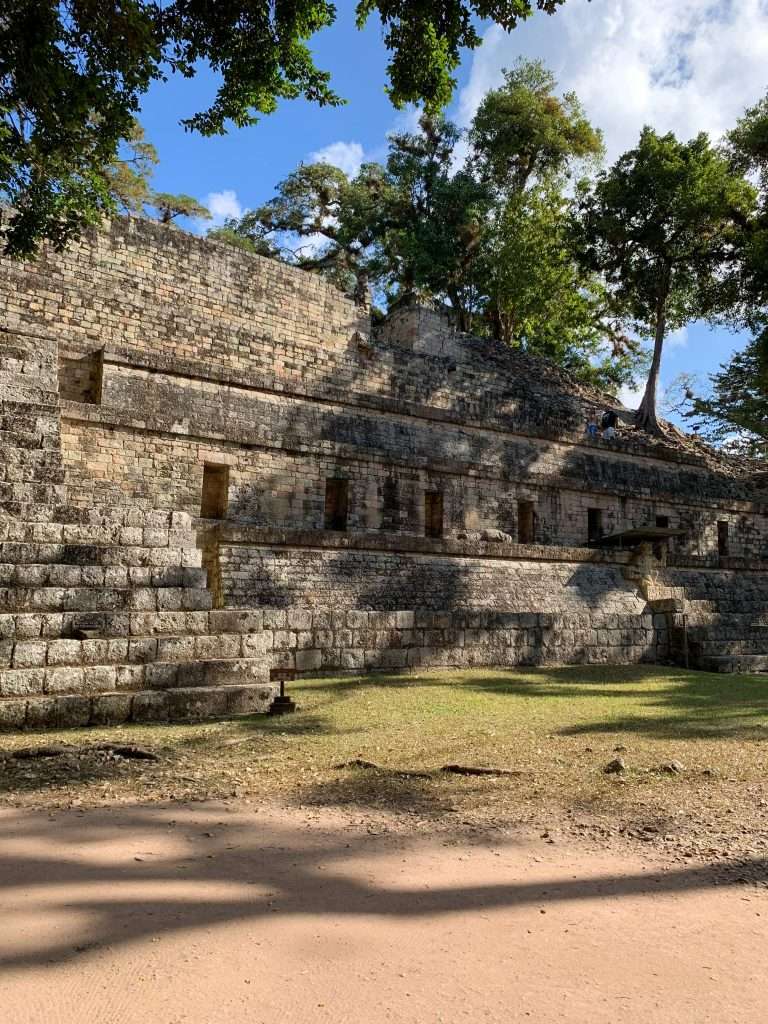

Temple 16 is dedicated to the founder of the dynasty and is the last of several structures built one on top of the other. It was not uncommon in fact for structures to be built over one another. Buried beneath Temple 16 is the Rosalilia Temple (which dates from the 6th century) and beneath that, the Margarita Temple.
At the base of Temple 16 is a reproduction of Altar Q, a monument depicting the succession of the Copán dynasty.


b) Hieroglyphic Stairway
The Hieroglyphic Stairway is the jewel in Copán’s crown. It’s the longest glyphic inscription in the Mayan world with over 2000 individual stone glyphs on 63 steps. The stairway is 10m wide and 21m long.

c) Ball Court
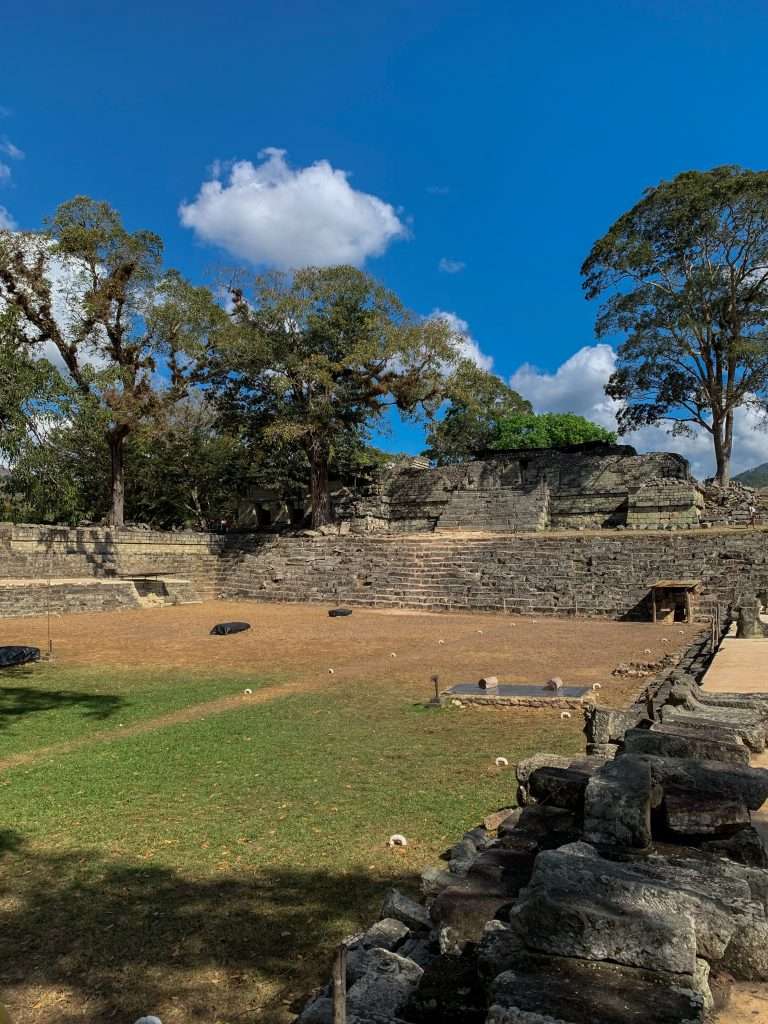
It was here that the Mayan people played a ball game, the aim of which is believed, in the absence of known rules, to have been to keep a rubber ball in play using only hips and thighs. Human sacrifice is also associated with the ball game although again, it’s not known who was killed, perhaps the captain of the losing team.
The Ball Court at Copan is widely regarded as one of the largest in the Maya world, perhaps second only to the huge ball court at Chichen Itza in Mexico. It’s the third ball court on the site, having been dedicated in 738 AD.
The smallest ball court I have seen is at Lamanai in Belize.

2. Tunnels
Two tunnels beneath the Acropolis, the Rosalila and Los Jaguares, were opened to the public in 1999 by archaeologists. These give visitors the opportunity to see pre-existing structures. Unfortunately, I did not have opportunity to experience these.
3. The Great Plaza of the Stelae
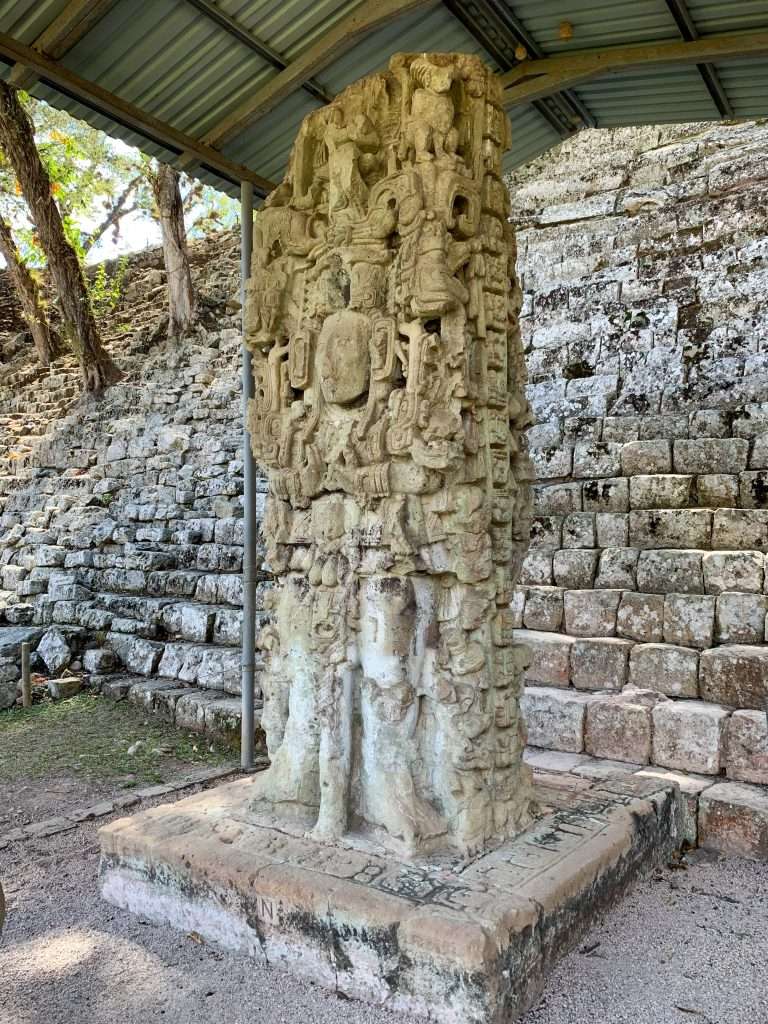
Huge, intricately carved stone stelae are positioned across the Great Plaza. Many portray the 13th King, Rabbit 18 and the detail is really quite incredible.
4. Museum of Sculpture and Las Sepulturas
There are a further two areas at the ruins that are available to visitors. The Museum of Sculpture contains many examples of Copán’s highly regarded sculptures. This includes a replica of the Rosalila Temple and the original Altar Q.
Las Sepulturas is an area that many visitors do not see for some reason. It is believed to have been a residential area for the rich and powerful and included burial sites.

Tips for Visiting
In order to make the most of your visit, I would suggest:
- planning to spend at least half a day there as there is a lot to see
- getting a guide or at least taking a guide book with you. For those exploring Honduras on a group tour, a guide may be included but if not, seek one out!
- visiting during the morning when it’s less busy and cooler
- wearing covered, supportive shoes
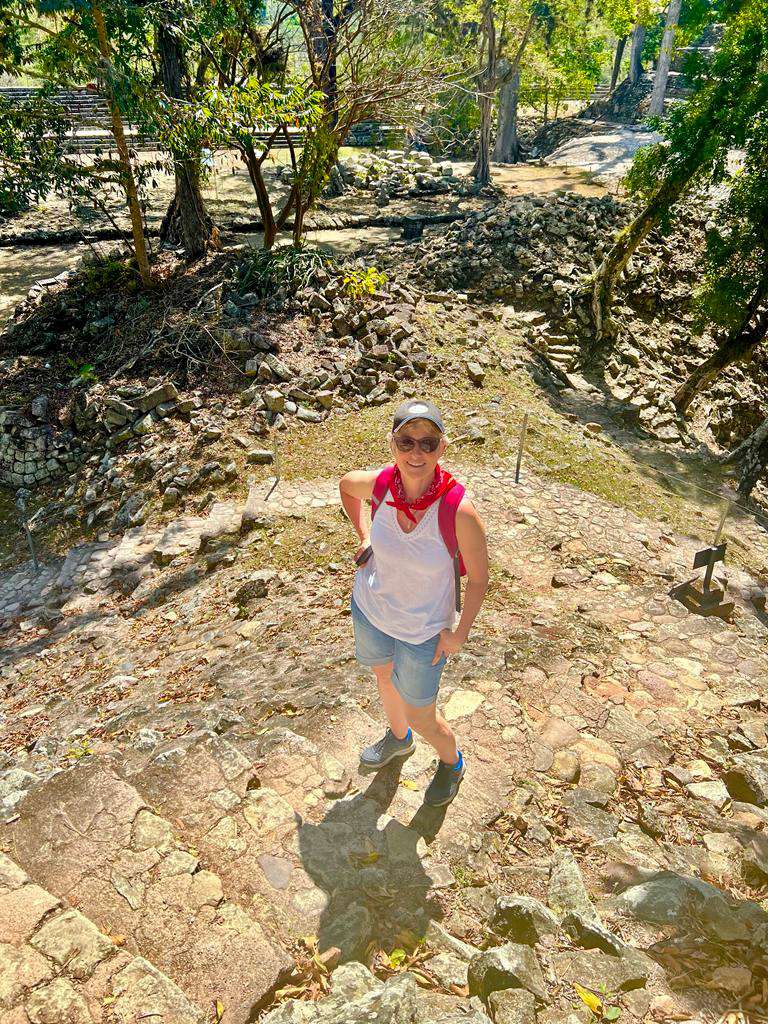
- being careful when walking around as surfaces are uneven and steps high and steep!
- taking (and drinking!) plenty of water
- wearing sunscreen and bug spray
Final Thoughts
Copán was once a powerful city ruling a vast kingdom. Today, the Mayan Ruins at Copán offer an incredible opportunity to learn more about ancient Maya civilization. Well preserved, detailed and not overrun with tourists, the site is a fascinating excursion for those travelling through Honduras and definitely worth visiting.
If you’re planning a larger trip to Central America then do read the other posts on my Central America page. Finally, if you’re looking for extra travel planning advice and help, check out my Resources page.
Disclaimer – Information correct at the time of writing but do check before visiting.
Disclosure – This post may contain affiliate links. That means that if you book something using them, I will earn a small commission but you will not pay anything extra. Thank you for supporting my blog.


Leave a Comment